
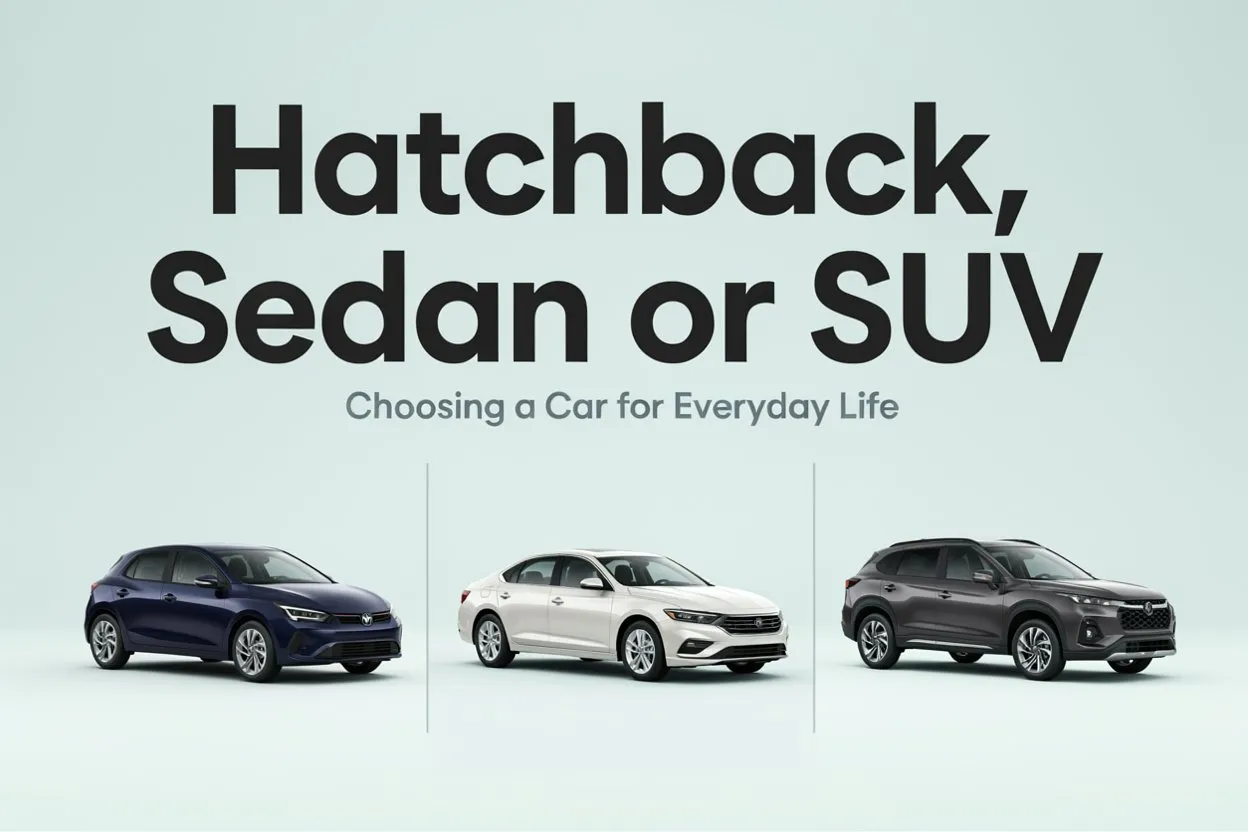
Hatchback, Sedan or SUV: Choosing a Car for Everyday Life
Most of us drive the same loop most days. Work, shops, school run and home account for nearly all our kilometres. Pick the hatchback, sedan or SUV that handles that loop well and the rest takes care of itself.
What each shape actually gives you
A hatchback is a small to mid-size car whose rear window lifts with the boot lid. Folding rear seats often extend the load area, although the floor may not be flat and the arrangement varies by model. The short rear suits car parks and older garages, while the low floor eases loading heavy shopping bags.
A sedan has a separate enclosed boot with its own lid. Check whether its rear seats fold or offer a pass-through, as that changes how longer items can be carried. The boot hides bags and keeps shopping smells outside the cabin. Rear legroom and headroom vary by nameplate, so measurements matter more than the badge.
An SUV has a tall cabin and raised chassis, with more ground clearance than a hatchback or sedan. This helps on steep driveways and tall kerbs but doesn’t make a city wagon a bush truck. Height, length, width and kerb weight vary widely, from light five-seaters to long seven-seaters. Drive varies too. Many city-focused models are front-wheel drive only, regardless of looks. Read that car’s spec sheet.
Match the car to your normal week
Think about ordinary days. A standard week tells you more than an annual road trip.
City commuting and tight parking often favour a hatchback. It turns in less space and fits short bays, while a smaller, lighter body often uses less fuel around town. There’s still room for loads. With seats folded, many hatches take flat-pack boxes or a bike with its front wheel off. Measure your longest item and test it inside.
Long sealed-road commutes with one or two aboard often favour a sedan. The separate boot takes two suitcases plus soft bags without roof-high stacking. Cabin noise varies, so compare contenders on the same motorway stretch. Compare asking prices for the actual models on your shortlist. Body shape alone doesn’t establish value: year, variant, condition and service records belong in the same comparison.
Big, square loads and tall gear can favour an SUV. Its upright tailgate and square opening take dog crates, garden gear and boxed toys with less lifting over a lip. Step-in height helps some bad backs but hinders others; lower hatches or sedans may suit wheelchair transfers or older knees. Try it with your everyday passengers.
Then browse cars for sale to compare actual boot sizes, door openings and prices while shortlisting.
Check fit, costs and parking before you decide
Paper measurements help, but try your passengers and luggage. Bring your usual seats, pram, golf clubs or work tools. Fit child seats in the exact car, checking belt length, anchor points and front-seat sliding room. Measure rear legroom with the driver’s seat set for you. Sit in the back for five minutes.
Test entry and exit too. Lift a toddler in and out. Help a parent climb in. Load a heavy bag over the boot lip. Ease varies between individual SUVs, hatches and sedans. No class wins outright.
Driving the same route on the same day sorts the rest. Take each contender along your commute, through a tight car park and over a familiar rough road. Note intersection visibility and U-turn ease, along with how readily you judge the corners. Park at home and work. An SUV too wide for your old garage is wrong, however good it feels on open roads.
Then price the week, not just the windscreen sticker. Fuel use in L/100km, servicing intervals and insurance quotes reveal running-cost differences. A heavy seven-seater often drinks more around town than a light hatch, but avoid assumptions. Find the official figure for that engine and gearbox, then request insurance quotes using the plate or VIN. Get a service quote too. Small parts and labour differences can wipe out a bargain purchase price within two years.
Treat towing and drive similarly. Tow ratings, all-wheel drive and front-wheel drive depend on the variant, not body shape. For trailers or boats, read that car’s compliance plate and handbook. If you stay on sealed roads, avoid extra weight and fuel costs for unused hardware.
Shortlist first, then shop what is available
Narrow to one shape and budget band before ringing around. List must-haves plainly. Four doors. Two child seats and a folding pram. Fits a 4.8 metre garage. Uses less than your current car. This keeps fashion from steering you off course.
Measure first, fall in love later
Then compare live stock. Dealer inventory changes fast, and condition, kilometres and service history matter more for long-term value than fashionable badges. Look for clear boot photos with seats up and down, read the inspection report and check the safety rating year against the build date, since older used cars vary. Shortlist two or three in your chosen shape and drive them back to back.
Bring the whole crew.
The right everyday car fits your garage and passengers without straining your fuel budget. Choose for Tuesday’s run and Saturday’s chores. The rare big trip can be hired, borrowed or planned around.