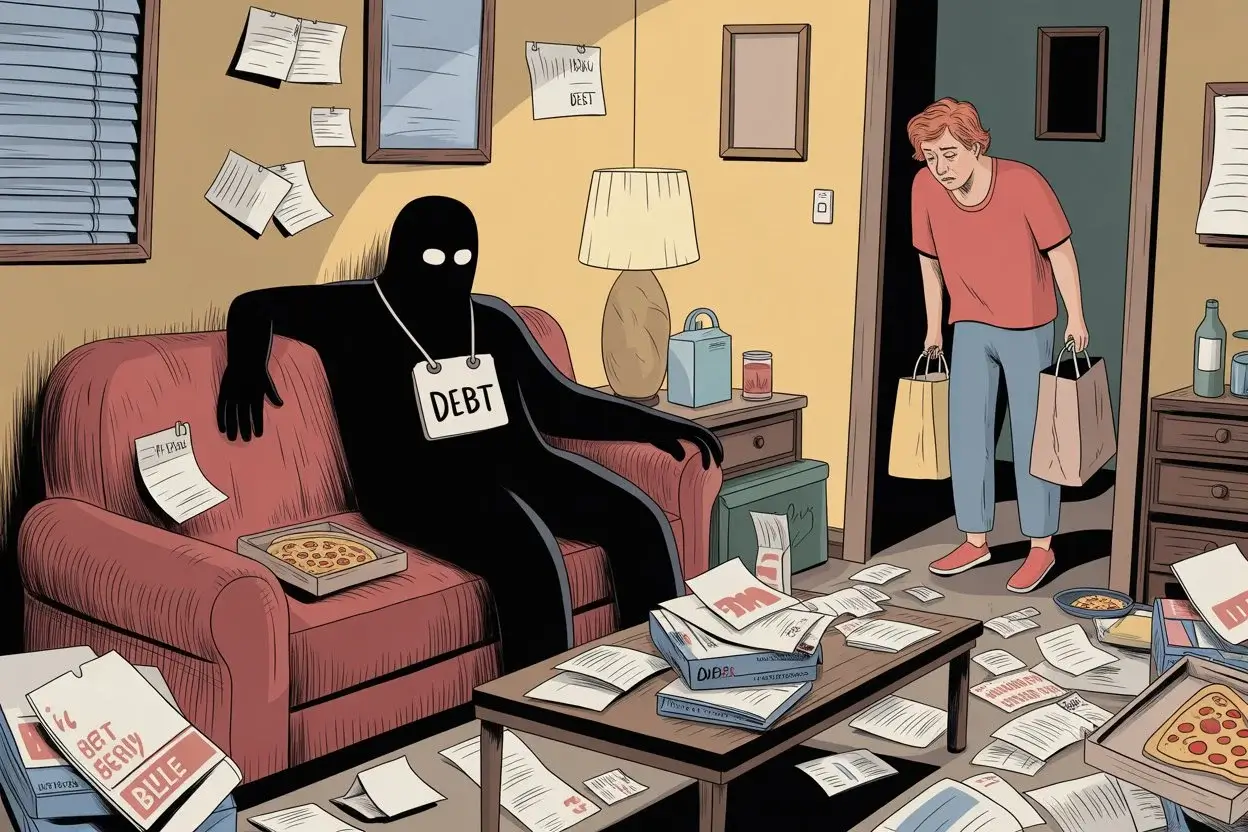
When Debt Starts Feeling Like a Roommate You Never Invited
You know that low-grade anxiety that shows up on Sunday evenings, right before the week starts? For a lot of people, debt is sitting right there in the background — not screaming, but not quiet either. Just there. Reminding you.
Here’s the thing nobody really tells you: debt isn’t a moral failing. It’s a math problem. And math problems have answers.
The trouble is that most advice about managing debt either feels too clinical (amortization schedules, weighted interest calculations) or too cheerleader-y (“You’ve got this! Just believe!”). Neither is useful when you’re staring at three credit card balances and a personal loan.
So let’s talk about it more practically — how debt actually works, how to get your arms around it, and what a real payoff plan looks like when you’re not starting from zero.
First, Know What You’re Actually Dealing With
Before anything else, write down every debt you have. Not in your head — on paper or in a spreadsheet. For each one, note the balance, the interest rate, and the minimum monthly payment.
This step sounds obvious, but most people avoid it. There’s something about seeing it all together that feels worse than keeping it blurry. Resist that instinct. You cannot manage something you haven’t measured.
Once it’s in front of you, two things usually happen: it’s either not as bad as you feared, or it IS that bad — and now you finally know exactly what you’re working with. Both outcomes are better than vague dread.
The Interest Rate Is the Story
Not all debt is equal. A student loan at 4.5% is a very different problem than a credit card at 22%. If you’re making minimum payments on everything without prioritizing, you might be losing money you don’t realize you’re losing.
Here’s a quick way to think about it: paying down a credit card at 22% interest is effectively the same as getting a guaranteed 22% return on your money. There’s almost no investment that reliably beats that.
Two main strategies people use for payoff order:
The avalanche method — You put any extra money toward the debt with the highest interest rate first, while paying minimums on everything else. Mathematically, this saves you the most money over time.
The snowball method — You pay off the smallest balance first, regardless of interest rate. It costs more mathematically, but the psychological win of eliminating an account entirely can keep you motivated when the process feels long.
Neither is wrong. Pick the one you’ll actually stick with.
“Minimum Payment” Is a Trap
Credit card companies calculate minimum payments to keep you paying for as long as possible. On a $5,000 balance at 20% APR, paying only the minimum could take over 15 years and cost you more in interest than the original balance.
If you can pay even $50 or $100 extra per month on your highest-priority debt, the difference is significant. Not “feel-good” significant — actual years and hundreds (or thousands) of dollars significant.
Run the numbers for your situation. You can use a basic debt payoff calculator — or the tools on this site — to see how different monthly amounts change your payoff timeline. The difference between minimum payments and slightly-more-than-minimum is usually striking enough to motivate action.
When Consolidation Makes Sense (and When It Doesn’t)
Debt consolidation — rolling multiple debts into one loan, often at a lower rate — can genuinely help. If you have several credit cards at 19-24% and you qualify for a personal loan or balance transfer card at 8-12%, the math is clearly in your favor.
But watch for two things:
One, the new loan needs to actually be paid off. Some people consolidate, feel relief, and then slowly run their credit cards back up. Now they have the consolidation loan AND new balances. That’s worse than before.
Two, balance transfer cards often have 0% promotional periods that last 12-18 months, then jump to a standard rate. That promotional window is only useful if you have a realistic plan to pay down the transferred balance before it expires.
Consolidation is a tool. It works when it’s part of a payoff plan, not a substitute for one.
The Budget Piece Nobody Wants to Hear About
Debt payoff requires extra money going toward debt. That money has to come from somewhere — either income you weren’t directing there before, or spending you cut back on.
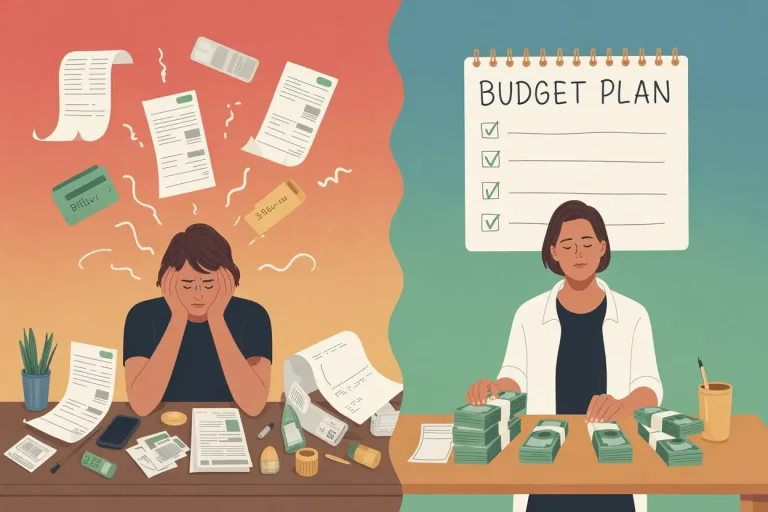
You don’t need a perfect budget. But you probably need some version of one. A useful starting point: track every dollar you spend for one month without changing anything. Just observe. Most people find at least one or two categories where money is leaking out faster than they realized — subscriptions they forgot about, food delivery that adds up, small purchases that feel minor individually but aren’t.
Finding $200-300 per month in existing spending that you can redirect toward debt is more common than it sounds. And $200-300 extra per month on a $6,000 credit card balance cuts your payoff time dramatically.
Emergency Fund vs. Debt: The Chicken-and-Egg Problem
This one comes up constantly: should you build an emergency fund or pay down debt first?
The short answer most financial planners land on: keep a small emergency cushion (usually $1,000-2,000) before aggressively paying down debt. The reason is practical — if you put every spare dollar toward debt and then your car needs a repair, you put it on the credit card. You just canceled out your own progress.
Once you have that buffer, funnel everything else toward the debt. A larger emergency fund can come after the high-interest balances are cleared.
What to Do If It’s Gotten Out of Hand
If your debt-to-income ratio is high, minimum payments are straining your budget, or you’re using credit to cover basic expenses, that’s a sign you need more than a payoff strategy.
A few options worth knowing about:
Nonprofit credit counseling — Organizations like NFCC-affiliated agencies offer free or low-cost counseling and can help you set up a debt management plan (DMP), where they negotiate reduced interest rates with creditors on your behalf. This is different from for-profit debt settlement companies, which often charge high fees and can hurt your credit.
Income-driven repayment for student loans — If federal student loan payments are eating too much of your income, income-driven repayment plans cap your payment as a percentage of discretionary income. They’re worth exploring if you haven’t already.
Talking to a bankruptcy attorney — This sounds extreme, but a free consultation with a bankruptcy attorney doesn’t mean you’re filing. It means you’re getting a complete picture of your options. Some people are surprised to find they have more choices than they thought.
Keeping the Bigger Picture in View
Debt payoff tends to feel like it’s in direct competition with saving for retirement, building an emergency fund, or working toward any financial goal. In the short term, it kind of is.
But debt — especially high-interest debt — is a drag on everything else. Every dollar going to interest is a dollar not growing anywhere. Getting the expensive stuff paid off faster frees up cash flow in a way that changes what your budget looks like month to month.
If you’re thinking about FIRE, Coast FIRE, or any version of financial independence, debt management isn’t separate from that goal. It’s part of getting there. The interest you stop paying is money that goes back to you.
A Few Things Worth Doing This Week
If you’ve read this far and want to actually move on something, here’s a low-pressure starting point:
Pull up all your debt accounts and write down balance, rate, and minimum payment for each. That’s the whole first step. Once that list exists, you can run a payoff order, calculate what extra payments would do, and make a call on whether consolidation is worth exploring.
You don’t have to have it all figured out at once. Most people who make real progress on debt do it incrementally — one decision at a time, over months and years. The math just needs you to start.
coastfirecalc.com can help you model debt payoff timelines, see how extra payments affect your schedule, and understand how debt fits into your broader Coast FIRE number. Start with the numbers you have — even rough ones — and go from there.