The Month Everything Felt Too Tight (And How a Simple Plan Changed That)
It was a Tuesday — payday — and after rent, groceries, and a couple of bills, there was less than $200 left. Not for savings. Not for emergencies. Just… left. No big purchases had been made, no vacation was booked. The money just disappeared the way it always does.
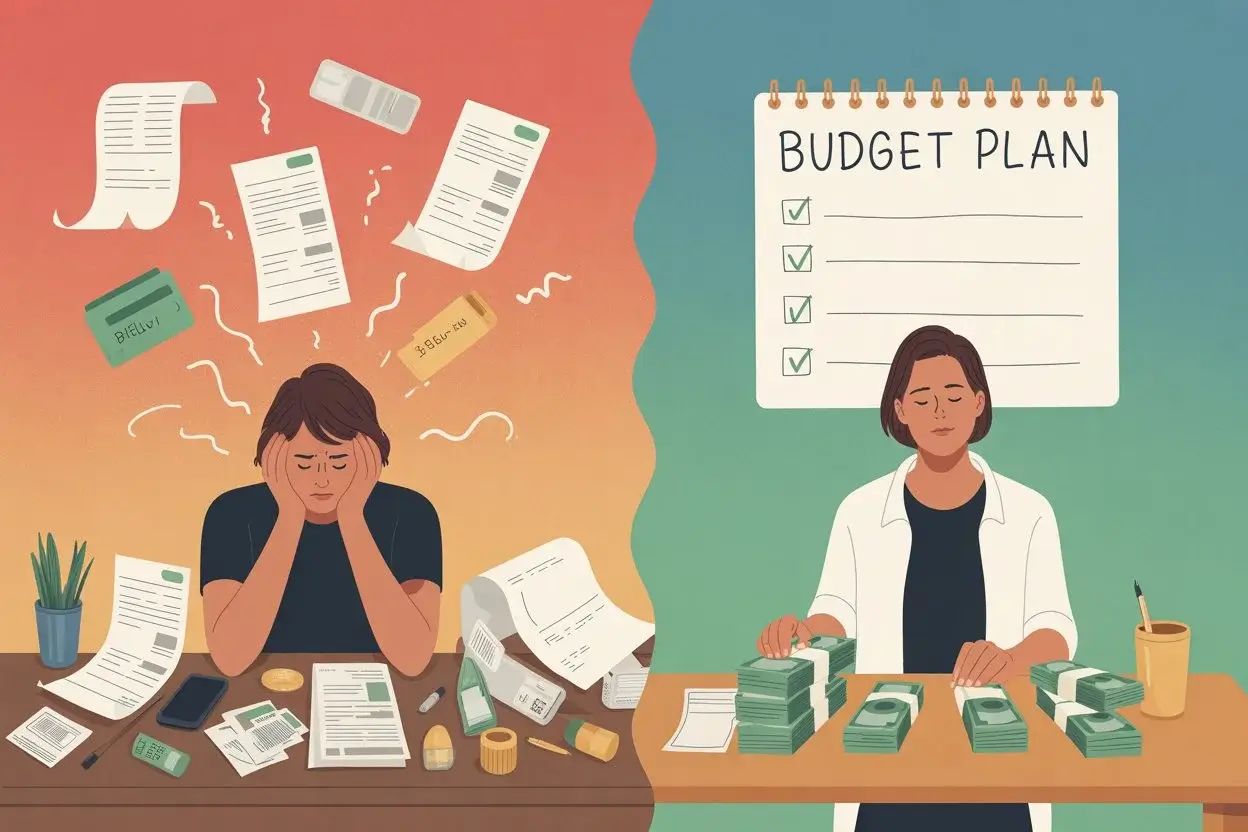
If that sounds familiar, you’re not dealing with a spending problem or a discipline problem. You’re dealing with a planning problem. And unlike some financial issues, that one actually has a fix.
The Gap Between Earning and Keeping
Most people who feel broke aren’t broke. They earn enough — sometimes significantly more than enough — but without a structure in place, money moves through accounts like water through cupped hands. You can’t save what you can’t see.
Financial planning, at its core, is just deciding what happens to your money before it arrives. That’s it. The more elaborate versions — investment strategies, tax optimization, retirement projections — all sit on top of that one idea.
Start there.
Practical tip: Before anything else, open a notes app or grab a piece of paper and write down what you expect to earn this month, then what you know you must spend. That gap in the middle? That’s what you’re actually working with. Most people have never looked at it clearly.
Getting Honest About Where the Money Goes
Budgets fail not because people are bad at math, but because the numbers they start with aren’t real. They estimate groceries at $300, spend $520, and wonder why the budget fell apart by week two.
Before building any kind of plan, spend two to four weeks just tracking — not changing anything, just watching. Use your banking app’s transaction history, or a free tool like YNAB’s trial or even a Google Sheet. The goal isn’t to feel guilty. It’s to get accurate numbers.
Once you have real data, categories tend to sort themselves out naturally. You’ll notice you spend almost nothing on clothes but a shocking amount on food delivery. Or that subscriptions you forgot about are pulling $80/month in total. These aren’t things you could have guessed. They’re things you have to see.
Practical tip: Most banks now have automatic spending category breakdowns. Spend five minutes in your banking app reviewing last month’s transactions before you build any budget at all.
A Budget That Actually Works for Real Life
The 50/30/20 rule gets mentioned in almost every personal finance article, and for good reason — it’s a decent starting framework. Fifty percent of take-home pay goes to needs (rent, utilities, groceries, transport), thirty percent to wants, twenty percent to savings and debt repayment.
But here’s the thing most articles skip: that ratio doesn’t work for everyone, especially if you live in an expensive city or earn below median income. If rent alone eats 45% of your paycheck, a textbook split is going to make you feel like a failure immediately.
The better version is to treat 50/30/20 as a directional target, not a strict rule. If you can get savings to 10% right now, that’s genuinely good. Push to 15% next year. Adjust the want/need balance as your life changes. A budget that you can actually stick to for six months beats a perfect budget that falls apart in three weeks.
Practical tip: Build your budget around fixed expenses first. Rent, loan payments, and subscriptions don’t flex — so lock those in, then work with what’s left.
The Emergency Fund Question
Financial advisors say three to six months of expenses. Most people have less than one month. Both facts are true and neither is a reason to give up.
An emergency fund matters because it’s the thing that keeps a $700 car repair from becoming $700 on a credit card at 24% interest. It’s what makes one bad month a bad month instead of a bad year.
Starting small is fine. Start with $500. That covers most minor emergencies. Once you hit $500, push toward $1,000. That’s enough to handle most car trouble, medical copays, and unexpected travel without panicking. Work up from there.
Keep this money somewhere boring — a separate savings account that isn’t your main checking account. Out of sight, slightly harder to access, earning a little interest. High-yield savings accounts currently offer around 4-5% APY, which is meaningfully better than the 0.01% most traditional bank accounts pay.
Practical tip: Set up a small automatic transfer — even $25 or $50 per paycheck — into a separate savings account. Automating it means you don’t have to decide every time.
Debt Isn’t All the Same
Not all debt needs to be attacked immediately. A low-interest student loan at 4% doesn’t require the same urgency as a credit card charging 22%. Treating all debt as equally urgent leads either to paralysis or to paying off the wrong thing first.
The two most practical debt payoff approaches are the avalanche and the snowball. Avalanche means paying minimums on everything and throwing extra money at the highest-interest debt first — mathematically optimal. Snowball means paying off the smallest balance first, regardless of interest rate — psychologically satisfying because you get wins faster.
Neither is wrong. The best one is whichever you’ll actually stick with.
What doesn’t help is carrying a balance on high-interest credit cards while money sits in a 0.01% savings account. If you have credit card debt above 15%, paying it off is effectively a guaranteed 15%+ return on your money — better than almost any investment.
Practical tip: List your debts from highest interest rate to lowest, along with minimum payments and total balances. Even just seeing them in one place changes how you approach them.
Saving for Something Specific vs. Saving “In General”
Vague savings goals fail. “I want to save more money” is not a goal — it’s a wish. Goals that work are specific: “I want $4,000 saved by March so I can take a trip to Japan” or “I’m putting $200 aside every month until I have enough to replace my laptop.”
When you name what you’re saving for and attach a number to it, the decision becomes mechanical. Do I transfer the $200 this month? Yes, because I know exactly what it’s for. That’s a very different mental calculation than “should I save some of this month’s money?”
For longer-term goals like buying a house or retiring early, the math gets more involved — but it still starts with naming the thing and putting a number on it. Tools like coastfirecalc.com exist precisely for this: turning a retirement vision into concrete savings targets so you’re not just guessing.
Practical tip: Open a separate savings account and name it after your goal — “Japan fund,” “house down payment,” “car replacement.” Banks let you rename accounts. It sounds small. It isn’t.
Retirement Feels Far Away Until It Doesn’t
The most reliable thing about retirement savings is that starting earlier is almost always worth it. Not because of discipline or willpower — because of math. Money invested in your 30s has decades to compound; money invested in your 50s has less than half that time.
If your employer offers a 401(k) match, contribute at least enough to get the full match before doing anything else. That’s free money with an immediate 50% to 100% return depending on your employer’s match rate. Not taking it is genuinely one of the most expensive non-decisions in personal finance.
After the match, a Roth IRA is usually the next smart step for most people under a certain income threshold. Contributions go in after-tax, but growth and withdrawals in retirement are tax-free. For someone in their 20s or 30s expecting their income to grow, that trade-off tends to be favorable.
You don’t need to figure all of this out at once. Contribute to the match, open a Roth IRA, invest in low-cost index funds, and let it sit. That’s genuinely most of what you need to do.
Practical tip: If you’ve never touched your 401(k) after enrolling, check what fund you’re invested in. Many people are in a money market fund earning almost nothing because they never made an election. Switch to a target-date fund matching your approximate retirement year if you’re unsure.
When Plans Fall Apart
They will. Some months you’ll overspend. You’ll forget to transfer to savings, or an unexpected expense will wipe out what you’d set aside. This is normal, not failure.
The difference between people who build financial stability over time and those who don’t isn’t that the successful ones never mess up. It’s that they treat the mess-up as a data point rather than evidence that they’re bad with money.
One bad month doesn’t unwind a year of progress. Getting back on track the following month does more for your finances than spending energy feeling bad about the previous one.
One Thing to Do This Week
Don’t try to overhaul everything at once. Pick one thing and do it in the next seven days.
If you’ve never tracked your spending: pull up last month’s transactions and categorize them. Just look.
If you have no emergency fund: open a separate savings account and transfer $50 into it today.
If you have high-interest credit card debt: list your cards, their balances, and their interest rates on a piece of paper. That’s the whole task for this week.
Financial planning doesn’t require a spreadsheet empire or a certified financial planner. It requires making one small, concrete decision about your money — and then making another one next week. That’s what it actually looks like in practice.