
Money Habits That Actually Stick — and the Hidden Reason Most Don’t
Most financial advice focuses on what to do with money. The harder, more useful question is why you consistently don’t do it — and what to change instead.
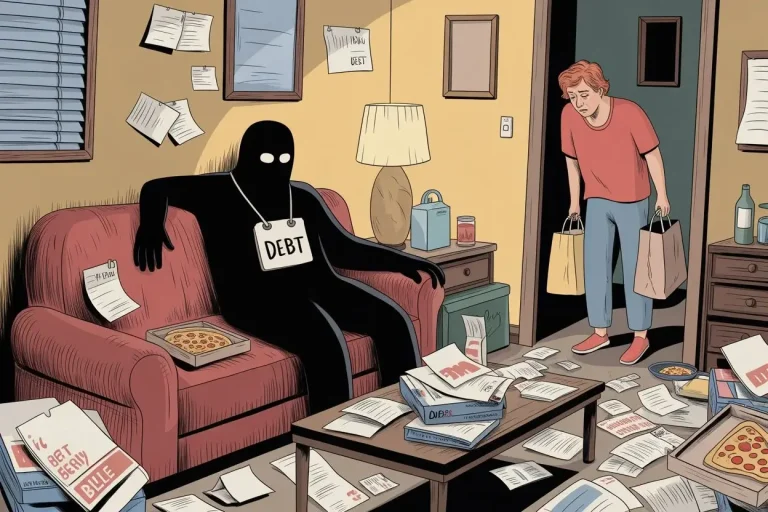
Here’s a common scenario: someone reads a personal finance book, gets energized, sets up a budget, automates a savings transfer — and then slowly, without any single dramatic failure, drifts back to where they started three months later. The budget is technically still there. The transfer still runs. But decisions are made the same way they always were.
The popular narrative says this is a willpower problem. It isn’t. It’s an architecture problem. The habits didn’t fail because the person lacked discipline — they failed because the habits were designed to require discipline in the first place.
Why “just be more disciplined” is the wrong frame
Financial habits sit at the intersection of two things that resist each other: the immediate and the abstract. Spending money today delivers a real, tangible experience. Saving for something 15 years away delivers almost nothing you can feel right now. Your brain is not broken for preferring the concrete over the distant — it’s functioning exactly as designed.
The problem is that most money advice treats this as a character flaw to overcome. “Spend less, save more, stay consistent.” As if knowing the right behavior were the same as being able to execute it reliably under real conditions — when you’re tired, when something breaks, when a friend invites you somewhere you didn’t plan for.
A habit designed to require willpower will always lose to a situation that drains it. The fix isn’t more willpower — it’s fewer decisions.
The people who manage money well over the long run are not usually more disciplined than everyone else. They’ve simply structured their financial lives so that the right behaviors happen without requiring active decisions.
The difference between a rule and a system
A rule says: “I won’t spend more than $200 on eating out this month.” A system says: “On the 1st of every month, $X moves automatically into a fixed account that isn’t connected to my debit card.”
Rules require you to remember them, apply them in the moment, and overcome whatever friction you’re feeling at the time. Systems remove the moment of decision entirely. One runs on your intentions; the other runs on your calendar.
Consider two people with the same income and the same savings goal. Person A decides to “try harder” and transfer whatever is left over at the end of the month. Person B automates a transfer the day after payday and adjusts spending around what remains. After a year, Person B has saved more — not because they care more, but because they engineered out the decision point where things go wrong.
Key distinction:
Automation doesn’t mean you stop paying attention to money. It means that the most important behaviors — saving, investing, paying down debt — don’t compete with your mood, your energy level, or your schedule on any given day.
The five habits worth building (and how to sequence them)
Not all money habits carry equal weight. Some are foundational — they create the conditions that make everything else easier. Others are refinements that only matter once the foundation is solid. Trying to optimize in the wrong order is one of the most common reasons people feel perpetually behind.
Here’s a sequence that actually builds on itself:
Know your baseline
Before changing anything, spend one month tracking where money actually goes — not where you think it goes.
Automate the non-negotiables
Savings, debt payments, and investment contributions move automatically. Everything else is what’s left.
Build a small buffer
A $500–$1,000 float in your checking account absorbs small surprises without derailing the whole month.
Run a monthly review
15 minutes to look at what happened and adjust — not to judge, but to stay calibrated to reality.
Align spending with actual priorities
Once the structure is working, cut what you don’t actually value and spend more on what you do.
The sequence matters. Trying to optimize spending before automating savings is working backwards. And trying to build all five habits simultaneously is a reliable way to build none of them.
What the monthly review actually looks like
The monthly financial review has a reputation for being either a stressful audit or an exercise in guilt. It doesn’t have to be either. The goal is calibration, not judgment.
Pick one consistent time — first Sunday of the month, the day after payday, whatever becomes routine. Open your accounts and ask three questions: Did money move where I intended it to? Are there any categories that surprised me? Is there one thing I want to adjust next month?
That’s it. No spreadsheet required, no hour-long session. The power of this habit is not in its depth — it’s in its regularity. Fifteen consistent minutes every month will tell you more about your relationship with money than an annual deep-dive ever will.
The slow spending leak that’s harder to notice
There’s a category of spending that almost never shows up when people list their expenses: the subscriptions, memberships, and auto-renewals they’ve stopped thinking about. These aren’t dramatic purchases — they’re $12 here, $18 there, billed monthly to a card you check infrequently.
Individually, none of them feel meaningful. Collectively, they’re often $100–$300 a month of spending that delivers close to zero value.
Once a year — not more — do a full audit of recurring charges. Go back 90 days in your bank and card statements. Anything you can’t immediately explain or don’t actively use gets cancelled. This single habit often recovers more money than months of trying to “cut back” on visible spending.
Worth noting:
The goal of this audit isn’t to become ascetic. It’s to free up spending power for things you actually value — the subscriptions you keep after the review are ones you chose consciously, not ones that just survived inertia.
How to think about “bad” money months
Every honest financial life includes months where things go sideways. A car repair, a medical bill, a social occasion that cost more than expected — these aren’t aberrations. They’re the texture of real life, and any financial system that can’t survive them isn’t actually working.
The mistake most people make after a bad month is overcorrecting: extreme restriction followed by rebound spending. A more durable approach is to absorb the month, understand what happened, and then return to the baseline system without drama.
If bad months happen repeatedly in the same category — car maintenance, home repairs, travel — that’s information. It means the category belongs in your regular budget as a deliberate line item, not an emergency. Building it in advance is almost always cheaper and less stressful than scrambling to cover it after the fact.
The Coast FIRE angle: why habits matter more than the plan
If you’re working toward Coast FIRE — the point where your investments can grow to fund retirement without further contributions — the math is only half the equation. The calculation tells you the target. Your habits determine whether you actually get there.
The interesting thing about Coast FIRE is that it reframes the relationship between present spending and future security. Once you’ve hit the threshold, continued aggressive saving has diminishing returns on your retirement outcome. What matters more is maintaining the habits that got you there — not backsliding into spending patterns that require you to work longer than you intended.
In other words, the habits aren’t the obstacle to your financial goal. They are the goal, expressed in daily form.
Most financial planning focuses on the destination — the number you need, the date you want to reach it, the rate of return required. That’s all useful. But the gap between knowing the plan and living it is filled entirely by habits. Not the dramatic kind — not the sweeping lifestyle overhauls that last a month — but the quiet, automated, barely-noticeable routines that compound quietly in the background. Get those right and the plan mostly runs itself.
Visit: Coastfirecalc.com