
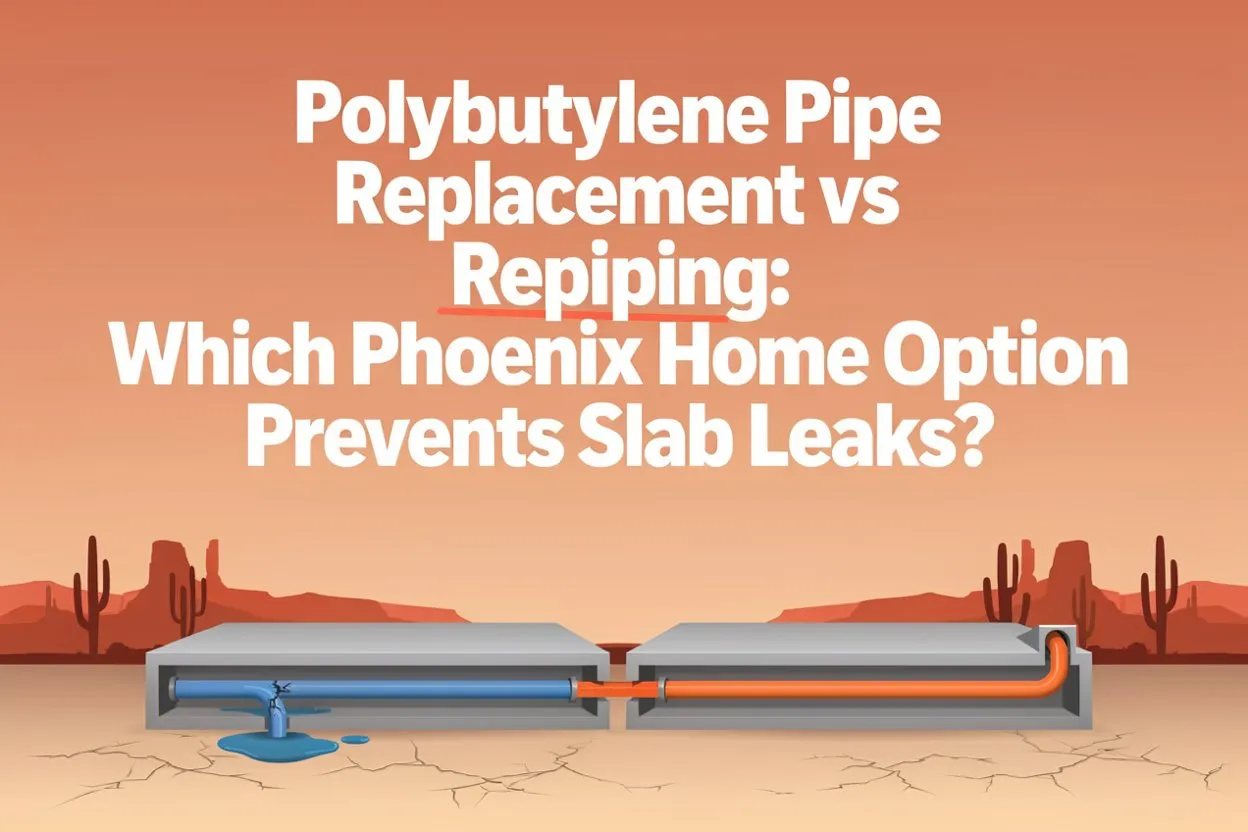
Polybutylene Pipe Replacement vs Repiping: Which Phoenix Home Option Prevents Slab Leaks?
Imagine walking into your Phoenix home and finding water seeping from your tile floor, only to discover a slab leak beneath your foundation. For many local homeowners, aging polybutylene pipes—once a popular material for residential plumbing—are the silent culprit behind these costly and disruptive events. The dilemma is clear: should you opt for targeted polybutylene pipe replacement, or is a full-home repiping project the better safeguard against slab leaks? The answer depends on your home’s unique plumbing system, the extent of existing pipe damage, and your long-term plans for property value and reliability. Both approaches can address problematic pipes, but only one effectively eliminates the root cause of slab leaks in Phoenix’s climate and soil conditions.
Polybutylene Pipe Hazards in Phoenix Residential Plumbing
Polybutylene pipes, identifiable by their blue, gray, or black flexible plastic appearance, were installed in many Phoenix homes from the late 1970s through the mid-1990s. While initially valued for their low cost and easy installation, these pipes have since been found to react poorly with chemicals in municipal water supplies. In Phoenix, high chlorine levels accelerate the breakdown of polybutylene, causing the material to become brittle and develop microfractures over time. These tiny cracks may go unnoticed until they lead to a sudden leak, often under the home’s slab foundation where repairs are most difficult.
The most severe risk associated with these pipes is their tendency to fail without warning, resulting in water leaks that can erode soil and weaken a home’s foundation. Because slab leaks are difficult to detect until damage is extensive, many homeowners face significant repair costs by the time the issue is discovered. Reviewing polybutylene failure mechanisms reveals why professionals strongly recommend addressing these pipes before leaks develop beneath the slab.
Comparison of Partial Replacement and Whole Home Repiping
When polybutylene pipes are found in a home’s plumbing, owners often consider partial replacement—removing only the visibly damaged sections. This approach offers a lower upfront cost and can resolve isolated leaks in accessible areas, such as exposed plumbing in a utility room. However, leaving original polybutylene in place means the risk of future failures remains, particularly in hard-to-reach areas like under floors or behind walls. In Phoenix homes with a history of leaks or signs of pipe deterioration, partial replacement may only postpone the next emergency.
Whole home repiping, by contrast, involves replacing all polybutylene plumbing with modern materials like PEX or copper. This comprehensive solution eliminates hidden vulnerabilities and dramatically reduces the chances of future slab leaks. While the process can be invasive, requiring sections of drywall to be opened, it provides a long-term fix that protects your foundation and property value. Comparing PEX vs copper piping for repiping can help homeowners assess which material best matches their needs and budget.
Slab Leak Prevention Through Proactive Pipe Replacement
Slab leaks occur when water pipes running beneath a concrete slab foundation develop cracks or bursts, allowing water to escape into the ground. In homes with polybutylene plumbing, these leaks are commonly linked to the material’s gradual deterioration. Proactive pipe replacement—especially full repiping—removes this risk entirely by installing new, durable water lines above the slab or within accessible interior walls. Not only does this make future maintenance easier, but it also prevents the long-term moisture exposure that can lead to mold growth and costly structural repairs.
Some Phoenix homeowners rely on Plumbers in Phoenix, AZ to assess their current plumbing and recommend the most effective approach for slab leak prevention. These local experts can perform pressure tests, visual inspections, and even camera inspections to identify hidden issues before they escalate. By working with a qualified plumbing professional, residents can make informed decisions about whether targeted repairs or complete repiping is the best investment for their property.
Choosing Professional Plumbing Solutions for Phoenix Homes
Selecting the right plumbing company makes a significant difference in the quality and longevity of any pipe replacement project. Phoenix’s unique climate—characterized by high mineral content in water and temperature swings—requires materials and installation practices tailored to local conditions. Emergency Plumbers in Phoenix, AZ, are familiar with these challenges and can advise on the best pipe materials for long-term durability and code compliance.
Reputable plumbing professionals will provide a detailed evaluation, including an assessment of your home’s layout, slab foundation, and any previous water damage. They will also help you understand the benefits and costs of partial versus whole home repiping so you can balance immediate needs with future security. For any homeowner facing aging polybutylene plumbing, choosing a licensed and experienced provider is critical to preventing slab leaks and protecting your investment.
Conclusion
For Phoenix homeowners with polybutylene piping, full home repiping is the most reliable way to prevent slab leaks and secure your property’s foundation for years to come. If you suspect your home still contains this outdated material, schedule a professional plumbing assessment to review your options and create a plan that fits both your budget and long-term goals.