
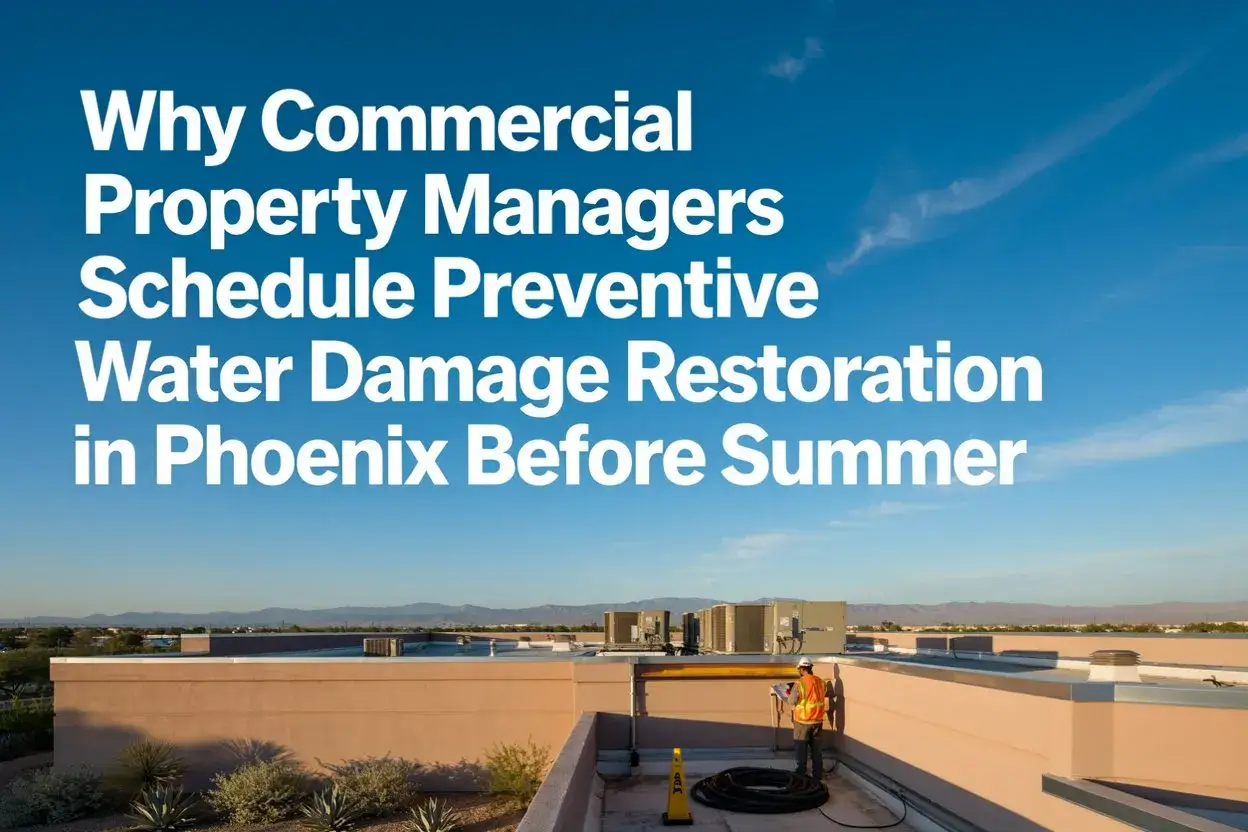
Why Commercial Property Managers Schedule Preventive Water Damage Restoration in Phoenix Before Summer
Every spring in Phoenix, commercial property managers face a familiar challenge. As temperatures climb and summer approaches, the risk of water damage increases in office buildings, retail centers, and multi-tenant complexes. The city’s unique climate—with its dry heat followed by the arrival of intense monsoon storms—creates a perfect storm for hidden leaks, roof failures, and burst pipes. Waiting until water damage is visible can lead to business disruptions, costly repairs, and tenant complaints. Proactive managers schedule preventive water damage restoration before the summer heat and storms arrive, ensuring properties remain protected and tenants stay satisfied. Early intervention addresses vulnerabilities before they become emergencies, saving both time and significant expense.
Monsoon Season Preparation for Phoenix Commercial Real Estate
Monsoon season in Phoenix brings sudden, heavy rainfall and strong winds that test the integrity of every commercial property. Managers often arrange for roof membrane inspections and gutter cleaning as part of their preparation. These services target common weak points—such as clogged drains and aging sealants—that can fail under the weight of pooled rainwater. A thorough inspection can identify roof seams that may split or flashing that has degraded since last summer, both of which are frequent sources of leaks during the first heavy storm.
Preventive maintenance also includes checking window seals and exterior wall coatings, which are especially vulnerable to wind-driven rain. By scheduling commercial Water Damage Restoration in Phoenix before monsoon season, property managers can take advantage of dry weather to complete repairs and waterproofing tasks. Information on monsoon season flood preparation highlights the importance of addressing drainage and building envelope weaknesses early.
These pre-summer efforts not only minimize the risk of costly flood-related repairs but also help properties remain insurable. Insurers may require documentation of recent inspections and repairs, making advance scheduling a proactive step toward maintaining coverage during the most hazardous months.
HVAC Condensate Overflow Risks in Desert Summer Heat
High temperatures in Phoenix mean air conditioning systems run nearly non-stop. This constant operation produces significant condensate—water that forms as air cools—especially in rooftop HVAC units and large-scale systems. When condensate drains clog with dust or debris, water can back up and overflow into ceiling spaces or mechanical rooms. These leaks often go unnoticed until water stains or ceiling damage appear in offices or common areas.
Commercial Water Damage Restoration in Phoenix frequently addresses damage caused by overlooked HVAC maintenance. Routine pre-summer inspections check for blocked condensate lines, cracked drain pans, and corroded connections. By clearing lines and replacing worn components, managers greatly reduce the risk of hidden leaks that can damage insulation, drywall, and electrical systems. For more on why HVAC condensate management is vital in desert climates, technical guides provide in-depth recommendations.
Scheduling these checks before temperatures spike ensures repairs can be performed without disrupting cooling during peak demand, and prevents water damage from compounding the challenges of summer heat.
Cost Savings of Early Leak Detection in Office Buildings
One of the most effective strategies for controlling facility maintenance budgets is early leak detection. Water intrusion, even in small amounts, can cause structural deterioration, mold growth, and expensive tenant relocations if left unchecked. Commercial property managers in Phoenix increasingly use moisture sensors and infrared cameras to pinpoint leaks beneath floors, behind walls, or above drop ceilings—places where conventional inspections may miss warning signs.
When managers schedule Water Damage Restoration in Phoenix before summer, they often request comprehensive leak detection as part of the service. This approach identifies vulnerabilities that might otherwise escape notice until after significant damage occurs. These water damage professionals use specialized drying equipment and restoration techniques to address issues at their source, minimizing the need for invasive repairs later. This preventive step helps property owners avoid the much higher costs of emergency remediation and business interruption.
Investing in early detection and targeted repairs also helps preserve asset value and reduces the likelihood of disputes with tenants over property condition, further protecting the property manager’s bottom line.
Maintaining Business Continuity During Extreme Arizona Temperatures
Business continuity is a top priority for commercial property managers, especially as Arizona temperatures soar. Water damage incidents can force tenants to close temporarily or relocate, resulting in lost revenue and strained relationships. By addressing moisture risks before summer, managers reduce the chance that leaks or floods will disrupt operations during the busiest months.
Advance planning includes coordinating restoration work during off-peak building hours and scheduling equipment access so tenant activities are not interrupted. For multi-tenant facilities, this can mean the difference between seamless summer operations and costly downtime. Preventive water damage restoration also supports emergency preparedness plans, ensuring that mitigation resources are in place if a weather event or mechanical failure does occur.
Staying ahead of seasonal challenges with a scheduled approach to commercial Water Damage Restoration in Phoenix is a practical way for managers to safeguard business interests and maintain strong tenant relations throughout the hottest part of the year.
Conclusion
Scheduling preventive water damage restoration before summer allows Phoenix commercial property managers to address vulnerabilities on their own timeline. The most effective next step is to request a full building moisture assessment and targeted repairs well before the first monsoon storm or heatwave hits, ensuring both asset protection and uninterrupted business operations.