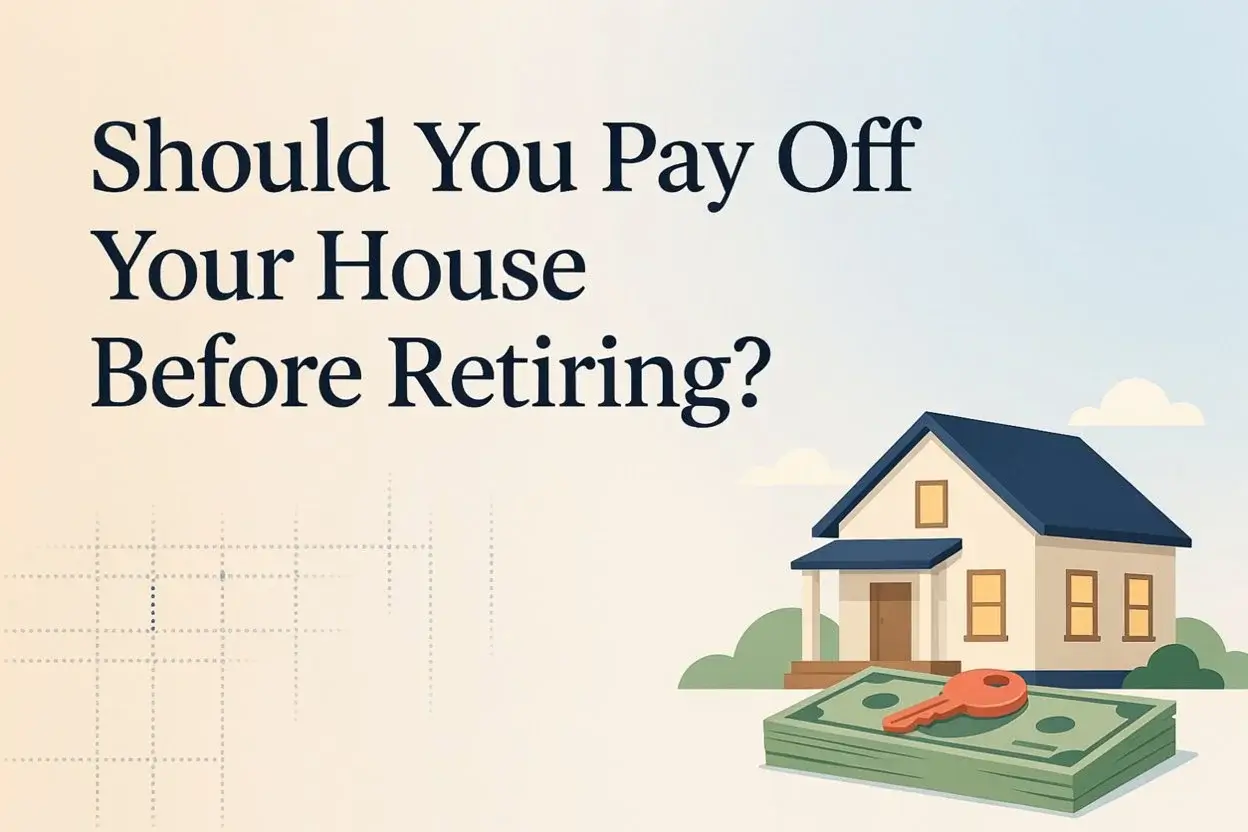
Should You Pay Off Your House Before Retiring?
Anyone who’s paid off their house will tell you that it’s the best feeling in the world when you finally pay off your mortgage and don’t have it hanging over your head month after month.
And they’re not wrong.
Knowing the bank can’t take your home away from you is soothing in itself. It’s peaceful. It’s great to know your spending is lower than ever. It brings about a huge sense of freedom, which is why paying off the house early seems like the obvious choice for most people.
But does ‘safe’ here also equal ‘smart’? Basically, is paying off your mortgage early the correct (financial) move?
You pretty much have two choices here:
- You either pay off your house and have little to no investments, or
- You have a mortgage and a pile of cash growing in the market.
So, which one of these two options is the better one for you?
The unpopular answer – it depends.
Paying off Your Mortgage Early or Not?
Most people focus only on the balance part of the mortgage; after all, it’s the part that changes each month with each payment. This also has to do with the fact that that number is astronomically high and it’s intimidating and scary. It feels like a massive weight that’s tying you down.
But there’s another way to look at this. A different perspective. One that real estate investors use.
Think about this for a second – what do you prioritize when it comes to ordering/buying food? Is it the cost, or is it about focusing on what you ACTUALLY like?
There’s so much more going on here, and if you look at the number only, you have no idea what paying off a mortgage early will do for your finances in the long run.
The first point of talk should be ‘interest rates’ whenever someone’s discussing mortgages. There’s no way around it.
If you’re one of the lucky ones who managed to get a rate below 5%, then you’re already aware of the fact that the loan costs you very little money in today’s world. So, why not put the extra cash in a savings account and earn pretty much the same? Or you could even take a shot at the stock market. But if you have a higher rate, like upwards of 6%, then that’s a different story.
That extra you pay towards the principal will actually save you the money you’d have paid in interest, and that means you’re getting a guaranteed return. Now that’s something that’s pretty impossible to say no to.
The real question, though, is what you’re giving up when you make those extra payments, and it can be a lot.
Let’s say you have this pile of cash.
Your instinct might tell you to get rid of the mortgage ASAP and save yourself from paying interest for the next 15 years. But there’s another, possibly smarter option, which is to put that money in a diversified investment portfolio.
Remember, diversification is key here.
If you take a look at past data, you can see that the stock market has had a return of 7-10% a year over longer periods of time. So, if your mortgage is 4%, you’re losing a decent amount of money by not investing.
| U.S. stock market return rates average at around 7% (annually) after adjusting for inflation which often exceeds typical mortgage rates. – U.S. Securities and Exchange Commission |
Of course, the past data is from the past, and there’s no guarantee that you’ll get the same return now. But that’s how it is with the stock market. It’s a hard decision to make because you simply don’t know what’s going to happen.
When you factor in retirement, the whole thing changes.
If you still have, say, 20 years until you retire, then time is your friend. It’s okay if you start to invest because there’s plenty of time to ride out the downturns, and those WILL happen sooner or later. On the other hand, if you have 5 years left, then, well… You don’t have this luxury.
We can’t forget liquidity, either, and this is pretty confusing for a lot of people.
Let’s say for a moment you’ve decided to make an extra payment on your mortgage this month. That money’s gone now, but it’s part of your home equity, which is good.
| Home equity falls under illiquid assets. This is because the capital is tied to the property and can only be accessed by selling the property or by borrowing against it. – Consumer Financial Protection Bureau |
Of course, you can’t get it back until you sell the house or take out a new loan. And that part isn’t ideal because what if you have a medical emergency or your car breaks down? Where do you get the money to cover such surprises?
Where you live has an effect on this conundrum, too.
If you live in Florida, you spend a lot more money on insurance than someone living in Illinois, so that’s definitely something to think of. Cash-out refinancing and/or debt consolidation, such as Haven mortgage solutions or any similar financing option offered by a business that specializes in such services, can help out here and make the math make sense.
Conclusion
So, when do you pay off your mortgage, and should you pay it off early?
As you’ve seen, a lot goes into the answer to this question, from interest rate to how much time you still have until you retire. This is a huge decision, which is why a single article you read online can’t tell you what to do.
Sit down, put whatever you can on paper, and see what makes sense for your situation.
And remember that taking a little risk here and there can earn you a good deal of money.