
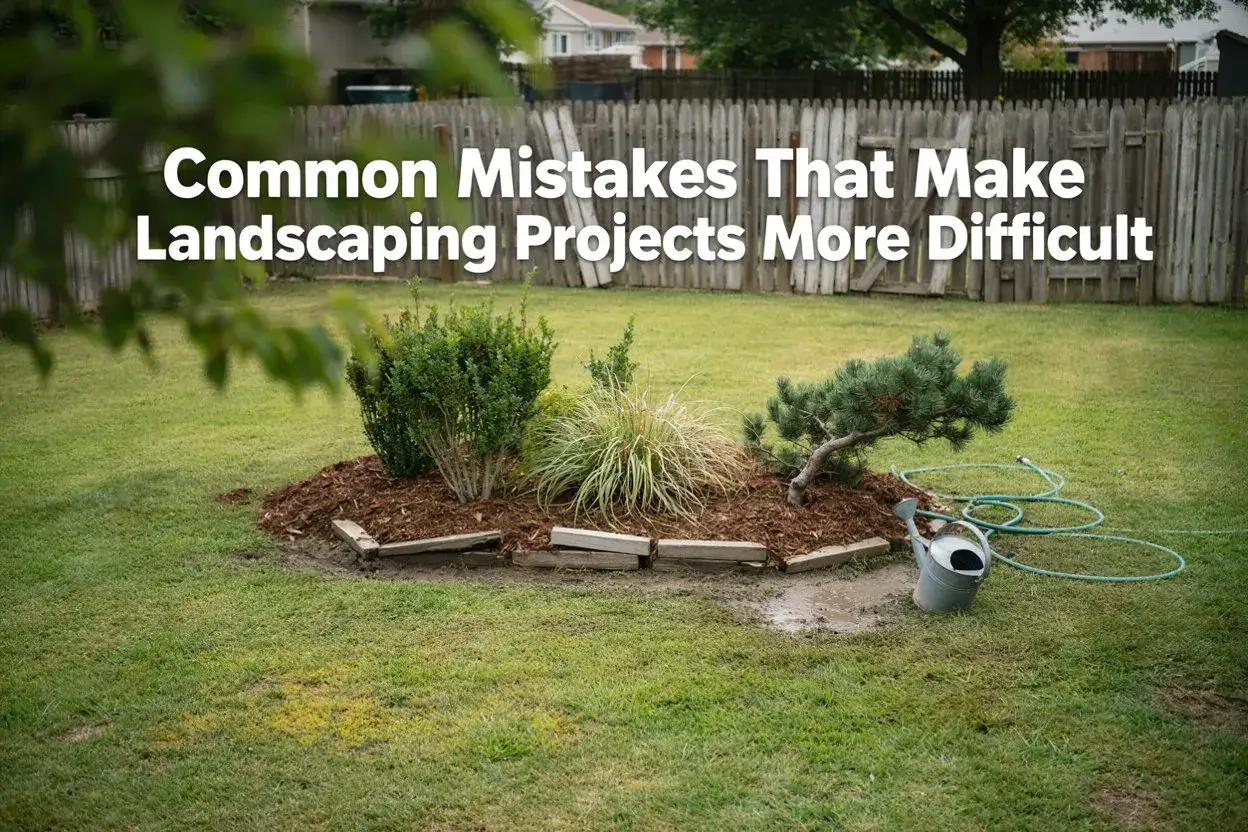
Common Mistakes That Make Landscaping Projects More Difficult
Landscaping can be thought of as an easy task at first glance. Perhaps, one may consider clearing his overgrown yard or constructing a patio in the same yard, creating some flower gardens, or simply putting his outdoor space to better use. However, while starting the project, one may encounter additional costs, delays, and frustrations from small mistakes he may have made.
The challenge here lies in the fact that landscaping entails much more than simply planting certain types of vegetation and constructing paths in particular parts of the outdoor space. The soil condition, drainage, amount of materials, and order in which things should be done are some of the many aspects that need to be considered.
1. Starting Without a Clear Plan
It’s easy to get excited about a landscaping project and start buying plants, paving materials, or outdoor furniture before working out the layout. Unfortunately, this can lead to a yard where things don’t quite fit. A garden bed might take up too much space, a walkway may end up in an awkward spot, or there may not be enough room for the seating area you had in mind.
A simple plan can help avoid these problems. Start by looking at what is already in the yard, including trees, fences, walkways, and existing garden beds. Then decide which features you want to keep and where new ones should go.
Think about how you actually use the space, too. If you enjoy having friends and family over, you might want a larger patio with comfortable seating. If gardening is more your thing, you may prefer to leave more room for planting beds.
Making these decisions before work begins helps you avoid changing the layout once you’ve already spent money on materials.
2. Ignoring Soil and Drainage Problems
Not every yard has the right conditions for landscaping straight away. Some have heavy clay soil that holds too much water, while others have sandy ground that dries out quickly. Compacted soil can also make it difficult for plants to establish healthy roots.
Drainage is another thing that’s easy to overlook. If water collects in certain parts of the yard after heavy rain, simply adding plants or installing a patio won’t solve the problem. In fact, it could make things worse.
Before starting, pay attention to how water moves across the property. Check whether certain areas stay wet for days or whether rainwater runs toward the house. Depending on what you find, you may need to improve the grading, loosen compacted soil, or install drainage features.
The EPA’s landscaping tips offer practical advice on choosing suitable plants, improving soil conditions, and making better use of water. These are useful things to consider before deciding what to plant and where.
3. Underestimating Materials and Waste
Landscape projects have a tendency to make a lot more mess than many people realize. The removal of old plants, digging up dirt, removing rocks, and general preparation of the landscape can create a lot of waste.
Without proper planning, this task will easily fall into chaos. There may not be sufficient storage space to accommodate the additional materials, or the process may come to a grinding halt as more waste management is organized.
It’s worth thinking about waste management before the project begins, especially if you’re planning major changes to the yard. For larger jobs including excavated soil, gravel, or construction debris, contractors may use equipment such as self-dumping hoppers to collect loose materials and make unloading easier. Having a practical way to handle these materials can keep the work area clearer and reduce unnecessary handling.
You should also calculate how much gravel, soil, mulch, or other materials the project will need. Ordering too little can delay the work, while ordering too much leaves you paying for supplies you won’t use.
4. Choosing Plants Based Only on Appearance
It’s tempting to choose plants because they look good at the garden center. But a plant that looks healthy in a shop may not do so well once it’s in your yard.
Sunlight, soil type, rainfall, and available space all affect how plants grow. Some flowers need several hours of direct sunlight, while others do better in shaded areas. Certain shrubs also need more room than homeowners realize, especially once they reach their full size.
Observe your backyard before purchasing anything and pay attention to areas with maximum sunlight exposure, areas that have a tendency to retain water, and the areas that dry up quickly.
It’s also important to check how large trees and shrubs will become. A small tree might look perfectly placed next to a walkway when it’s first planted, but its roots and branches could cause problems a few years later.
Choosing plants that suit the conditions in your yard makes them easier to care for and reduces the chances of having to replace them.
5. Not Thinking About How the Space Will Be Used
The yard could be filled with wonderful plants, a brand-new patio, and beautiful pathways, yet it could remain hard to navigate. This occurs because each element of the design is considered a separate item from the others.
For example, a patio might look great, but it doesn’t have a connection to the house. Garden beds could be placed so close to seating areas that there’s not much room to move around. Even simple things like getting a lawn mower to the back of the yard can become difficult if access hasn’t been considered.
It’s helpful to think about how you’ll use the space throughout the year. If you enjoy having friends over, you may want a comfortable seating area with enough room for people to move around. Looking at different backyard entertaining ideas can also provide inspiration for arranging seating, walkways, and other outdoor features without making the yard feel crowded
Before settling on a layout, think about what you’ll do in each part of the yard. Consider where people will walk, where outdoor furniture will go, and whether you’ll have enough room to maintain the garden.
Drainage should also be part of these decisions. Paved areas change the way rainwater moves through a property, so their placement and slope matter. The EPA’s information on stormwater runoff explains how landscaping and developed surfaces can affect water movement.
A little planning can make the completed space much more comfortable and easier to look after.
6. Rushing Through Site Preparation
As soon as homeowners see progress in their project, they want it to be completed as soon as possible. But sometimes, rushing the preparation process may result in some unexpected complications.
Take a patio, for example. If the ground underneath hasn’t been properly prepared, the paving may start to shift or become uneven. The same goes for garden beds. Planting directly into poor or compacted soil can make it harder for roots to grow.
Order is important as well. Hole, grading, and drainage work should be done prior to planting and finishing work. Otherwise, it could result in disturbing areas that are already completed.
It is much better to spend a little bit more time at the initial stage than to make corrections later. Moreover, inspecting the previous stage helps to identify minor problems in advance.
Conclusion
A landscaping project doesn’t have to become complicated, but overlooking a few important details can make the work harder than it needs to be. Poor planning, drainage issues, incorrect material estimates, and rushed preparation are all common sources of frustration.
Taking time to understand the yard, choose suitable plants, and organize the work before getting started can make a noticeable difference. The result is a space that not only looks good but is also practical to use and easier to maintain.