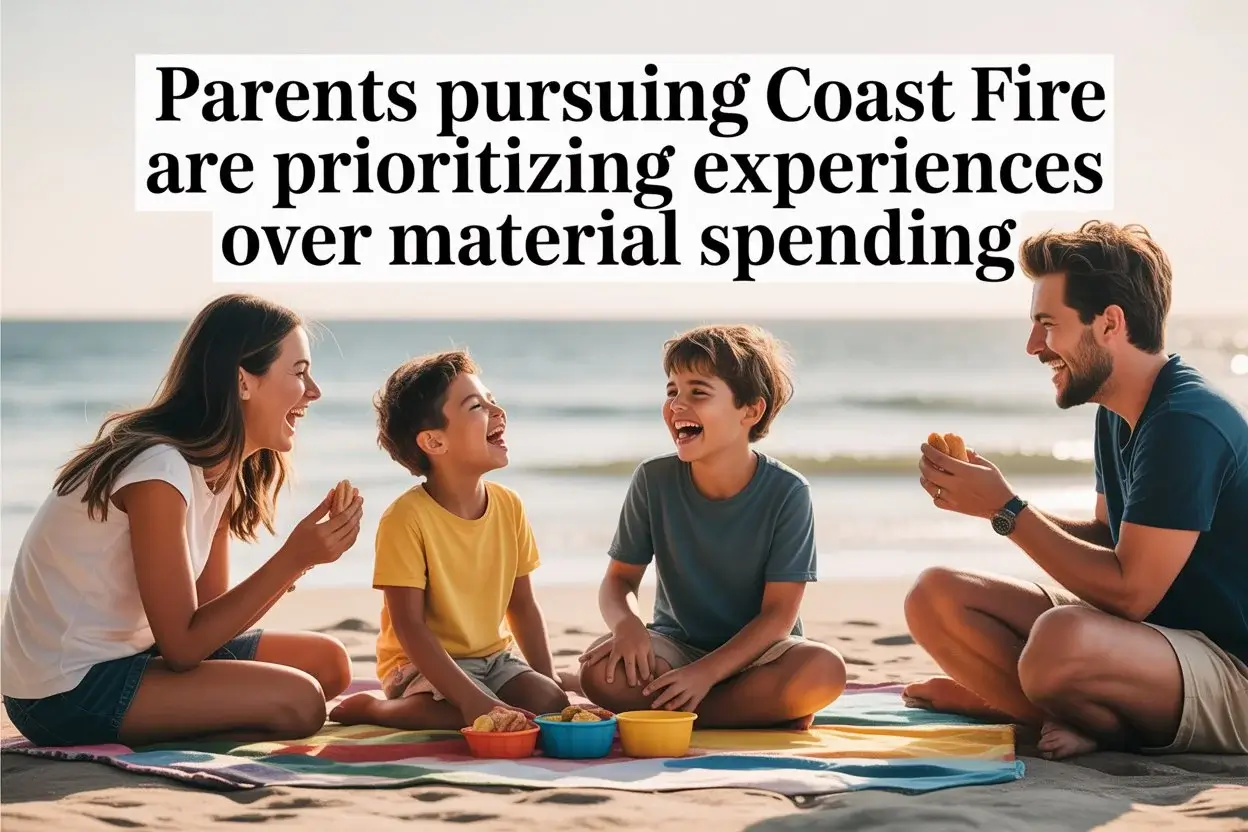
Parents Pursuing Coast FIRE Are Prioritizing Experiences Over Material Spending
Once you’ve run the Coast FIRE numbers as a family, a lot of the default parenting spending starts to look strange. The Amazon impulse buys, the third scooter, the closet full of clothes that fit for three months. Parents who’ve committed to coasting toward retirement are quietly rewriting the unspoken script that says good parents buy a lot of stuff. The new script puts most of the discretionary spend toward things kids actually do, learn, and remember, and the result is usually a happier household and a faster path to the Coast FIRE number.
The honest math on kid stuff
Children’s stuff depreciates faster than almost any other consumer good. The bouncer that cost $90 is worth $15 on Facebook Marketplace eight months later. The trampoline goes for half price by the end of summer. None of this is news to any parent, but Coast FIRE parents tend to actually internalize the math. Spending the same money on swim lessons, a season of soccer, or a weekend camping trip leaves a kid with a skill or a memory instead of an object that will be in a yard sale by next spring. The dollar-for-dollar return on experience spending is genuinely lopsided in its favor.
Swimming as the foundational skill worth paying for
If there’s one experience category most parents in this camp protect in the budget, it’s swimming. The reason is partly safety. Drowning remains one of the leading causes of accidental death in young children, and swim ability is the single biggest mitigating factor. The reason is also partly that swimming opens up everything else. A confident kid in water is a kid you can take to lakes, pools, hotel trips, and beach holidays without the constant low-grade vigilance. Structured programs like kids’ swim lessons move children from splashing to actual stroke work in a way that informal pool time rarely does, and the price per session is modest compared to the long arc of what it enables.
Skateboarding as the underrated outdoor experience
The activity that often gets overlooked in the experience-over-stuff conversation is skateboarding. It’s cheap to start. A board, a helmet, and a pair of shoes is well under $200, and the equipment lasts for years. What surprises most parents is how much it pulls kids off screens and into the world. Public skate parks are some of the most social third places left for children, and the learning curve creates a steady drip of small wins that builds genuine physical confidence. Options like Go skate programs shorten the painful early stretch by giving kids actual coaching instead of YouTube tutorials and parking lot trial-and-error. The kids who stick with it long term tend to be the ones who tried it with a coach first.
Travel and shared adventures as long-tail memory builders
The other category that Coast FIRE parents tend to overweight is family travel, but rarely the expensive kind. National parks, road trips, off-season cabin rentals, and visits to extended family generate the kind of memories children genuinely keep into adulthood. A weeklong camping trip costs less than a week of full-day camp and produces stories that surface at dinner tables fifteen years later. The financial logic and the parenting logic point in the same direction here, which is rare enough to be worth noticing.
Setting a sustainable experiences budget
The trap with reframing spending toward experiences is that experiences can run up the same kind of bill that stuff used to. Three sports at once, premium swim clubs, and weekly family outings will quietly outpace what was being spent on toys. The fix most Coast FIRE parents land on is picking one or two experience categories at a time and going deep on them, rather than sampling everything. Depth tends to produce more durable skills, closer friendships, and ironically lower costs per hour of joy than breadth ever does.
What the kids actually remember
Ask any adult what they remember from their childhood and the list is almost entirely activities, places, and people. The toys barely register. Coast FIRE parenting just makes that obvious math the basis for how the family budget gets built, and the side effect of investing more in experiences than in objects is a retirement timeline that arrives a little sooner.