
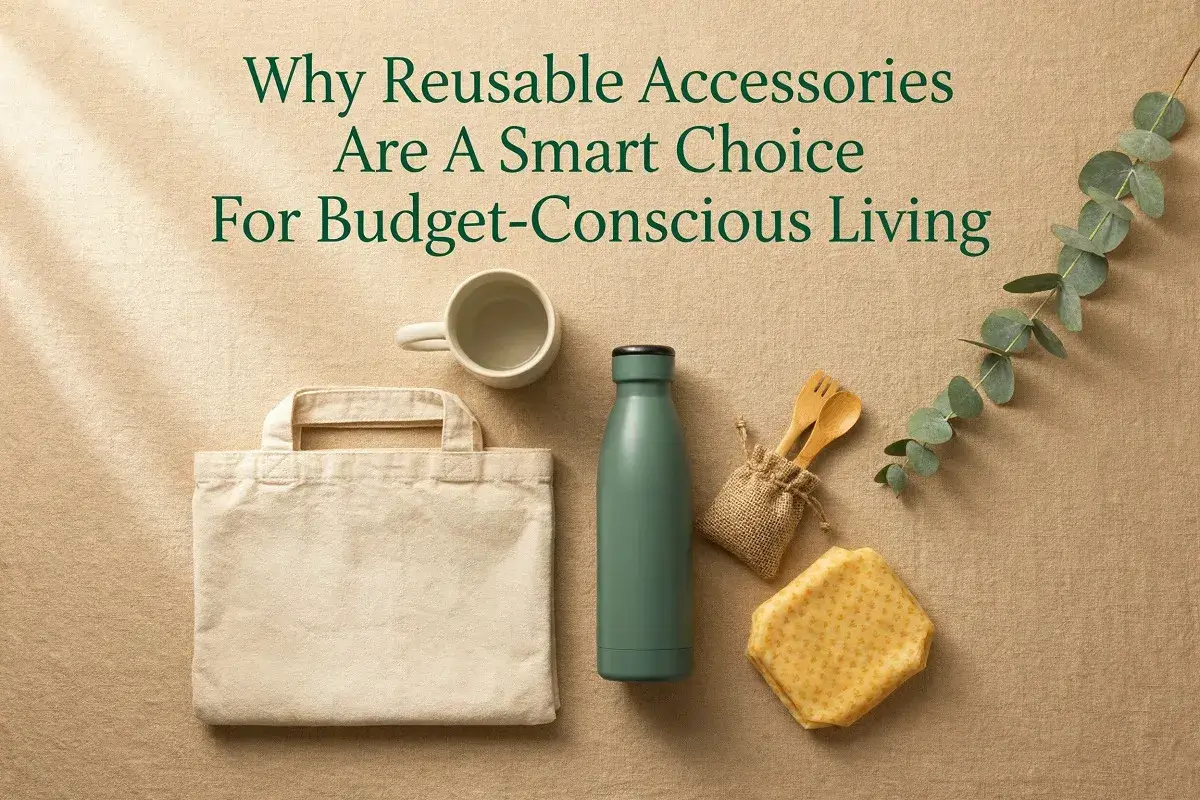
Why Reusable Accessories Are A Smart Choice For Budget-Conscious Living
Daily spending behavior is a large factor in an individual’s financial situation. Larger expenditures like housing, transportation and health care are usually the focus of attention, however, smaller daily expenditures can be a major factor in determining whether or not individuals will be able to save enough money for their long-term goals. Items like clothing, fashion accessories, travel gear, and other common household goods might appear to be relatively cheap when purchased individually; however, if these same items need to be replaced on a regular basis then those expenses could ultimately reduce the amount of money available to the household to help meet its goal of saving.
One way to control the cost of these items is to choose reusable accessories. Accessories made to be used multiple times will help you avoid buying too many items that you don’t really need, minimize your waste and give you more for your money in the long run. Making conscious decisions on what to buy each day can make up a small part of a larger, long-term plan for saving money toward achieving financial freedom.
Understanding the Value of Reusable Accessories
The everyday use of items that can be used again and again as opposed to being thrown away after one or two uses is called reusable. Some examples of reusable accessories include fabric grocery store shopping bags, cotton handkerchiefs, scarves, bandanas, reusable water bottles, and durable travel organization products.
The primary benefit of buying these types of products is usually not just because they are cheaper at the time you buy them, but because you can use them for many years. When you buy a good quality product that has a number of different uses, it will probably be more valuable than if you purchased a number of cheap products that you had to replace regularly.
When reviewing these types of products, there are several things that a consumer needs to look at in order to decide if the product will last long enough for them to use it regularly. The first thing a consumer should do is check out the quality of materials used in the product. Then, they should find out how durable the product is. Next, they should see how easy the product is to clean. Finally, they should find out what else the product can be used for (or if it is versatile).
How Reusable Accessories Help Reduce Everyday Expenses
The purchase of disposable and/or limited use products can be an unnecessary cost. For instance, individuals who routinely buy disposable shopping bags, low-quality accessories, and/or short-term travel products are likely to spend more than they anticipate on these types of products throughout the course of a single year.
Alternative options that are reusable can decrease on-going expenses. For example, a long lasting shopping bag can take the place of many single-use plastic bags. Additionally, a machine-washable cotton handkerchief could be used instead of purchasing single-use tissues over and over again, for appropriate daily activities.
However, the financial benefit will depend on how often you actually use the item. If you purchase a reusable product that you rarely use, there won’t be any significant savings. Your goal should be to find a functional replacement for a current expense and not just accumulate more items.
Calculating the cost each time you use a product can help you understand how much you may get from using that product. When calculating the cost of a product, you divide the purchase price of the product by the estimated number of uses. This will provide you with a better understanding of the value that the product can offer. This can help consumers look at products and determine if they are worth the money they spend on them.
Versatility: Getting More Value From a Single Purchase
Another benefit to using budget-friendly accessory products is versatility. Budget-friendly products can often be used for more than one purpose, which reduces the need to buy additional products to use in various circumstances.
For example, if you use a bandana as an accessory to your outfit, then depending upon what type of fabric and how large the bandana is, you could wear it as a head covering; around your neck; or as a wrist detail. You can use a bandana for many different types of activities, such as outdoors, traveling, or just every day.
As a consumer who wants to explore various types of fabrics for bandanas cotton and satin you may view some of these examples on a retail website like 4inbandana. However, the larger point is that when an accessory’s design and materials allow it to be used in multiple ways other than what was initially intended, then the usefulness of that accessory extends beyond its primary function.
In the same way, the same idea would also apply to scarves, tote bags, and lightweight organizing systems made from fabric. Instead of buying several individual specialized accessory products, people should consider selecting product options that are versatile enough to use with many different outfits, in various types of activities, and on numerous types of occasions.
Reusable Accessories and Mindful Consumption
The concept of being budget conscious goes beyond just minimizing your spending. It requires you to know how you spend money, and to make a distinction between what you truly need and what you simply want.
Many people buy new clothing and accessories frequently because of fashion trends, advertising campaigns, and social media. Oftentimes, people will purchase replacement accessories even if they are still working properly. This is often done to stay up-to-date with current styles.
Mindful consuming takes a different perspective on purchasing. Prior to purchasing a product, consumers may consider if they already possess an identical product, how often they plan to use the product, and if the purchase aligns with their genuine requirements.
Having a small collection of functional accessories will help you make simpler daily choices. It will reduce the amount of junk in your life, simplify the organization of your items, and assist you in being more deliberate with how you spend your cash.
The Environmental Benefits of Reusing Everyday Items
In addition to being cost effective, choosing reusable items may also be an effective way to minimize waste.
Many times, when you choose disposable items, they will have to be manufactured, packaged, shipped, and then disposed of multiple times. When you select durable alternative items, you can help decrease the need to continually replace items; however, the total amount of damage done to the environment by each product will depend on how that item was made, where it went during its lifetime, how well it was kept up, and ultimately what happened to it at the end of its usefulness.
Fabric accessories have a lot going for them in terms of practicality since most can be washed, and they’re also generally simple to store. When you take care of your fabric accessories by using the appropriate washing procedures and repairing small issues as soon as possible, you will be able to get a longer use out of those products.
Consumers should also refrain from purchasing unneeded reusable items under the guise of being environmentally conscious. In many cases, it is better to consume what you have first prior to making another purchase.
How to Evaluate an Accessory Before Buying It
When consumers are considering making a purchase, it is important for them to look past how the product appears visually, and what it costs. Consumers have some easy steps they can follow to determine whether a product has the potential to provide more value over time.
- Check durability: Examine the fabric, stitching, construction, and overall quality.
- Consider versatility: Think about whether the accessory can serve different purposes.
- Evaluate maintenance: Determine whether it is easy to wash, store, and maintain.
- Estimate cost per use: Compare the purchase price with its expected frequency of use.
- Avoid impulse purchases: Take time to decide whether the item addresses a genuine need.
These factors may allow you to avoid making unnecessary purchases and decrease the probability of buying goods that will soon go unused.
Practical Ways to Incorporate Reusable Accessories Into Daily Life
You don’t have to alter your lifestyle to develop sustainable spending habits. A few minor changes will allow you to incorporate reusable items into your daily routine.
Review your current possessions. Find accessories that you could use again when going grocery shopping, commuting to work/school, traveling, or as a way to express yourself through fashion. Store the most often-used accessories in an easy-to-reach location; this will help make using these accessories a habit.
Equally important is proper maintenance. Preservation of the utility of fabric accessories can be achieved by properly washing according to the accessory’s care label, storing the accessory in an appropriate manner, and making repairs to small areas of damage.
Select multi-purpose gear to be used for multiple purposes. This will allow you to pack less and save money on extra purchases during your travels.
Why Small Spending Choices Matter for Financial Independence
The achieving of financial independence is most likely going to come from consistent and thoughtful financial choices rather than one big change. Consistently saving money, keeping track of your spending so you are not wasting money on things you don’t need, and consistently making investments that will help you achieve your long-term goals are what will make you financially successful.
Reusable accessories are also consistent with this approach as they allow households to become more conscious when buying products. Even though a single reusable accessory does not have much financial benefit, making a habit out of avoiding unneeded replacement purchases can provide extra funds to spend on other things that are more important.
In addition to supporting overall financial planning, the habits outlined above will assist individuals who are implementing a “Coast FIRE” approach. Spending less on everyday items can help build emergency funds, fund retirement accounts, and achieve other long-term financial goals.
Final Thoughts
Reusable accessories provide a practical solution for combining daily practicality with smart money management. The benefits of these items come from their long-lasting qualities, versatility and replacement of multiple purchases with regular use.
Consumers with a tight budget may want to focus on more than just price when shopping. They may also consider the life expectancy of a product, and how often they expect to use that product.
In the long run, having financial discipline is not about having to sacrifice your own sense of fashion or the everyday comforts you enjoy. Rather, it is about making smart buying decisions, utilizing what you already have in an efficient manner, and allocating your resources to prioritize those things that are most important to you. These basic principles will help you develop a more organized lifestyle and build a solid base for your future financial independence.