
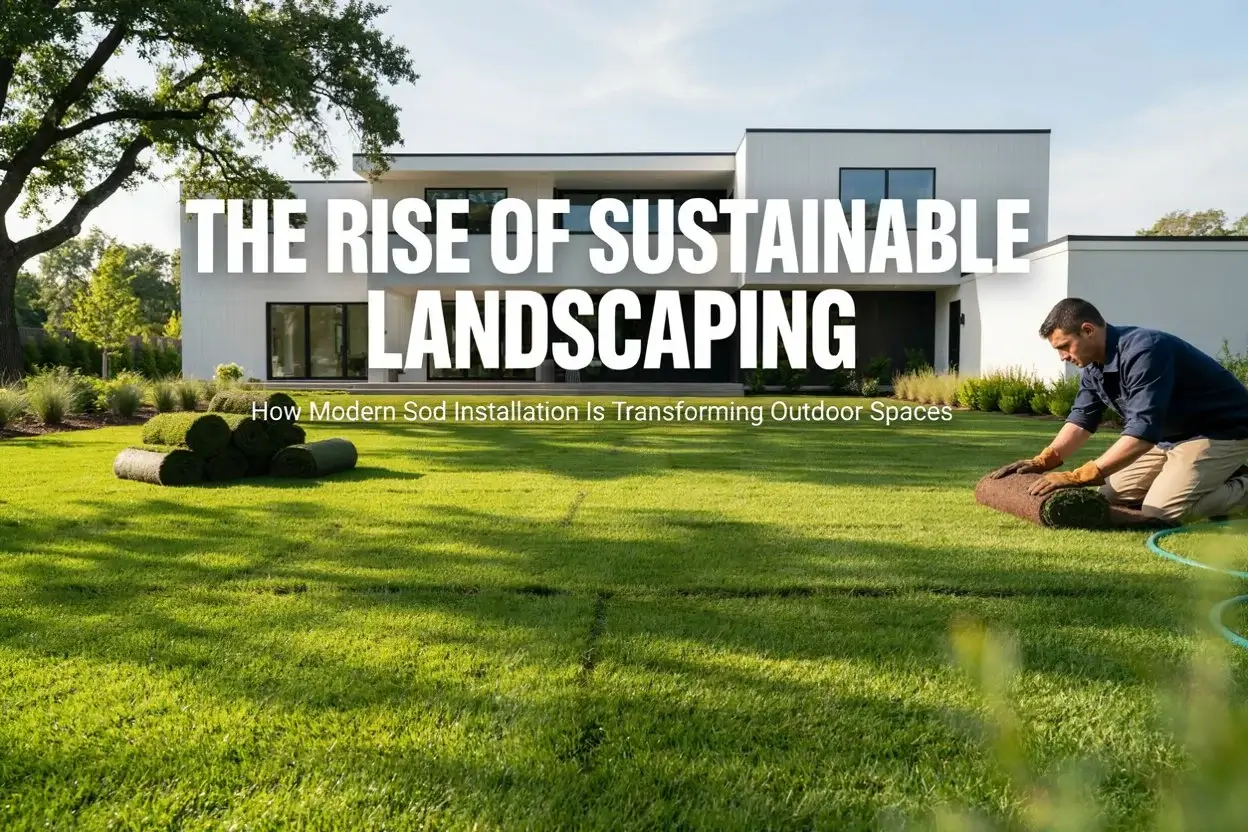
The Rise of Sustainable Landscaping: How Modern Sod Installation Is Transforming Outdoor Spaces
For readers tracking their path to financial independence, the biggest expenses in a household budget are rarely the obvious ones. Mortgage payments and grocery bills get all the attention, but recurring costs like water bills, lawn care contracts, and landscaping repairs quietly chip away at savings rates over decades. If you are modeling your Coast FIRE number or stress testing a retirement budget, the yard outside your window is actually part of that math, whether you have thought about it that way or not.
This is why the shift happening in residential landscaping matters to anyone building long term wealth through homeownership. Sustainable sod installation is no longer a niche upgrade for eco conscious buyers. It has become a practical cost control strategy that reduces water usage, cuts maintenance labor, and protects property value, all of which feed directly into the kind of expense tracking and net worth growth that FIRE minded households care about. Understanding what has changed in this industry over the past few years helps explain why smart landscaping choices now belong in the same conversation as index funds and emergency funds.
The Shift to Drought-Tolerant Sod: How Modern Varieties Are Redefining Sustainability
A few years ago, most residential sod options were bred primarily for color and density, with water efficiency treated as an afterthought. That has flipped. Breeders now prioritize root structure and drought tolerance first, producing hybrid varieties that can survive extended dry spells without the constant irrigation of older turf required. The practical result is grass that stays green through summer heat while demanding far less from a homeowner’s sprinkler system and water bill.
Recent industry data shows these modern hybrids use up to 70 percent less water than traditional natural grass varieties, a figure that would have seemed unrealistic just five years ago. That reduction is not a marginal tweak, it is a fundamental change in what a lawn costs to maintain over its lifetime. Homeowners in hot, dry climates are noticing the difference on their utility statements within the first season of installation.
For readers in the Central Valley specifically, this shift has real teeth. Regional conditions, including long dry summers and clay heavy soil, have historically made lawn maintenance expensive and inconsistent. Working with local specialists such as SodLawn gives homeowners access to sod varieties bred and farmed with these exact regional stresses in mind, rather than generic turf pulled from a distant supplier.
Smart Irrigation and Technology Integration: The New Standard in Sod Installation
Sod installation used to be a standalone project, disconnected from the rest of a home’s systems. That is changing quickly. Installers now routinely pair new sod with smart irrigation controllers that adjust watering schedules based on real time weather data, soil moisture sensors, and even seasonal evapotranspiration rates. This integration means the grass and the irrigation system are designed together rather than bolted on separately after the fact.
The financial logic here is straightforward. A smart controller paired with drought tolerant sod compounds the water savings rather than simply adding to them, which matters for households trying to lower fixed monthly costs. Market data reflects this trend directly, with 92 percent of installation requests in 2025 coming from homeowners rather than commercial clients, a sign that residential buyers are driving demand for these more efficient, tech integrated systems.
Environmental Benefits of Modern Sod Installation: Carbon Sequestration, Erosion Control, and Cooling Effects
Beyond water savings, sod plays a measurable role in broader environmental outcomes that homeowners rarely consider when comparing landscaping options. Turfgrass areas across the United States sequester an estimated 26.4 million tons of carbon dioxide annually, a contribution to climate mitigation that most people never associate with their own front yard. A properly maintained lawn also stabilizes soil, reducing erosion during heavy rain events that can otherwise wash away topsoil and damage foundations.
There is also a cooling effect that matters more each year as summers grow hotter. Grass surfaces stay significantly cooler than concrete, asphalt, or artificial turf during peak heat, which reduces the urban heat island effect and can even lower cooling costs for nearby structures. A single 25 square foot patch of healthy lawn produces enough oxygen to meet one adult’s daily needs, a statistic that puts the ecological value of even a modest yard into perspective.
The Rise of Fast-Track Lawn Solutions: Why Fresh, Farm-Direct Sod Is Transforming Modesto Landscapes
Perhaps the most visible change for homeowners is speed. Where seeding a new lawn once meant months of patchy growth, bare spots, and careful watering just to get coverage, farm-direct sod delivery now allows a fully established lawn to be installed in a single day. This fast-track approach has become especially popular in growing regions where new construction and landscape renovations are happening at a rapid pace.
Freshness matters enormously here, since sod cut and delivered within 24 hours roots faster and survives transplant stress far better than product that has sat in a warehouse or truck for days. This is part of why local, farm-direct suppliers have gained ground against big box retailers who cannot match that turnaround time. It is worth noting that this demand exists alongside a booming artificial turf market, which grew from 3.92 billion dollars in 2024 to 4.18 billion dollars in 2025, a 6.6 percent increase that shows homeowners are weighing every option on the table before choosing real sod’s environmental advantages.
| Metric | Figure |
|---|---|
| Carbon Sequestration by U.S. Turfgrass | 26.4 million tons of CO2 annually |
| Water Reduction with Modern Hybrids | 70% less water consumption vs. traditional grass |
| Residential Sod Installation Demand | 92% of installation requests from homeowners |
| Artificial Turf Market Growth | $3.92B (2024) to $4.18B (2025), 6.6% annual growth |
| Oxygen Production per 25 sq ft Lawn | Enough daily oxygen for one adult |
Taken together, these shifts point to a landscaping industry that has quietly matured into something worth budgeting for intentionally, rather than treating as an afterthought. Drought tolerant varieties, smart irrigation, measurable environmental returns, and faster installation timelines all reduce the long-term cost and hassle of maintaining a lawn. For anyone building a financial plan around lower expenses and higher net worth, that is a home improvement decision that actually pays for itself over time.