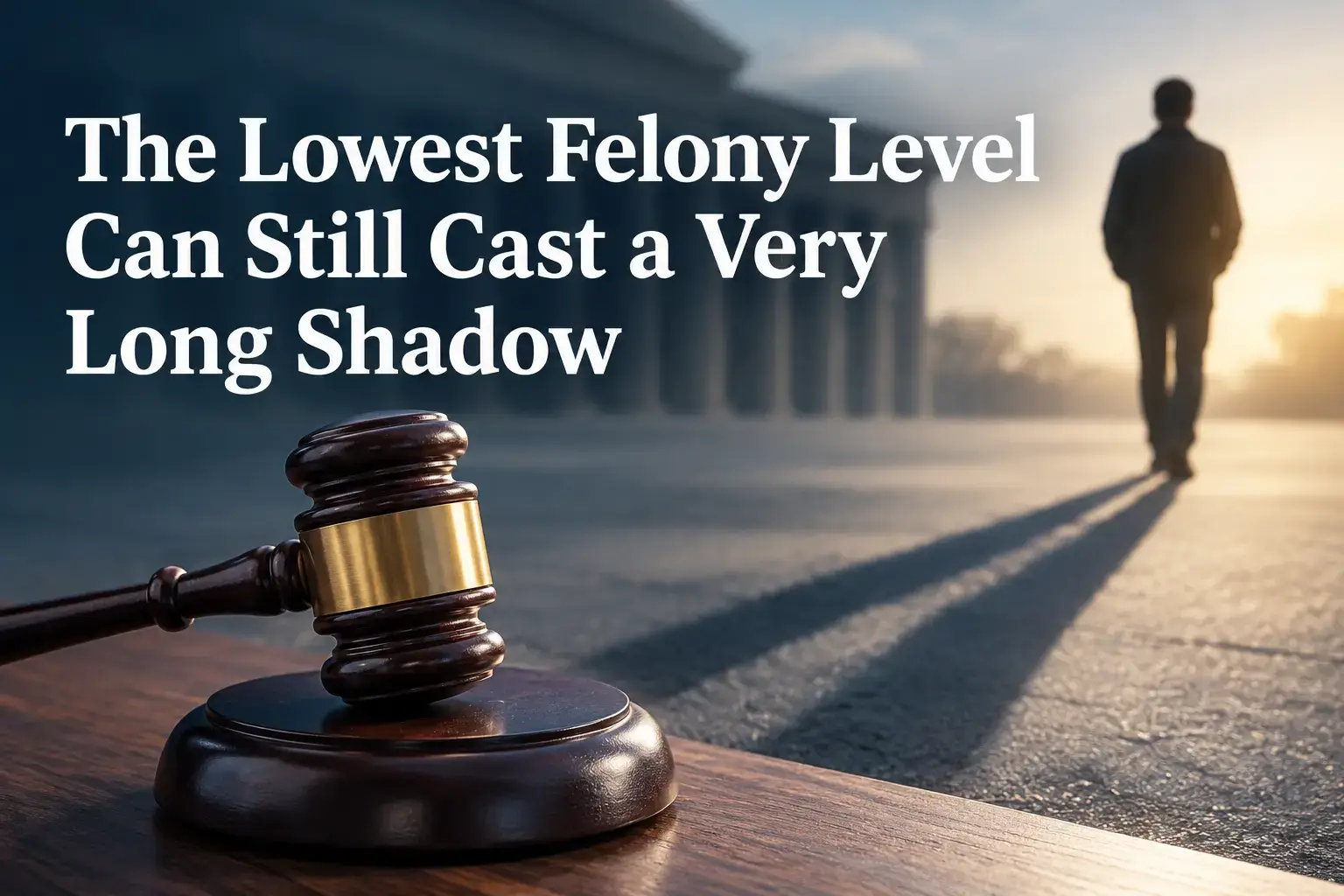
The Lowest Felony Level Can Still Cast a Very Long Shadow
Lowest sounds reassuring. It’s the word people cling to when they first hear a charge described as Indiana’s least serious felony level. Surely the bottom rung can’t be that bad. Unfortunately, the bottom rung is still on the felony ladder, and the climb down can take years.
Indiana ranks felonies from Level 1, the most severe, down to Level 6. That ranking makes Level 6 sound minor, and in sentencing terms it is the lightest felony tier. But the label felony carries weight that a number on a chart can’t capture.
The consequences reach far past a courtroom. Jobs, apartments, licenses, and even how people see themselves can all be affected. Knowing what’s really at stake, both inside and outside the justice system, helps people make clearer decisions from the moment charges are filed.
What an Indiana Level 6 Felony Actually Means
Level 6 sits at the bottom of Indiana’s felony scale. Offenses at this level can include certain theft, drug possession, and other charges, depending on the facts and the statute involved. It’s a serious classification, even though it’s the least severe felony category.
Under current Indiana law, a Level 6 felony conviction can carry a sentence between six months and two and a half years, with an advisory sentence of one year. Courts may also impose a fine of up to $10,000. Those numbers are the starting framework.
Judges don’t simply pick a number from a hat. They weigh aggravating and mitigating factors, consider criminal history, and decide whether time is served in prison, jail, community corrections, or on probation. The range sets the boundaries, while the details determine where a sentence lands.
How a Conviction Can Affect Life Outside Prison
Background checks don’t care that it was the lowest level. Many job applications ask about felony convictions, and employers may see the record long after any sentence ends. That can close doors in industries that would otherwise be a perfect fit.
Professional licensing can become complicated too. Nurses, teachers, contractors, and others who need state licenses may face reviews, restrictions, or denials depending on the offense and the licensing board’s rules. A conviction can stall a career that took years of training and hard work to build.
Housing applications often ask about criminal history, and some landlords screen out applicants with felony records. Other consequences can include limits on firearm possession and impacts on certain public benefits. These collateral consequences rarely show up in the sentence itself, yet they shape daily life.
Why the Details of the Offense Matter
Two Level 6 cases can look identical on paper and end very differently. Criminal history plays a big role. Someone with no prior record may be treated differently from someone with several earlier convictions, especially at sentencing. Past records follow people into the courtroom.
The circumstances of the offense matter too. Whether anyone was hurt, how much property was involved, and what led to the incident can all influence the outcome. Judges and prosecutors look at the whole picture, not just the statute number on the charging document.
Sentencing rules add another layer. Indiana law sets certain limits on when alternatives are available, and judicial discretion fills in much of the rest. That combination means outcomes vary, and assumptions based on someone else’s case can be badly off target. Every file tells its own story.
Can the Long-Term Consequences Ever Be Reduced?
Sometimes, yes. Indiana law allows a judge, in certain cases, to enter judgment as a Class A misdemeanor instead of a Level 6 felony. That option isn’t available for every offense or every person, and specific exclusions apply. It still makes a huge difference when it fits.
There’s also a path to conversion after the fact. In some situations, a person who completes the sentence and meets strict eligibility requirements, including a waiting period and a clean record afterward, can petition to have the felony converted to a misdemeanor. The process involves a court hearing.
Expungement offers another possibility. Indiana’s record-relief laws may allow eligible people to seal certain convictions after a waiting period. Sentencing alternatives like community corrections or probation can also reduce immediate impact. Eligibility depends on the offense, history, and current law. Fresh starts are possible, though rarely automatic.
Conclusion
The word lowest can be misleading. A Level 6 felony is Indiana’s least severe felony classification, but it can still mean jail time, fines, and a record that follows someone into job interviews, apartment applications, and licensing reviews. That’s a lot of weight for a small number.
The specific details matter enormously. Criminal history, offense circumstances, sentencing rules, and judicial discretion all influence the outcome, and options like misdemeanor treatment or later conversion may be available in some cases. Those options deserve a close look early, before any plea decision locks things in.
A lower classification doesn’t mean lower stakes. Anyone facing a Level 6 charge in Indiana can benefit from talking with a qualified criminal defense attorney who can explain the possible consequences and the options that might reduce the long-term impact. That shadow can be shortened.