Reaching Coast FIRE Doesn’t Mean Every Financial Risk Is Covered
Reaching your Coast FIRE number can feel like crossing a major finish line. Your investments may now be on track to fund retirement through future growth, even without further contributions. But that milestone doesn’t pay today’s bills.
If illness or injury interrupted your earnings, income protection insurance might be one safeguard worth considering. The bigger question is how to stay financially stable now without undermining the retirement plan you’ve built.
Your Retirement Investments Still Have a Different Job From Your Income
A Coast FIRE projection is built around leaving investments to grow until retirement. It isn’t proof that you can stop earning immediately. Housing, groceries, utilities, and debt repayments still need funding in the years before that point.
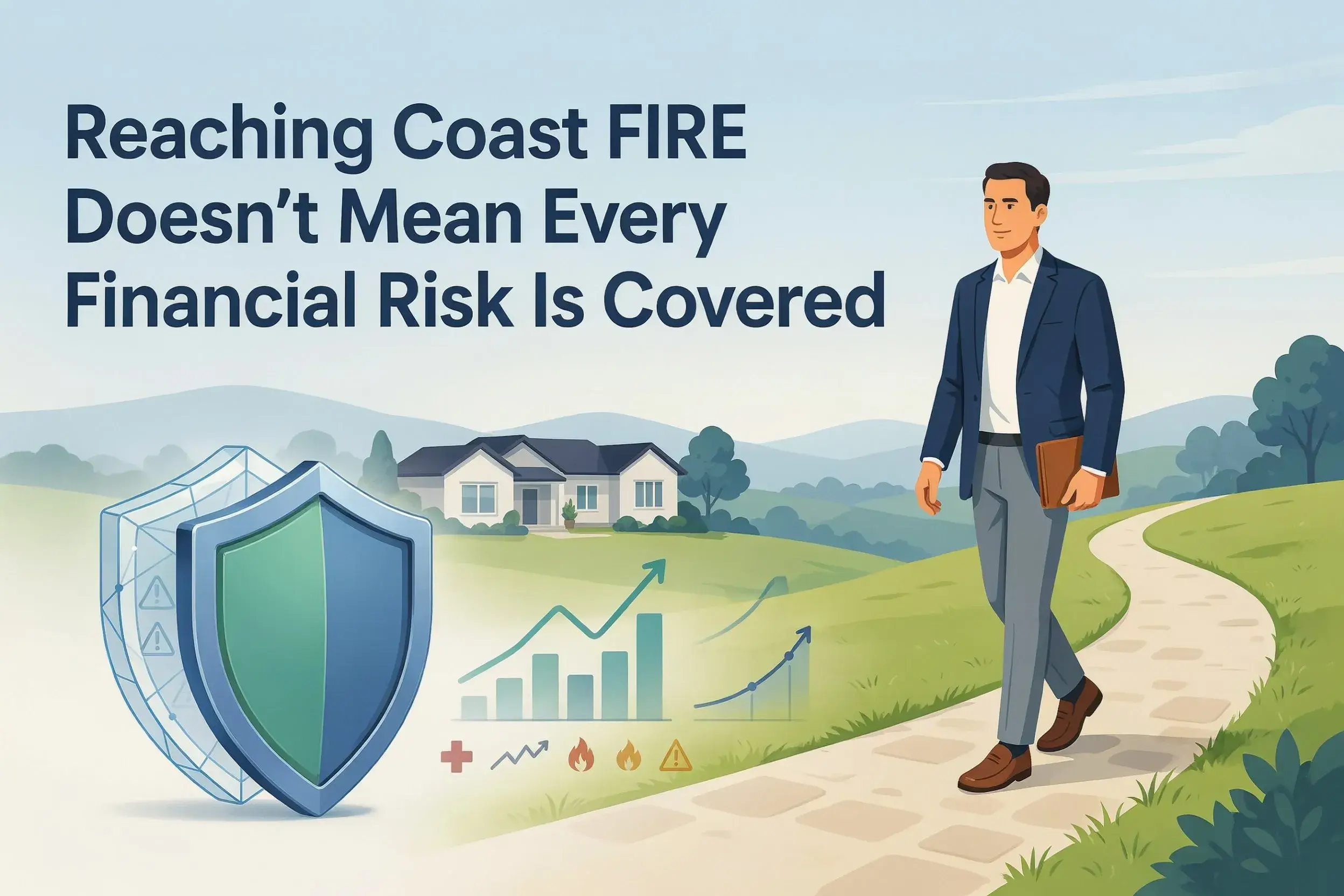
That creates two different financial jobs. Your portfolio is intended to support future retirement spending, while your paycheck supports daily life. Having one on track doesn’t automatically secure the other.
And projections aren’t promises. Investment returns, inflation, and eventual spending may differ from your assumptions, making it especially important to avoid treating long-term assets like an everyday cash reserve.
An Income Interruption Can Affect More Than Today’s Expenses
Imagine needing several months away from work to recover from an injury. Your immediate concern may be keeping up with household expenses, but the financial effects can reach further.
Emergency savings could run down. You might pause contributions you had planned to make, reduce spending, or consider selling investments if accessible cash runs short. Each choice has different consequences, and selling assets early may leave less invested for future growth.
None of this means your Coast FIRE strategy would automatically fail. It means the assumptions behind your original projection could change, especially if an interruption forces you to use money you’d intended to leave untouched.
Build Financial Safeguards Around Different Types of Risk
Rather than expecting your retirement portfolio to cover every setback, identify which resources could help before you need to draw on it. Each layer has a different job:
- Emergency savings: Accessible money for urgent costs and shorter disruptions.
- Workplace support: Paid leave or employer benefits that may help during time away, depending on your arrangements.
- Household flexibility: Expenses you could reduce or other household resources you could rely on.
- Broader safeguards: Financial arrangements that may support eligible longer interruptions to earnings, subject to their terms.
Compare these resources with essential monthly costs and consider when each would actually become available. The aim is to see how long you could keep bills paid without relying on money set aside for retirement.
Keep Your Coast FIRE Strategy Aligned With Your Working Life
Coast FIRE often creates the freedom to work fewer hours, change careers, or become self-employed. Those choices can also change your income, access to paid leave, and ability to absorb an unexpected absence.
Before making a shift, consider whether your emergency reserves and other support still match your household commitments. Repeat that check when you take on debt or start supporting someone else.
Financial independence is a long-term journey, not a single number. Giving today’s expenses their own safety net can help your retirement investments stay focused on the future.