
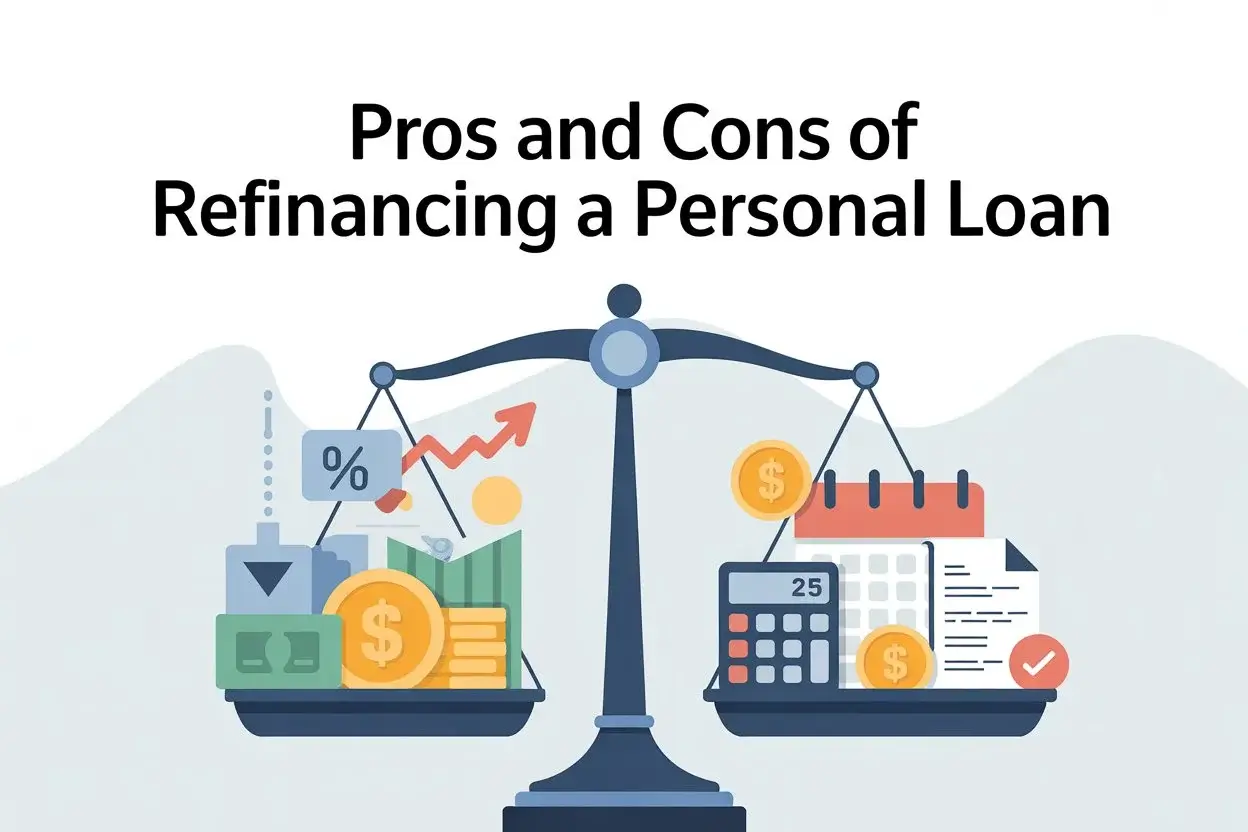
Pros and Cons of Refinancing a Personal Loan
When you apply for a personal loan, the lender offers you an interest rate, loan term, and monthly payment amount based on your financial information and creditworthiness. However, you are not necessarily stuck with the terms for the life of the loan. But can you refinance a personal loan to secure more favorable terms? The good news is, yes— you may be able to refinance if your credit score has improved or if you find a better rate.
However, refinancing isn’t without its downsides. This article explores the pros and cons to help you see if now is the right time to refinance a personal loan.
Pros
Save on Interest
Interest represents the cost of borrowing money. A higher interest rate means you pay more to borrow money. One of the primary benefits of refinancing is lowering this interest rate. Even if your repayment term stays the same, a lower interest rate can save money each month.
If your credit score has significantly increased since you got your personal loan, or interest rates have declined, refinancing may provide a more favorable rate than your current personal loan.
Reduce Your Monthly Payment
Refinancing a personal loan may decrease the monthly payment. This could be a result of reducing the interest rate or extending the repayment term, even if the interest rate stays the same or increases slightly.
This lower monthly payment could be helpful if you’re having trouble making timely payments. Remember that a longer payment term could result in you paying more interest over the life of the loan.
Consolidate Other Debts
Balancing multiple debts can be difficult and sometimes results in missed or late payments. Refinancing offers an opportunity to consolidate these debts and streamline your debt management to a single monthly payment.
For example, imagine you have two credit cards, each with a $5,000 balance, alongside a $5,000 balance remaining on a personal loan. A new $15,000 personal loan could allow you to combine all three debts into a single monthly payment.
Since credit card APRs are often much higher than personal loans, you could save a significant amount on interest as well.
Cons
Requires a New Credit Check
When you apply for a loan, the lender performs a hard inquiry, which may slightly lower your credit score for a period of time. However, hard inquiries typically only impact your score for up to a year, and credit bureaus remove them from your report after two years.
Therefore, if you only refinance or apply for credit infrequently and manage your loans and credit cards well, you may not have to worry too much about credit damage from hard inquiries.
May Incur Prepayment Penalties
A prepayment penalty is a fee you may owe to the lender if you pay off a personal loan before the final payment date specified in the loan terms. Some, but not all, lenders may charge these because paying the loan off early means you’ll pay less interest. The fee offsets the potential loss for the lender.
Since refinancing involves paying off your existing loan early, you may owe a prepayment fee if your lender charges it. For this reason, it’s important to review your current loan terms and conditions before refinancing.
Might Have a Longer Payment Term
Refinancing to a longer payment term could get you a lower monthly payment. However, you’ll have to manage that debt for longer.
This may not be a big deal if you are confident you will continue to earn enough or have savings to make your payments. Just remember there’s additional risk involved in carrying debt for longer.
The Verdict on Refinancing a Personal Loan
Refinancing could save on interest, reduce your monthly payment, and allow you to consolidate other debts. However, you must do a new credit check and may get a longer repayment period. Plus, you must be careful to avoid prepayment penalties.
Ultimately, refinancing a personal loan could make sense if your credit score has increased or you need to make more room in your budget. That said, evaluate your financial situation first since a new loan may temporarily reduce your credit score.
Notice: Information provided in this article is for information purposes only and does not necessarily reflect the views of coastfirecalc.com or its employees. Please be sure to consult your financial advisor about your financial circumstances and options. This site may receive compensation from advertisers for links to third-party websites.