Best Crypto Card 2026: MEXC vs. Bybit, Bitget, Binance, Crypto.com, OKX & Kraken Compared
Quick Answer
The best crypto card in 2026 depends on what you value most. If your priority is cashback and earning yield on idle stablecoins, MEXC stands out with up to 10% cashback, 7% APR on eligible USDT balances, and no annual fee. Travelers may prefer OKX or Kraken for 0% foreign exchange fees, while Crypto.com remains attractive for premium lifestyle benefits if you’re willing to stake CRO.
Key Takeaways
- Automatic Conversion: Crypto cards are Visa or Mastercard debit cards that spend crypto through automatic crypto-to-fiat conversion at checkout.
- Beyond Headline Numbers: The best card isn’t necessarily the one with the highest advertised cashback—fees, staking requirements, APR, and regional availability matter.
- Distinct Profiles: MEXC, Bybit, Bitget, Binance, Crypto.com, OKX, and Kraken each target different user profiles.
- Net Value: Compare effective rewards rather than headline percentages.
- Verification: Always verify country availability, supported assets, spending limits, and reward eligibility before applying.
Crypto debit cards have become increasingly popular as exchanges expand payment products globally. Driven by a growing global demand for using USDT and other digital assets in everyday purchases, these cards allow holders to bridge the gap between digital wealth and physical retail without manual hassle.
This comparison is designed for crypto users looking to optimize their daily spending, asset off-ramping, and passive rewards. To help you choose the ideal card, our methodology evaluates these cards across several crucial pillars: real cashback structures, platform fees, passive yield potential, travel costs, ecosystem usability, and regional eligibility.
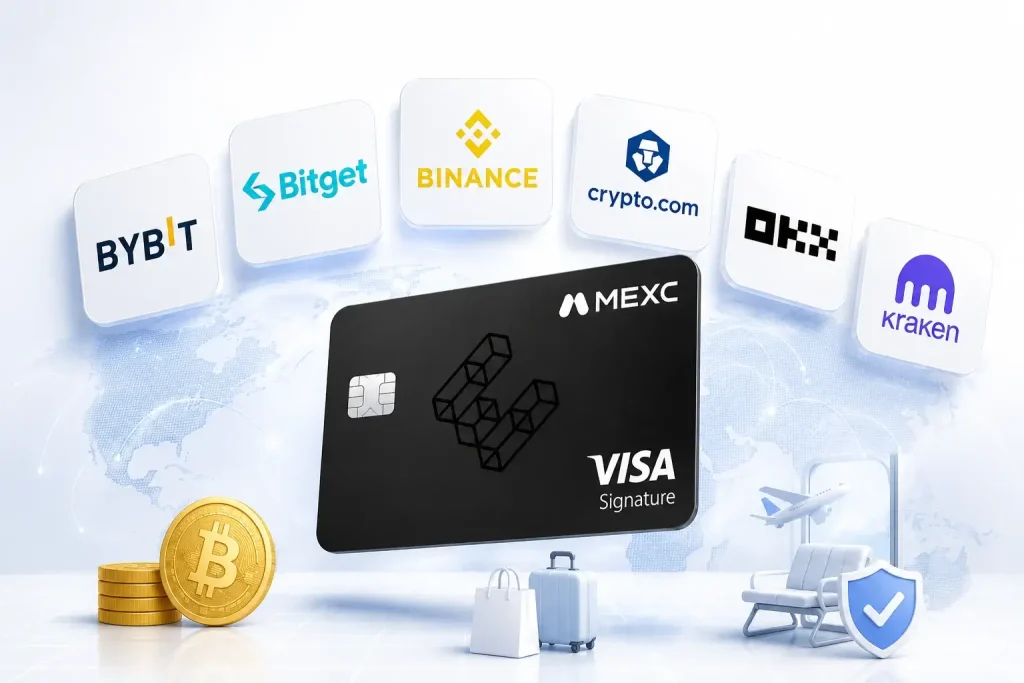
What Is a Crypto Card and How Does It Work?
A crypto card is a debit card linked to a cryptocurrency account. When you pay a merchant, your crypto is automatically converted into fiat currency, allowing you to spend digital assets anywhere the card network is accepted.
Unlike crypto credit cards, which rely on borrowing against a line of credit or collateral, crypto debit cards draw directly from your available balance. When you complete a transaction, the underlying network handles the instant conversion and settlement between your account and the merchant.
Most major exchange-issued crypto cards operate on Visa or Mastercard payment networks, depending on the provider and region. While cards support major assets like Bitcoin (BTC) and Ethereum (ETH), stablecoins such as USDT are among the most commonly used assets for crypto card spending because they reduce day-to-day price volatility.
How We Compared the Best Crypto Cards for 2026
The most useful comparison looks beyond cashback percentages. Real value comes from evaluating total ownership cost, reward requirements, and long-term earning potential.
To build an objective baseline, we analyzed these products across ten core metrics:
- Cashback structure (how rewards are scaled and distributed)
- Annual/monthly fees (fixed costs of keeping the card)
- Foreign exchange fees (costs incurred when spending abroad)
- Passive yield (APR) (interest earned on idle funds)
- Native token staking requirements (upfront token lockups)
- Supported regions (geographic availability)
- Spending limits (daily or monthly transactional caps)
- Security and card controls (app-based protections)
- Supported cryptocurrencies (the variety of spendable assets)
- Mobile app experience (overall usability and speed)
Best Crypto Cards Compared (2026)
| Card | Network | Max Cashback | Annual Fee | FX Fee | Passive Yield | Staking Required | Best For |
| MEXC | Visa | Up to 10% | None | Varies | 7% APR on eligible USDT | M-Score based (no token staking) | Cashback + yield |
| Bybit | Varies | Varies by tier | None | Low/None | Limited | No | Everyday crypto spending |
| Bitget | Visa | Tiered | None | Varies | Limited | No | Existing Bitget users |
| Binance | Visa | Tiered | None | Varies | Limited | Yes (BNB ecosystem) | Binance ecosystem |
| Crypto.com | Visa | Varies by tier | None | Varies | Various Earn products | Yes (CRO staking) | Premium rewards |
| OKX | Visa | Varies | None | 0% (eligible regions) | Limited | No | International travel |
| Kraken | Visa | Varies | None | 0% (eligible regions) | Limited | No | Travelers & simplicity |
Individual Card Reviews
MEXC Card
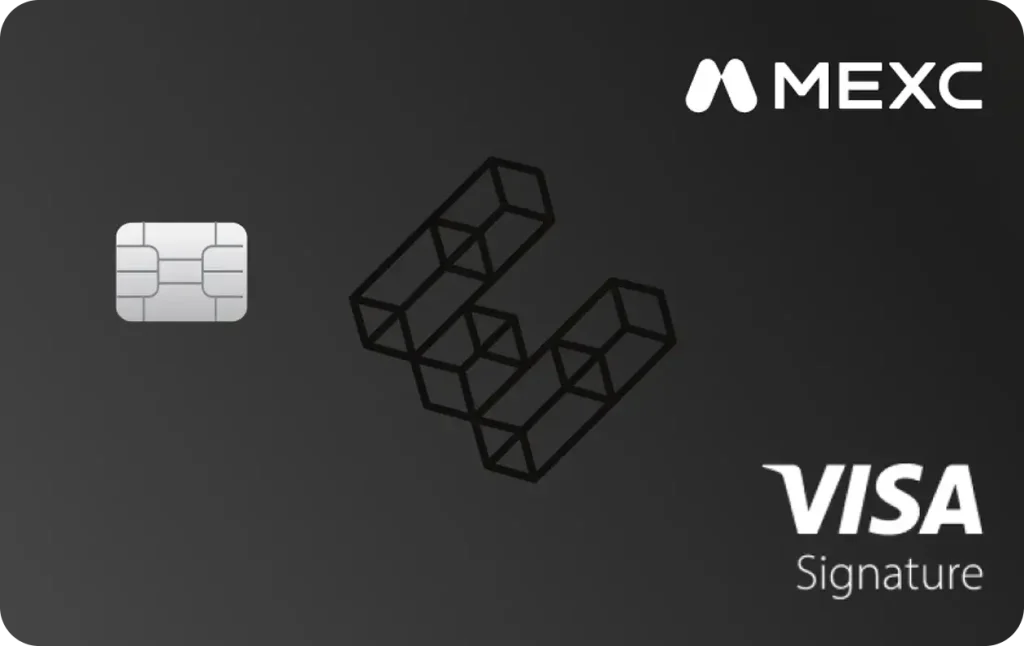
MEXC Card is best suited for users seeking a combination of high cashback and passive income without paying annual card fees.
- Rewards & Tiers: Offers up to 10% cashback using a tier system determined by your platform “M-Score” rather than requiring a dedicated native token lockup.
- Yield Potential: Provides an attractive 7% APR on eligible USDT balances, allowing your spending funds to grow passively.
- Strengths: Features among the highest advertised cashback rates in this comparison, strong passive yield on stablecoins, no annual fees, and is accepted anywhere Visa is supported, subject to regional issuance restrictions. To check availability in your region, see the MEXC card supported countries list.
- Trade-offs: Maximum reward tiers depend entirely on maintaining an active M-Score via exchange activity.
- Ideal for: High-volume spenders and stablecoin holders who want to maximize cashback and yield simultaneously.
Bybit Card
Bybit offers a simple crypto spending experience for active exchange users who prioritize convenience over premium rewards.
- Spending Experience: Available through supported payment networks depending on region, hooking directly into your exchange wallet balances.
- Advantages: Seamless integration with your Bybit exchange balance, competitive cashbacks, and low or nonexistent base card fees.
- Limitations: The card features limited native yield opportunities and fewer luxury lifestyle upgrades.
- Best suited to: Active Bybit users looking for a reliable, low-friction card for daily fiat purchases.
Bitget Card
Bitget focuses on straightforward crypto payments integrated with its exchange ecosystem.
- Reward Structure: Built with a tiered reward setup that does not generally rely on mandatory native-token staking to access its core card functionality.
- Fees & Markets: Carries no annual maintenance fees, running over the Visa network across selected global markets.
- Advantages: Clean, direct spend functionality from your spot or funding wallet.
- Drawbacks: Regional access can be restrictive, and foreign exchange costs vary by location.
- Recommended for: Dedicated Bitget ecosystem users who want a direct physical gateway to their trading capital.
Binance Card
Binance remains attractive for users already invested in its ecosystem, although availability has become more region-specific.
- Ecosystem Integration: Tied deeply to the Binance platform, allowing you to spend various assets directly from your funding account.
- Cashback Tiers: Card benefits scale through tiers based directly on your average holdings of BNB.
- Pros and Cons: Highly rewarding for BNB holders, but availability has become more region-dependent because of regulatory differences.
- Ideal for: Long-time Binance ecosystem participants living within fully supported geographic card regions.
Crypto.com Visa Card
Crypto.com offers some of the strongest premium lifestyle perks, but many benefits require significant CRO staking.
- Perks & Rebates: Unlocks high-end lifestyle rewards, including subscription rebates (like Spotify or Netflix) and airport lounge access on premium tiers.
- Staking System: Your tier, cashback rate, and perk access depend directly on locking up fixed amounts of the native CRO token.
- Advantages: Dynamic lifestyle perks and robust premium tier benefits.
- Opportunity Cost: Requires a large capital commitment to a single utility asset, risking exposure to asset volatility during the lockup period.
- Best suited to: Users seeking premium rewards who are comfortable committing capital to CRO staking.
OKX Card
OKX is a strong option for frequent international travelers thanks to its 0% foreign exchange fee in supported markets.
- International Spending: Operates smoothly over the Visa network with a clear focus on cutting cross-border transaction costs.
- Fee Optimization: Eliminates foreign exchange markups in eligible regions, maximizing your actual purchasing power abroad.
- Recommended for: Nomads, frequent flyers, and users who regularly buy goods priced in foreign fiat currencies.
Kraken Card
Kraken emphasizes low-friction crypto spending with competitive international payment costs.
- Spending Experience: Built entirely around a minimalist, secure approach to spending digital balances via Visa.
- Fees & Security: Keeps foreign transaction friction minimal in eligible regions while maintaining Kraken’s historical emphasis on account security.
- Pros & Cons: Simple to understand and highly secure, but lacks aggressive double-digit cashback structures or robust yield products.
- Best suited to: Security-first users who want a simple, transparent card with low international overhead.
Why the Highest Cashback Doesn’t Always Deliver the Best Value
High headline cashback numbers often obscure underlying operational costs and strict limitations that lower your actual return.
- Monthly Reward Caps: A card boasting a massive 10% cashback rate may look incredible on paper, but if it imposes a $20 or $50 monthly reward cap, your effective rate drops significantly on higher spending volumes.
- Staking Opportunity Cost: Locking up capital in a volatile platform token like CRO or BNB to qualify for higher rewards introduces downside asset risk. If the token value drops by 20%, it easily wipes out the value of any cashback you accumulated.
- Foreign Exchange Fees: If you spend your card assets outside your base currency zone, a 2% or 3% FX fee will instantly swallow up your net rewards.
- Excluded Merchant Categories: Most cards contain strict fine print excluding large categories—such as utility bills, automated fuel dispensers, government payments, and insurance—from earning rewards entirely.
- Effective Net Rewards: True value is discovered only after subtracting transaction fees, token volatility exposure, and FX overhead from your nominal earnings.
Which Crypto Card Is Best for Different Types of Users?
The ideal crypto card depends more on spending habits than headline rewards. Matching the card to your usage pattern often delivers better long-term value.
- Highest Cashback: MEXC (up to 10% back via M-Score tracking).
- Best Passive Income: MEXC (7% APR directly on eligible USDT).
- Frequent Travelers: OKX or Kraken (0% foreign exchange fees in eligible areas).
- Beginners: Bybit (low fees and high day-to-day usability).
- Heavy USDT Users: MEXC (direct utilization optimized for stablecoin yield).
- Premium Lifestyle Users: Crypto.com (one of the strongest options for lounge access and streaming rebates).
- Existing Exchange Customers: Binance or Bitget (depending on where your primary trading capital sits).
- Lowest Ongoing Costs: MEXC, Bybit, OKX, and Kraken (all feature zero annual fees and low maintenance friction).
Factors Most Buyers Overlook Before Choosing a Crypto Card
Hidden costs often outweigh cashback. Understanding eligibility rules can prevent disappointing rewards after signing up.
- Token Staking Requirements: High tiers often require locking up volatile native tokens, introducing a clear market risk.
- Reward Caps: Monthly cashback limits cap your earning capacity regardless of your overall spending tier.
- Eligible Purchase Categories: Be prepared for restricted categories like utilities, rent, and fuel that fail to generate rewards.
- Foreign Exchange Costs: Markups on international checkouts can negate base cashback earnings when traveling.
- ATM Withdrawal Fees: Exceeding small free monthly limits often triggers flat or percentage-based penalty costs.
- Dormancy Fees: Accounts left inactive for extended periods can face automatic maintenance drawdowns.
- Country Restrictions: Local compliance changes mean specific cards or features can be paused in your home market.
- Tax Considerations: Because spending crypto via a debit card involves converting a digital asset into fiat, it can trigger capital gains tracking and constitute a taxable event depending on your jurisdiction.
Conclusion
There is no single universal winner in the 2026 crypto card market. True value depends entirely on matching a platform’s specific layout with your baseline financial habits.
If your goal is capturing top-tier cashback while earning a continuous passive yield on your stablecoins, MEXC offers one of the strongest combinations of cashback and passive yield in this comparison without requiring native-token staking for cashback eligibility. If you spend your time moving between global jurisdictions, the 0% foreign exchange capabilities of OKX or Kraken will serve you better, while Crypto.com is particularly attractive for premium lifestyle and travel benefits if you accept the underlying token staking commitments. Compare the effective rewards after accounting for all fees, staking rules, and geographic restrictions to find your optimal card.
Frequently Asked Questions
What is the best crypto card in 2026?
There is no universal best card. MEXC excels in cashback and yield, while OKX, Kraken, and Crypto.com suit travelers and lifestyle users.
Which crypto card offers the highest cashback?
MEXC offers up to 10% cashback, with rewards based on your M-Score.
Are crypto cards debit cards or credit cards?
Most exchange-issued crypto cards are debit cards funded by your crypto or stablecoin balance.
Do I need to stake tokens to earn rewards?
It depends. Crypto.com and Binance require token staking for higher tiers, while MEXC and Bybit do not.
Which crypto card is best for international travel?
OKX and Kraken are strong choices thanks to 0% foreign exchange fees in eligible regions.
Can I spend USDT directly with a crypto card?
Yes. Many crypto cards automatically convert USDT into local fiat at checkout.
Are crypto card rewards taxable?
Possibly. Tax rules vary by country, and spending crypto may trigger taxable events. Check your local regulations.