Market Cycles and Long-Term Financial Independence
If you are working toward Coast FIRE, you already know that consistency matters more than chasing perfect timing. However, when markets swing, it is easy to wonder whether your long-term plan is still on track. Understanding market cycles can take a lot of that uncertainty off your shoulders. Instead of feeling like the market is unpredictable or out to get you, you begin to recognise patterns that most long-term investors experience many times.

The Four Stages of a Market Cycle
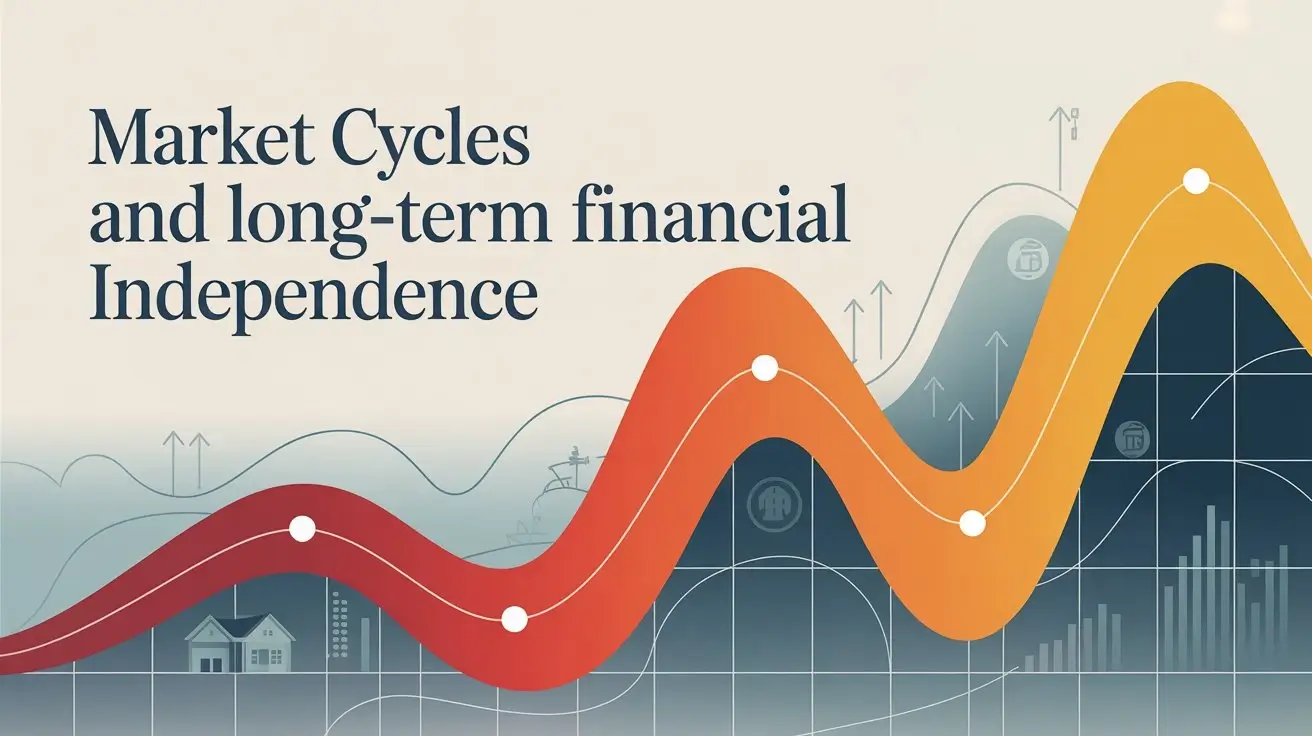
Markets tend to move in a familiar rhythm over time: growth, a peak, a pullback, and recovery. Expansion is the upbeat phase where jobs look strong, companies grow, and markets climb. Eventually, growth softens and peaks form. Then comes contraction, the part that often feels uncomfortable, followed by recovery, where stability returns and optimism rebuilds.
These stages do not follow a fixed schedule, and they do not reflect anything about your personal progress. They are simply how economies behave. Seeing this cycle for what it is can help you stay grounded when your portfolio feels choppy.
How Long Do Cycles Usually Last?
There is no standard length. Some expansions run for many years, while certain downturns are surprisingly brief. What remains consistent is that, historically, markets spend far more time growing than shrinking. That is encouraging when you are building toward financial independence over multiple decades. A short slump today does not define your entire journey. It barely registers when viewed against a 30 or 40-year horizon.
How Cycle Awareness Supports Your Plan
Once you understand the cycle, volatility becomes less alarming and more like background noise. During expansions, your contributions compound faster. In contractions, every deposit buys more shares and strengthens your long-term position. Recovery phases rebuild confidence and momentum. None of this requires prediction. It simply helps you stay steady, which is essential for Coast FIRE.
Sequence of Returns Risk, Simplified
Here is a scenario many early retirees think about: what if a downturn hits right when you start withdrawing money?
That is the sequence of returns risk. Poor returns early in retirement can make withdrawals harder to sustain because you are taking money out before the portfolio has time to recover. Coast FIRE naturally helps reduce this risk because you aim to build a strong investment base while still working. You are giving your portfolio many years to absorb both the highs and the lows.

Inflation and Interest Rates: Why They Matter
Inflation and interest rates are major forces behind market cycles. Rising inflation often leads to higher interest rates, which can cool markets for a while. When inflation eventually eases, borrowing becomes cheaper, and markets typically find their footing again.
If you are investing for the long haul, you will watch these forces shift many times. They are not a sign that your plan has failed. They are simply part of the journey.
Index Investing Through the Ups and Downs
Many Coast FIRE investors rely on broad index funds because they remove the emotional pressure of trying to outsmart the market. Indexes spread your investment across many companies, making downturns feel less dramatic and recoveries more dependable.
Over long periods, markets have historically rebounded from every contraction. That resilience is one reason staying invested often proves more effective than attempting to time entries and exits.
How Dollar Cost Averaging Helps You Stay Consistent
Dollar cost averaging means investing the same amount regularly, regardless of market direction.
You buy more shares when prices fall and fewer when prices rise. This simple approach builds discipline and removes decision fatigue.
If you use a trading app to automate recurring investments, the process becomes even easier. It allows you to stay consistent without needing to monitor every market move, which can be reassuring during volatile periods.
Diversification as a Buffer Across Cycles
Diversification spreads your investments across different types of assets so that when one area struggles, another may remain stable. Bonds, cash reserves, and international stocks often behave differently across the phases of a cycle.
A diversified portfolio does not eliminate risk, but it softens the edges. That can help you avoid making emotional decisions at exactly the wrong moments.
Using Cycle Awareness Without Trying to Time the Market
Cycle awareness is not market timing. Instead, it helps you make thoughtful adjustments that support your lifestyle goals.
For example, if you plan to scale back work soon and markets happen to be in a contraction phase, you might choose to build a slightly larger buffer before downshifting. If conditions look more like recovery, you may feel more comfortable easing into reduced hours. It is about preparation, not prediction, and it gives you more confidence in the path you are choosing.
Final Thoughts
Market cycles can feel unpredictable day to day, but zoom out far enough, and their patterns become surprisingly steady. Understanding them can quiet the noise, reduce stress, and help you trust the long-term process that Coast FIRE depends on. With patience, consistent investing, and a plan that accounts for natural ups and downs, your path toward financial independence becomes clearer and more achievable.