
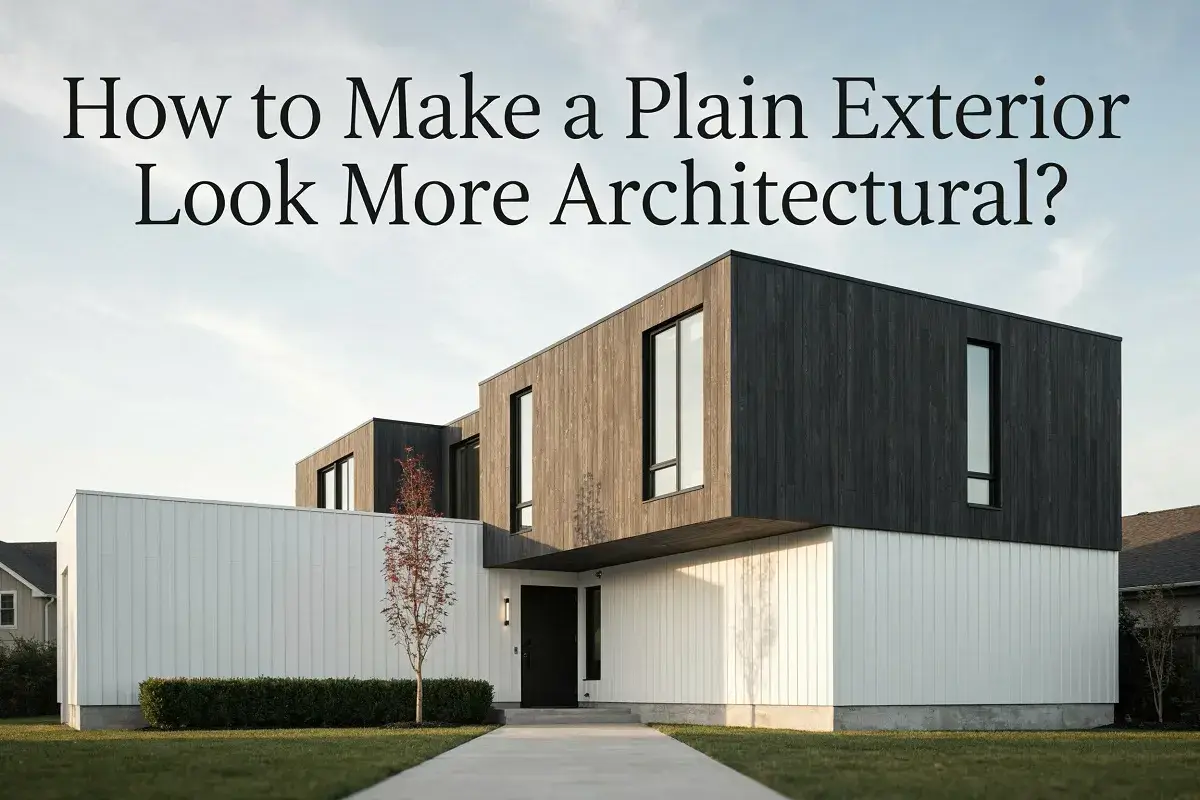
How to Make a Plain Exterior Look More Architectural?
Even the best home can look flat on the outside with a plain exterior. Bare walls, small windows, and a simple front door give the eye little to rest on. However, a home does not need a major renovation to gain character. Small, well-chosen updates can add shape, shadow and a clear focal point. Light, trim, color, and hardware each play a part in that change. The seven ideas below show how to give a basic facade real architectural presence.
Outdoor Wall Lights Give a Flat Facade Depth
An empty wall on the exterior is even flatter once night falls since the exterior becomes shadowy. With proper positioning of luxury outdoor wall lights and exterior sconces, this can be solved since the light will highlight the texture of the wall. Two sets of exterior sconces on each side of the entrance door help highlight the entry point, thus attracting attention to the door. Likewise, sconces placed vertically on a garage or side wall create vertical strips of light, which helps increase the height of the building façade. In order to get proper proportions, it is recommended that a sconce near an entrance door should be positioned to be one-quarter to one-third of the height of the entrance door. Fixtures rated for wet locations hold up to rain, snow, and coastal air for years.
Trim Boards Add Shape to Bare Walls
Trim gives a flat wall the lines and edges that make a home look built with care.
- Wide window casings make small windows look larger and more deliberate.
- A crown or frieze board under the roofline adds a finished edge to the top of the wall.
- Corner boards give siding clean vertical lines at each end of the house.
- A simple pediment or header above the front door adds classic shape to the entry.
- PVC or composite trim resists rot and keeps its shape in wet climates.
A Bold Front Door Creates a Focal Point
A plain front door tends to blend into the wall around it. As a result, the entry loses its role as the main feature of the facade. A strong paint color, such as deep navy, forest green, or glossy black, makes the door stand out from the street. In addition, a door with raised panels or glass lites adds detail where the eye lands first. Sidelights or a transom window can widen the entry and let in daylight. Together, these changes give the whole front a clear center of attention.
Shutters and Window Boxes Frame Plain Windows
Bare windows can look like holes cut into a flat wall. Shutters sized to cover half the window width each give the window a proper frame. Board-and-batten or louvered styles suit farmhouse and traditional homes, while flat panels suit modern designs. Meanwhile, window boxes under first-floor windows add depth and a spot for seasonal plants. Brackets or corbels beneath the boxes add one more layer of architectural detail. With these additions, each window reads as a deliberate design choice.
Contrast Paint Colors Define the Structure
A single color across siding, trim, and doors can hide the shape of a home. A two-tone or three-tone scheme brings those lines back into view. For example, light siding with dark trim outlines each window, corner, and roofline. On the other hand, dark siding with crisp white trim gives a sharper, more modern look. An accent color on the front door or shutters ties the palette together. Paint samples on a large section of wall show how each shade looks at sunrise and dusk.
House Numbers and Hardware Add Fine Detail
Small details shape the full look of a facade in a big way. Builder-grade house numbers and a basic mailbox can make an exterior feel unfinished. Large, modern numbers in a metal finish add a design note near the door. Similarly, a new door handle, kick plate, or knocker in the same finish ties the entry together. A matched finish across lights, numbers, and hardware gives the front a pulled-together look. These upgrades cost little and go up in an afternoon.
Landscape Lines Ground the Home
A house set on bare lawn can look like it floats on the lot. Foundation plants along the front soften the base of the wall and connect the home to the ground. A clear path to the door, lined with stone or brick edges, adds structure to the front yard. In addition, a pair of planters on each side of the steps repeats the symmetry of the entry. Low path lights along the walkway extend the design into the yard after sunset. Together, these touches make the home feel planted and complete.
A plain exterior can gain real character through small, practical updates. Trim, paint, and a bold door give the facade shape and a clear focal point. Shutters, hardware, and landscape lines then fill in the finer details. Light ties the whole look together, and luxury outdoor wall lights and exterior sconces keep that architectural shape visible long after the sun goes down. With a few careful choices, a basic house can look thoughtfully designed from every angle.