How to Get a Second Opinion on Your Retirement Portfolio With AI
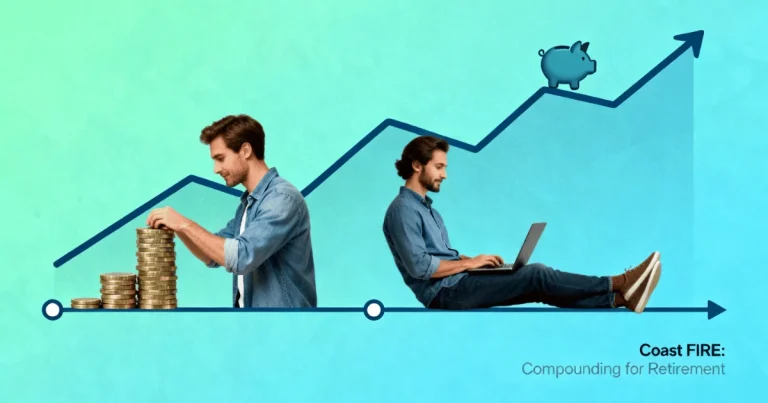
If you are working toward Coast FIRE or a traditional retirement date, the math tends to get most of the attention: the savings rate, the target number, the withdrawal rate. The portfolio that is supposed to carry you there gets less. Many people set up an allocation years ago, add to it every month, and rarely check whether it still looks the way they intended.
A second opinion used to mean paying a financial planner. That is still a good option for complex situations. For a routine check on what you hold, AI tools can now do a lot of the reading for you, as long as you know what to ask and where their limits are.
Why a second look matters more as the date gets closer
Early in a FIRE plan, a portfolio can be mostly stocks and the main job is to keep contributing. Closer to the point where contributions stop, the questions change. How much of the plan depends on a handful of companies? Has one fund grown until it dominates everything else? Is the mix still right for someone who may start drawing on it in five or ten years?
Small drifts matter here. A portfolio that started as 80% stocks and 20% bonds can end up near 90/10 after a few strong years without a single trade. A tech fund bought as a small tilt can grow to a quarter of the account. Neither is a problem by itself, but both change how hard a market drop would hit the plan.
What a second opinion should actually check
Whether you ask a person or software, a useful review covers the same ground:
- Allocation. The current split between stocks, bonds and cash compared with what you meant it to be.
- Concentration. How much rides on your largest holdings. Ten positions where one has grown to 40% of the account behave more like four.
- Overlap. Whether funds you hold for different reasons own the same companies. An S&P 500 fund, a Nasdaq-100 fund and a large-cap growth fund share many of their top holdings.
- Performance in context. How each holding has done over the same period as a broad benchmark such as the S&P 500, so a strong or weak year is measured against something.
- Account placement. Which holdings sit in taxable accounts and which in tax-advantaged ones, since that affects what selling would cost you.
Where AI fits in
General chatbots can explain these ideas, but they only see what you type into them. Copying positions from three brokerage accounts into a chat window is slow, and the numbers are stale by the next week.
The newer approach is to let an AI read your holdings directly from your broker, with read-only access, so it answers from what you actually own. Walnut, an AI investing app, works this way: you connect your brokerage, and you can ask questions in plain English in the app or through Claude. Other tools take different approaches, and it is worth comparing AI investing apps that connect to the brokerage you already use before you pick one.
Connecting the accounts you already have
Most people on the FIRE path have money in more than one place: a 401(k) rollover IRA at Fidelity, a Roth at Vanguard, a taxable account at Schwab. The value of an AI review comes from seeing all of it together, because concentration and overlap often only show up across accounts.
With Walnut, Fidelity, Vanguard, Schwab and most other large US brokers connect for reading your holdings. The connection is read-only by default, your money stays at your broker, and nothing is bought or sold without you approving it. If a broker is not supported, you can share screenshots of your positions instead.
Questions worth asking
Once your accounts are connected, these questions tend to get the most useful answers:
- “How concentrated is my portfolio across all my accounts?”
- “Which of my funds overlap the most, and by how much?”
- “How has each holding done over the last year compared with the S&P 500?”
- “My target is 70% stocks and 30% bonds. How far off am I, and what trades would bring me back?”
- “What happens to my total balance if my largest holding drops 30%?”
- “What do analysts currently say about the individual stocks I own?”
A good answer to a question like “should I sell this?” lays out your position, what analysts are saying and two or three options with their trade-offs, and leaves the decision with you. If a tool gives you a single confident instruction, treat that as a warning sign.
What AI cannot do for you
AI is useful for reading a portfolio quickly and spotting patterns you might miss. It does not know your full situation unless you tell it: your other income, your health, a pension, a planned home sale or how you would actually behave in a 40% drawdown. Most tools also cannot see your cost basis, which matters for tax decisions, so check that with your broker before selling anything in a taxable account.
For tax planning, estate questions or a full retirement income plan, a fee-only fiduciary planner is still worth paying for. For a regular check between those conversations, getting a second opinion on your portfolio from an AI that can see your real holdings takes a few minutes and costs little or nothing.
A sensible routine is to run a review once or twice a year and again after any large market move, compare the answer with your written plan, and change only what the plan says should change.
This article is for general information and is not investment, tax or legal advice. Walnut is not a registered investment adviser.