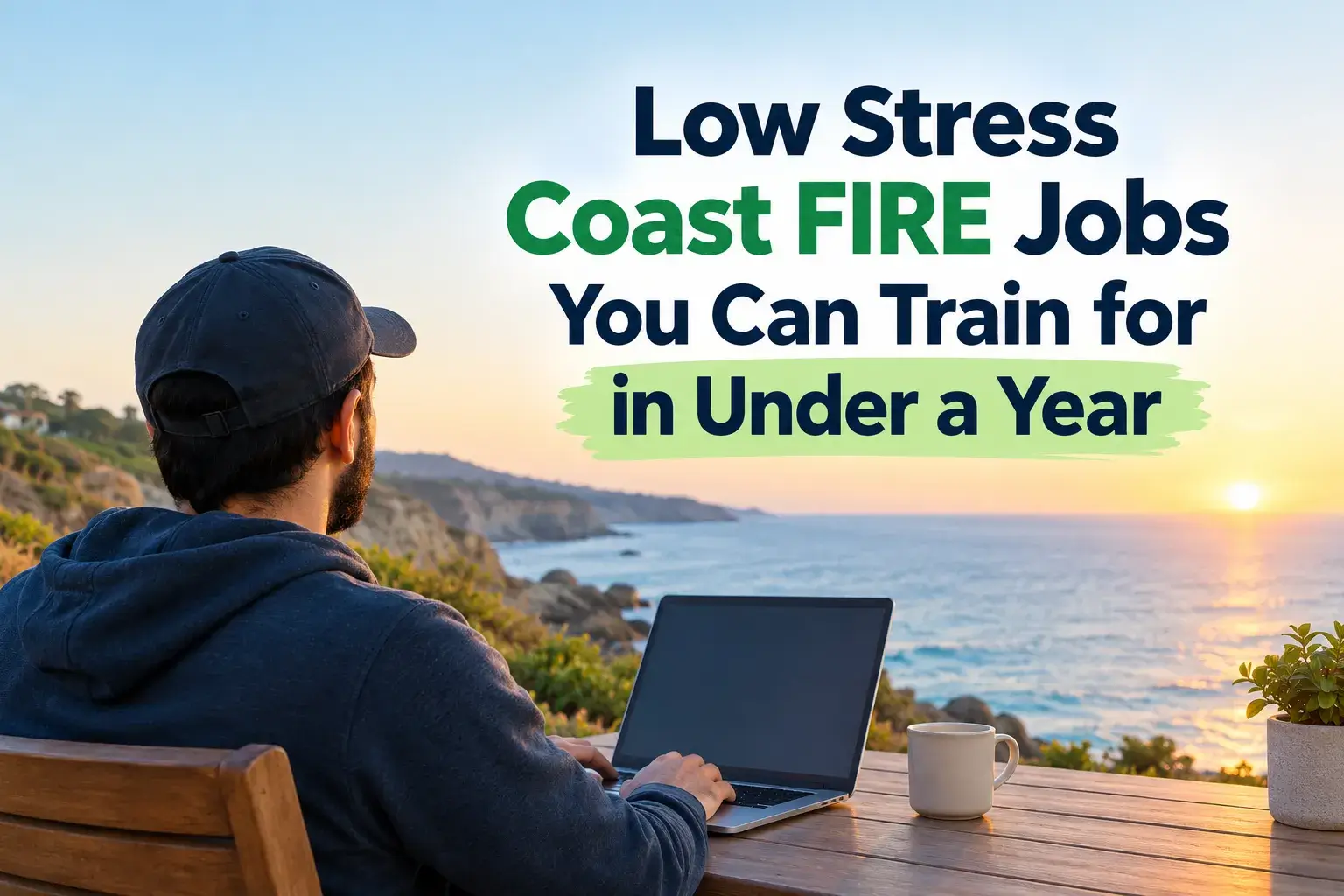
Low Stress Coast FIRE Jobs You Can Train for in Under a Year
Reaching Coast FIRE changes the entire purpose of your job. Once your invested savings are large enough to grow into a full retirement fund on their own, you no longer need a high-paying, high-pressure career to keep building wealth. All you need is work that covers your day-to-day expenses while your nest egg compounds in the background.
The timing has rarely been better to make that move. According to the American Psychological Association, roughly half of workers say they feel tense or stressed during the workday. It’s a clear sign of how many people stay in draining roles long after the financial pressure to do so has eased.
So why keep grinding in a stressful job when your portfolio is already doing the heavy lifting? For a lot of people chasing Coast FIRE, the answer is that they’ve never mapped which low-stress careers they could actually step into, or how quickly. Doing that math now is what creates a plan you can act on this year.
What Makes a Job “Low Stress” for Coast FIRE?
Low stress means different things to different people. For most Coast FIRE seekers, the goal is simple: to get work that pays the bills without following them home at night.
The need is widespread. The Staffing Industry Analysts found that 67% of workers experienced at least one symptom associated with burnout. When your savings no longer depend on your paycheck, there’s little reason to stay in that group.
A few factors reliably separate calm roles from draining ones:
- Predictable, consistent hours with minimal after-hours contact
- Manageable emotional demands and low-stakes daily decisions
- Clearly defined tasks with an end to the workday
- Little responsibility for other people’s emergencies
Rank any job you’re considering against these before you commit. A role can pay well and still be the wrong fit if it leaves you anxious at midnight. The whole point of Coast FIRE is to buy back your peace, not to trade one form of pressure for another.
Which Careers Can You Train for in Under a Year?
The best Coast FIRE jobs pair a short, affordable training path with steady demand and calm day-to-day work. Here are some options you have:
Medical Billing and Coding
Medical billers and coders work behind the scenes, translating healthcare visits into insurance claims. The work is largely desk-based, often remote, and built on predictable hours with no patient emergencies to manage.
Bookkeeping
Small businesses always need someone to keep their finances straight. Bookkeeping offers regular hours, strong remote potential, and work that ends cleanly when the books balance. Once they’re done training, many bookkeepers eventually build an independent client base that lets them set their own schedule.
Web and Digital Support Roles
Entry-level web development, quality-assurance testing, and digital marketing support can often be learned through a focused bootcamp or self-study in well under a year. These roles tend to reward output. They often have flexible, remote arrangements that make a low-stress lifestyle far easier to protect.
How Do You Match Training Time and Cost to Your Coast FIRE Runway?
A short training path only helps if it fits your budget and your timeline. Because Coast FIRE depends on not draining the savings you’ve already built, the tuition and length of any program matter just as much as the career waiting on the other side.
Compare your options on three situations before enrolling:
- How many months the training takes
- The total upfront cost
- The realistic entry pay afterward
A medical billing and coding career switch fits a short-training shortlist only if the program length and tuition fit your savings runway, so check those figures for STVT billing and coding classes and weigh them against what you can cover without touching your invested nest egg.
How Big Does Your Coast FIRE Number Need to Be?
Coast FIRE works only when both your invested savings are already large enough to compound into a full retirement fund by your target age, and your new job covers your current living expenses without any new contributions.
That second part is more achievable than it sounds. The U.S. Bureau of Labor Statistics reports that medical records specialists earn a median wage above $51,000, with employment projected to grow much faster than the average job through 2035. For many households, an income in that range comfortably covers everyday expenses while the existing portfolio quietly does the long-term work.
Run your figures. Total up your essential annual spending, confirm your invested savings are on track to hit your retirement goal on their own, and you’ll know exactly how much a low-stress job needs to earn.
What Mistakes Derail a Coast FIRE Career Switch?
Even a solid plan can have issues if you make errors. Watch out for these:
- Quitting your current job before the new training is finished
- Choosing a program on price alone without checking job-placement rates
- Underestimating living expenses, which inflates the income you truly need
- Assuming a job is “low stress” without talking to people doing it
- Forgetting that your invested savings still need years to compound
Each of these can turn a freeing transition into a stressful one. Avoiding them costs nothing but honest research and a realistic budget. The smoothest switches happen when the plan is tested before the leap.
How Can You Test Job Fit Before You Enroll?
Before spending a dollar on tuition, confirm the career suits you. A little legwork now prevents an expensive mistake later:
- Interview two or three people already working in the role
- Shadow a workday or watch detailed “day in the life” walkthroughs
- Take a free introductory online course to test your genuine interest
- Try a small freelance or volunteer version of the work
- Confirm the daily tasks match the low-stress profile you’re after
If the work still appeals after that, you can enroll with confidence. In case it doesn’t, you’ve saved yourself months of training and thousands of dollars.
Coast Toward the Life You Want
Reaching Coast FIRE earns you the ability to choose work for peace of mind. A low-stress job you can train for in under a year is how you turn that freedom into daily life. Map your number, compare the training paths, and test the fit before you commit.