
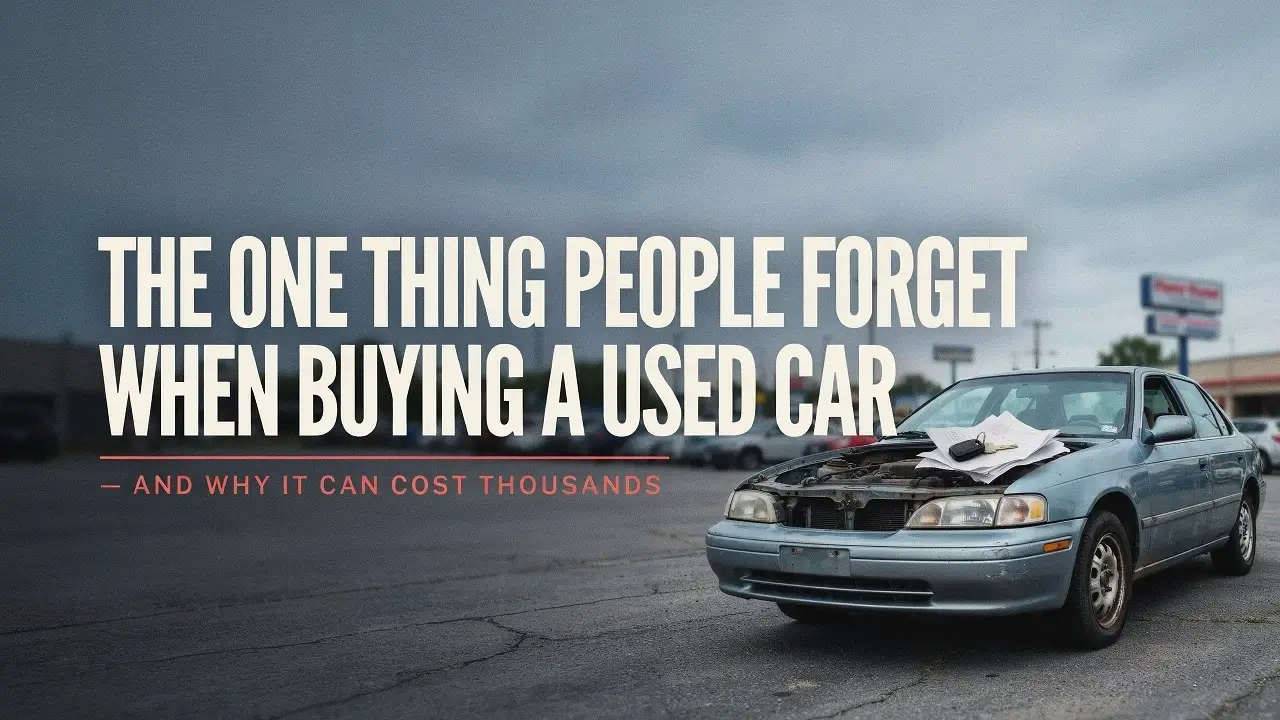
The One Thing People Forget When Buying a Used Car — and Why It Can Cost Thousands
What Every Buyer Overlooks Before Getting Excited
Most people walk into a car purchase focused on two things. Price and appearance. The new ride sits gleaming under dealership lights. A test drive delivers exactly the feeling a buyer hoped for. Then paperwork starts. That is the moment the forgotten step surfaces and it costs real money.
The forgotten step is history verification. Before any buyer commits to a vehicle purchase, checking the vehicle identification number reveals facts no sales pitch replaces. EpicVIN’s vin check tool delivers comprehensive vehicle history reports built from records across all 50 U.S. states. The service uncovers accident records, odometer rollbacks, salvage titles and ownership patterns tied to any vin. A low mileage claim means nothing without verified data behind it.
Credit Score Shapes Every Number on the Table
A credit score determines the interest rate on every car loan offer. A buyer with good credit secures rates below 5 percent through a bank or credit union while a weaker profile pushes auto loan interest past 15 percent on the same vehicle. That gap costs thousands across the life of the loan. Check the score before visiting a single car dealer.
A new car loan from a credit union typically beats what dealerships advertise. Pull pre-approval before stepping onto any lot. Pre-approved financing gives negotiating ground that changes the entire conversation with finance staff.
Real Cost Behind the Sticker Price
The sticker price is the opening number. Independent research shows transaction price data from actual regional sales. That preparation closes the gap between listed price and what a car actually sells for.
A loan calculator shows the full picture fast. Enter the purchase price, the interest rate and the term. The monthly payment appears. Add fuel costs, auto insurance and expected maintenance and the real annual expense of any new vehicle becomes impossible to ignore.
Financing Traps Buyers Walk Into
Leasing attracts buyers who prefer a lower monthly payment yet the math rarely favors long-term ownership. Lease deals lock a driver into mileage limits with zero equity at term end. Refinancing after purchase recovers cost when interest rates drop but the original rate shapes years of payments first.
A larger down payment shrinks both the monthly payment and total interest paid. Buyers who pay cash eliminate financing costs entirely. Those who pay up front on used cars avoid the rate negotiation altogether. Trade-in value from the old car reduces the next car purchase balance when handled directly rather than through dealerships that discount trade values aggressively.
The Add-On Trap Inside the Finance Office
A car-buying journey does not end at the sales desk. The finance office presents a warranty extension, paint protection, gap insurance and every add-on imaginable. Each item carries a markup that inflates the total cost far beyond the agreed transaction price.
Certified dealers present extended coverage as necessary. It rarely is. The trim level chosen already includes specific safety features from the automaker. An add-on warranty duplicates existing manufacturer coverage in most cases. Read the original warranty before that conversation starts.
Insurance and Running Costs Nobody Discusses
Car insurance quotes vary by zip code, driving record and vehicle make and model. A buyer who wants to buy a specific suv without checking insurance rates first discovers a $200 monthly gap after signing. Get three quotes before the purchase decision finalizes.
Suvs carry higher auto insurance rates than sedans across most U.S. markets. An electric vehicle often qualifies for lower rates through select providers though collision repair costs run high. Fuel costs across ownership add thousands beyond any initial price comparison. Resources available through federal government portals show average ownership costs by vehicle class.
Federal Incentives and Tax Savings Worth Claiming
Federal incentives exist for buyers who buy an electric vehicle meeting income and price thresholds. A tax deduction tied to an ev purchase reaches $7,500 for qualifying buyers. Confirm eligibility before any car purchase because not every model qualifies for the full credit.
Some automakers offer incentives directly through dealer networks. These promotional rates disappear when inventory shifts. Research car deals from multiple certified dealers before committing. A deal on a new car found through comparison consistently beats the first offer from one location.
New and Used Compared Through a History Lens
New and used inventory each carry distinct risk profiles. A new car arrives with full warranty coverage and no prior accident exposure. Used cars bring lower purchase prices but unknown history unless verified. That distinction shapes resale value years later when the loan is paid and a seller calculates equity.
A buyer who skips history verification on used cars makes a blind bet. Odometer fraud remains widespread in the secondhand market. An old car with manipulated mileage appears economical on paper and costs double in repairs within two years.
| Buyer Type | Best Approach | Key Risk |
| First-time buyer | Pre-approve auto loan first | High interest rate without good credit |
| Used car buyer | Run vin check before offer | Hidden accident or title issues |
| Lease candidate | Calculate total cost at term end | Zero equity after payments |
| EV buyer | Confirm federal incentives eligibility | Not all models qualify |
Trim Levels and the Vehicle You Actually Need
Trim levels define what a buyer receives beyond the base price. Higher trim adds technology packages and advanced safety features that a base model excludes. A buyer who wants the car you want at the right specification confirms trim levels in writing before the test drive ends.
A loan calculator comparison across trim levels reveals whether an upgrade justifies the monthly payment difference. Mid-level configurations often hold better resale value than stripped base versions because used buyers seek specific features.
The Final Check Before Signing
Before signing for the vehicle you want verify five things:
- Confirm the interest rate matches pre-approval from a bank or credit union
- Verify the monthly payment against an independent loan calculator
- Review every add-on against the warranty included from the automaker
- Check the total cost across the life of the loan
- Confirm federal incentives and any applicable deduction appear in final paperwork
A buyer who completes that review walks out satisfied. The new vehicle represents a long-term financial commitment. Car-buying works best when history is verified, financing is pre-arranged and every cost is mapped before signing. Want to buy a car based on facts rather than instinct and the next car purchase rewards that discipline for years.
Conclusion
A vehicle purchase rewards preparation. The one thing most buyers forget is the history check that sits between excitement and commitment. A vin report reveals what a seller never volunteers. Credit preparation determines the interest rate before any negotiation begins. Insurance costs, fuel costs and trim selection complete the financial picture. The best bet in any car-buying process is approaching it with data rather than hope. Refinancing, trade-in strategy and federal incentives all contribute to the final outcome but none of them replace the basic discipline of checking what a car has actually been through before signing for it.
FAQ
Can a dealership legally raise the interest rate above what a bank pre-approved?
A dealer submits loan applications to multiple lenders and earns a markup on the resulting rate. Pre-approval from a bank or credit union sets a ceiling. Presenting that document before finance office negotiations limits how far auto loan interest drifts above the original offer.
Does leasing ever beat buying for someone who drives under 10,000 miles annually?
Lease deals suit drivers who stay within mileage limits and prefer a new vehicle every two to three years without managing resale. A buyer who keeps a car beyond six years pays less through purchase and full payoff than through repeated leasing cycles even at low annual mileage.
Why does the trim level affect resale value more than exterior color?
Resale value follows demand patterns in the used car market. Popular trim configurations with safety features hold price better than stripped base models. An automaker’s mid-tier trim typically shows the strongest resale performance across make and model families.
What happens to federal incentives if a buyer sells an EV within one year of purchase?
Current U.S. tax rules require buyers to hold the vehicle for a specified period. Selling before that window closes triggers a recapture obligation where part or all of the deduction returns as tax owed. Confirm holding requirements before taking the credit on an electric vehicle purchase.
Is a certified pre-owned warranty from a car dealer worth paying extra for?
Certified pre-owned coverage fills the gap between an old car’s expired factory warranty and the uncertainty of a private sale. The value depends on the specific terms. A buyer who reviews exactly what the warranty covers against the vehicle’s history report spends money on real protection rather than overlapping coverage.