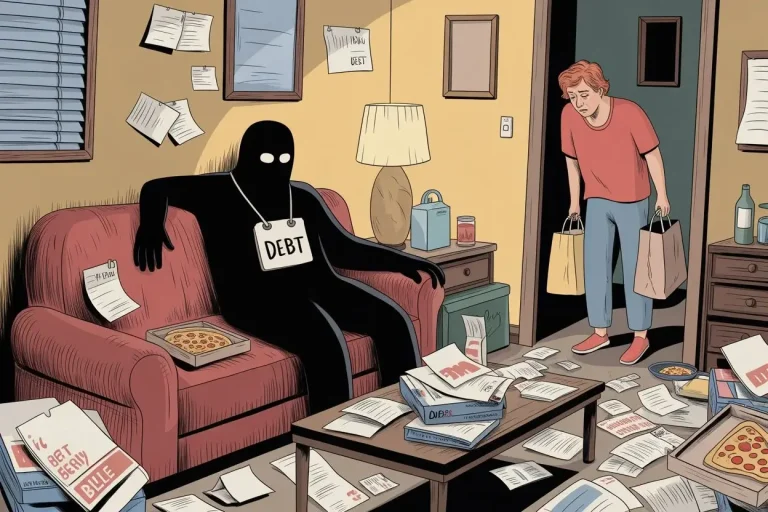

Why The “Unexpected Expense” Keeps Breaking Otherwise Solid Financial Plans
You’ve done everything right.
You created a budget. You started automatic transfers. You even began entering your spending into a spreadsheet.
And then… your transmission dies.
Imagine wrecking your perfectly good budget by tossing a $2,500 repair bill on top of everything else you spend. Yeah, been there too? Surprises like this are the #1 cause of even the best laid financial plans crumbling each year.
The thing is… people usually plan for the wrong expenses. Groceries. Gas. Rent. Nobody budgets for “surprise root canal” or “new alternator” on their monthly budget sheet.
That’s what breaks the plan.
Here’s what’s inside:
- The Real Numbers Behind Unexpected Expenses
- Where A Bad Credit Title Loan Fits In
- Why “Just Save More” Advice Falls Flat
- The Backup Plan Most Solid Financial Plans Are Missing
- How To Build A Plan That Handles Surprises
The Real Numbers Behind Unexpected Expenses
The statistics are pretty grim.
A Bankrate survey recently found that 59% of Americans wouldn’t be able to cover a $1,000 emergency without taking on debt. Here’s the best part: 21% have zero emergency fund savings whatsoever.
Zero. Nothing. Not a dollar set aside.
What about surprise car repairs? Yep. They’re one of the most frequent budget-busters. According to AAA, surprise car problems cost $500-$600 on average to repair. But some big ticket repairs, such as engines or transmissions, can exceed $10,000.
Median emergency savings for the average American is only $600. Guess what that doesn’t pay for? A transmission repair.
Consider that. Replacing a dead battery is $200. Repairing a broken tooth is $1,500. Fixing a busted furnace? Easily $3,000+. Most cannot afford it.
Not every unexpected expense involves a car or a home. A serious accident can create long-term medical bills, rehabilitation costs, and lost income that place even greater pressure on a household’s finances. For families trying to understand the potential financial impact of a traumatic brain injury, a brain injury estimator can provide a useful starting point before seeking professional legal advice.
Where A Bad Credit Title Loan Fits In
Uh oh. The check engine light blinks. The repair estimate comes in at $2,100. Your credit score is below 600. Now what?
It’s situations like these where a poor credit title loan can be a viable solution if you don’t have stellar credit or a healthy bank account. You’ll get doors shut in your face by traditional lenders. A title loan, on the other hand, is backed up by your car’s value…not your credit score.
The other myth is that you have to have the paper title physically in your possession to qualify. That isn’t always the case. There are lenders that allow you to qualify without a physical title as long as ownership can be verified. It’s that flexibility that allows a bad credit title loan to be a real possibility when that unexpected expense comes due and every other option seems slammed shut.
Before jumping into bad credit title loans, take a look at why the “just save more” advice you’ve been getting from every money “expert” simply doesn’t work.
Why “Just Save More” Advice Falls Flat
Here’s what you’d likely hear if you asked a financial expert about surprise expenses:
“Save 3-6 months of expenses in an emergency fund.”
Great advice. Terrible reality.
But here’s the reality of what happens in life. The average American doesn’t have nearly that much saved. Nearly half say their expenses are too high each month to save much.
Time for a reality check. The truth? It takes years to save that much money. And emergencies don’t care how long you’ve been saving. When they decide to pop up, they show up.
Here’s why the standard advice keeps failing:
- Rising prices are eating into savings faster than people can build them
- Wages haven’t kept up with inflation for most workers
- Regular monthly expenses are already stretched to the max
- Emergencies don’t schedule themselves around your savings timeline
That’s not a savings problem. That’s a math problem.
The Backup Plan Most Solid Financial Plans Are Missing
Every good financial plan needs three layers:
- Regular income to cover normal expenses
- Some form of emergency savings
- Backup access to funds when the first two aren’t enough
Most people have enough cash flow and are trying to build wealth. Few have any idea how to plan for spending it.
That’s the gap.
Alternator dies at 6pm on Friday when you’re $200 short on your emergency fund and can’t pay the bill… then what do you do?
For most people, the plan is:
- Panic
- Max out a credit card
- Beg family for a loan
- Skip other bills to cover it
- Just… not fix the car
None of those are ideal options. Every one of them leaves you with larger problems later. That’s part of why a solid financial plan always has a backup access plan built into it…some line of credit, title loan option you researched in advance, or something else you know how to actually access.
Ask yourself this. Would you wait until your house was burning down to see where the fire extinguisher was? Don’t wait that long with your finances.
How To Build A Plan That Handles Surprises
You now understand how unexpected expenses can derail financial goals. …Here is how to create a budget that can weather life’s storms.
Start with a mini-emergency fund. Not three-six months of expenses. Just $500-$1,000. That by itself covers most minor emergencies like a flat tire or medical copay.
Know your backup options BEFORE you need them. Research personal loans, credit union stuff, title loans when you’re not panicking. Don’t wait until 6pm on a Friday when the mechanic needs an answer from you.
Automate your savings. $25 per week is $1,300 per year. That’s real emergency cushion.
Keep tabs on surprise costs. Patterns will emerge. Car maintenance, healthcare, house upkeep – you’ll see these surprise you more frequently than not. Put unexpected expenses into your budget as its own category each month.
Review your plan every three months. Life happens. When life happens, your plan should happen too. Car repairs costs 43.6% more on average between 2019 and 20twenty-five. You plan should adjust for inflation like that.
Have an account for a “plan B”. Have an account you can quickly tap into if an unexpected expense arises.
Bringing It All Home
Here’s the truth nobody tells you…
Financial plans fail, not because people are bad with money. Financial plans fail because life doesn’t operate on a spreadsheet.
The transmission dies. The kid needs braces. The water heater floods the basement. Now all of a sudden the nice neat plan you had on paper is shredded.
It’s not the people who prevent unforeseen expenses whose plans survive. Those occur to everyone. The ones who succeed factor surprise into their plans.
To quickly recap:
- Unexpected expenses are the #1 budget-wrecker for most households
- The standard “save 3-6 months” advice doesn’t match real-life budgets
- Every financial plan needs a backup layer for when savings fall short
- Options like a bad credit title loan can work when traditional lenders won’t
- Research your backup options BEFORE the surprise hits
Build a plan that expects the unexpected. That’s the plan that actually survives.