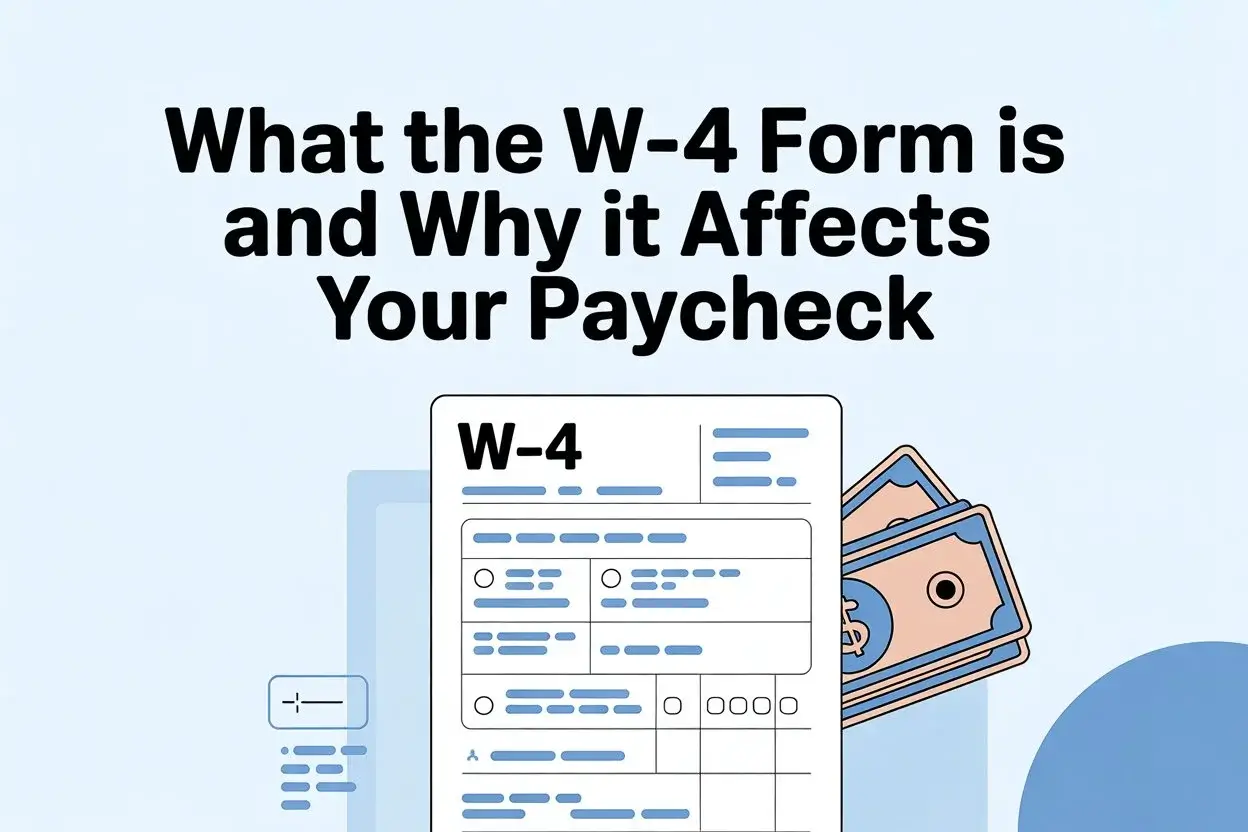
What the W-4 Form Is and Why It Affects Your Paycheck
The W-4 Form tells your employer how much federal income tax to withhold from every paycheck. It does not decide your final tax bill. It decides how that bill is paid during the year.
When your life changes, your withholding should usually change too. If your W-4 no longer matches your situation, you may end the year owing money or receiving a refund that is larger than necessary. Knowing when to update the form keeps your paychecks predictable and your taxes balanced.
Why Updating Your W-4 Matters
Your paycheck is based on the information on your W-4 Form. If that information is outdated, the math behind your withholding is outdated as well.
Updating your W-4 helps you:
- Avoid a surprise tax bill
- Reduce over-withholding
- Keep take-home pay aligned with reality
- Adjust quickly after major life events
If you have ever wondered what a W-4 Form is supposed to do, the answer is simple: it keeps payroll in sync with your real household situation.
The Best Times to Review Your Withholding
You do not need to update your W-4 every year. You should review it when something meaningful changes.
Good times to check include:
- Start of a new job
- Beginning of a new year
- After filing your tax return
- After any major personal change
- When your paycheck looks wrong
A quick review can prevent months of incorrect withholding.
Job Changes That Should Trigger a W-4 Update
Work changes are among the most common reasons to update the federal W-4 form.
Update when you:
- Start a new job
- Take a second job
- Lose a job in the household
- Get a large raise or a bonus structure change
- Move from hourly to salary or vice versa
Multiple jobs in a household often cause under-withholding if Step 2 of the form is skipped.
Relationship and Household Changes That Affect Withholding
Your filing status drives a large part of withholding.
Update your W-4 Form when you:
- Get married
- Get divorced or legally separated
- Become head of household
- Start living with a partner who shares finances
Marriage can either increase or decrease withholding depending on whether both spouses work.
Dependents and Caregiving Changes
Children and caregiving directly affect tax credits.
Update your W-4 Form when:
- You have a child
- You adopt a child
- A dependent moves in or out
- A child ages out of credits
- You begin caring for an elderly parent
Claiming dependents you do not qualify for leads to under-withholding. Forgetting to claim eligible dependents leads to over-withholding.
Income Changes Outside Your Main Job
Payroll only sees wages from that employer. Other income can throw things off.
Consider an update when you have:
- Freelance or contract income
- Interest or investment income
- Rental income
- Gig work
- Large one-time payments
Step 4 of the form lets you add extra withholding to cover these amounts.
Big Deduction or Credit Changes (What Counts)
Some deductions and credits change the tax you owe.
Examples:
- Buying a home and paying mortgage interest
- Large medical expenses
- Education credits
- Childcare credits
- Retirement contribution changes
If these change, your W-4 Form may need adjustment so payroll reflects the new picture.
Midyear Check: Signs Your Withholding Is Off
You do not need to wait until tax season to notice a problem.
Warning signs include:
- Paycheck drops sharply after a change
- The refund last year was very large
- You owed a large amount in April
- Household income mix changed
- You added a second job
Use the IRS estimator and compare your current withholding to your expected tax.
How Soon a New W-4 Affects Your Paycheck
After you submit a new W-4 Form to your employer:
- Payroll enters the new information
- Changes usually appear in one or two pay cycles
- The update affects future pay only
It does not correct earlier paychecks. If the year is almost over, you may need extra withholding to catch up.
FAQs About Updating Your W-4
Final Thoughts
Life changes, and your withholding should change with it. The W-4 Form is the tool that keeps your paycheck aligned with your real tax situation.
Review it whenever you change jobs, income, relationships, or dependents. A small update today can prevent a big surprise later.
If something in your pay feels off, the fix is usually simple: check the form, adjust the numbers, and submit a new W-4. Your future paychecks will reflect the update.