What Is FIRE? Your Complete Guide to Financial Independence and Early Retirement
Imagine waking up on a Tuesday morning and deciding whether you actually want to work today.
Not because you won the lottery.
Not because you inherited wealth.
But because your investments quietly cover your bills.
That’s the idea behind FIRE “Financial Independence, Retire Early” a movement that has changed how millions of Americans think about money, work, and long-term freedom.
If you’ve come across this term and thought, “That sounds too good to be true,” you’re not alone. Let’s break down what FIRE really means, how it works in the real world, and whether it’s realistic for ordinary people.
What Exactly Is FIRE?
FIRE stands for Financial Independence, Retire Early.
The concept is simple: save and invest aggressively until your investments generate enough income to cover your living expenses. Once that happens, working becomes optional.
Notice the word optional.
For many people, FIRE isn’t about never working again. It’s about having control. You might keep working, switch careers, start a business, or take extended breaks, but you’re no longer dependent on a paycheck to survive.
Traditional retirement in the United States typically happens around age 65. People pursuing FIRE often aim for financial independence in their 30s, 40s, or early 50s.
What Does Financial Independence Actually Mean?
You’ve reached financial independence when your investment income is equal to or greater than your annual expenses.
In other words:
Your investments can sustainably fund your lifestyle.
Most FIRE calculations rely on research commonly known as the Trinity Study, conducted by researchers at Trinity University. That research gave rise to what’s widely called the 4% rule.
The 4% Rule, Explained Simply
The 4% rule suggests that if you withdraw 4% of your portfolio per year (adjusted for inflation), your money has historically lasted at least 30 years in most market conditions.
Here’s what that means in practical terms.
If you need $40,000 per year to live, you would need roughly $1 million invested.
Because:
$40,000 ÷ 0.04 = $1,000,000
That target number is often called your FIRE number. Instead of estimating manually, you can calculate your exact FIRE number using our free Coast FIRE calculator.
Some early retirees prefer a more conservative 3.5% withdrawal rate, especially if they plan to retire decades before traditional retirement age. The earlier you retire, the longer your portfolio needs to last.
How FIRE Actually Works
There’s no secret formula. just math, discipline, and time.
Most people pursuing FIRE focus on three core ideas: increasing their savings rate, investing consistently, and keeping lifestyle inflation under control.
Instead of saving 5–10% of income (which is typical in the U.S.), many FIRE followers save 40–70%. The higher your savings rate, the faster you build investment capital, and the less you’ll need in retirement.
Those savings are usually invested in diversified, long-term assets such as broad market index funds, 401(k)s, Roth IRAs, HSAs, and low-cost ETFs. The goal isn’t day trading. It’s steady compound growth over decades.
Historically, the U.S. stock market has delivered average annual returns in the 7–10% range before inflation over long periods. That long-term compounding is what makes early retirement mathematically possible.
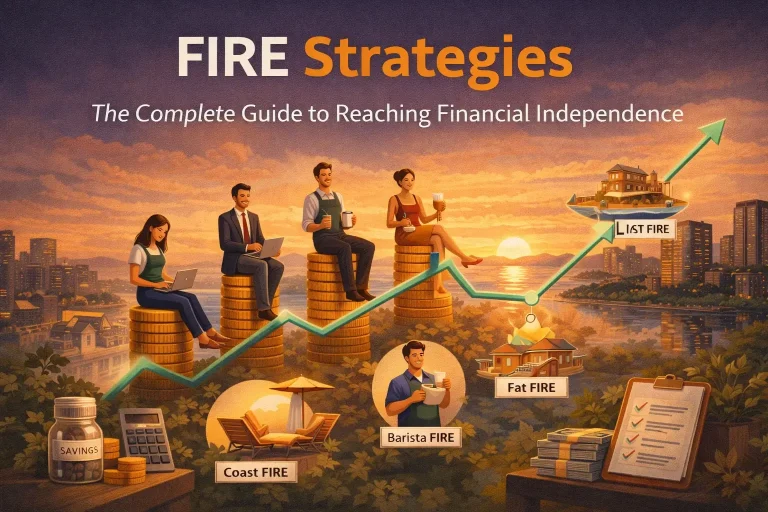
The Different Types of FIRE
Over time, different versions of FIRE have developed to fit different lifestyles.
Lean FIRE
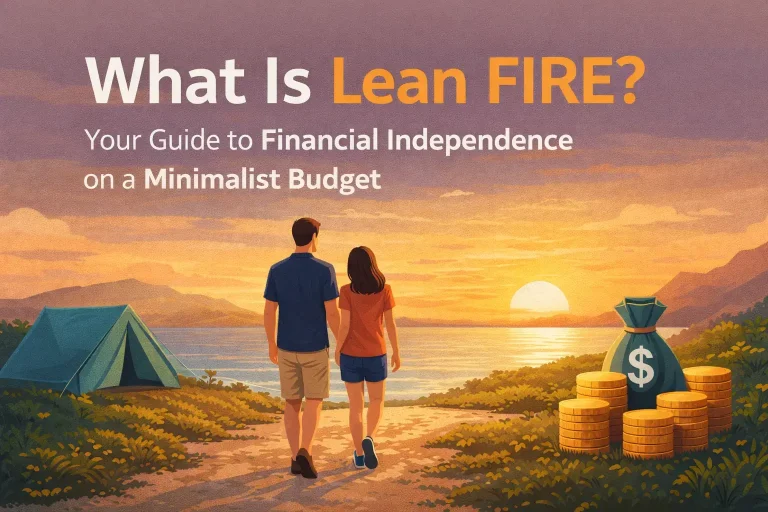
Lean FIRE is built around minimalism. You retire on a relatively modest annual budget, often around $30,000–40,000.
Because your spending is lower, your FIRE number is smaller. But it requires comfort with a simpler lifestyle and careful budgeting.
Fat FIRE
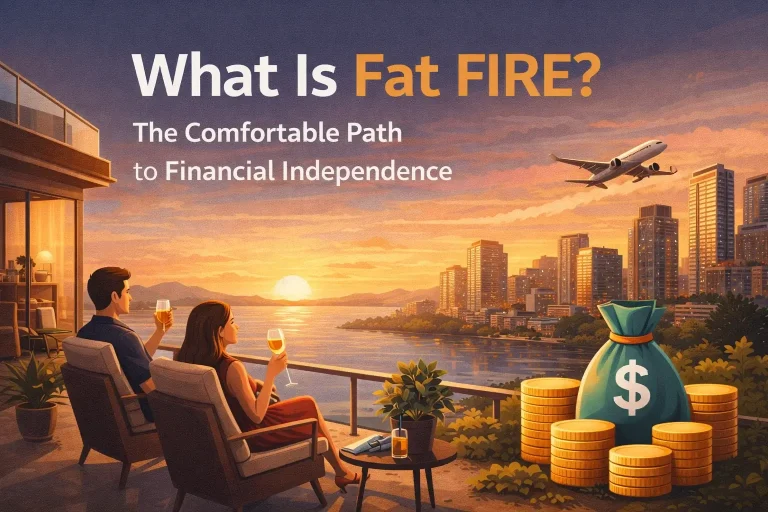
Fat FIRE is the opposite approach. You aim for financial independence while maintaining a more comfortable or higher-spending lifestyle.
If you plan to spend $100,000 per year, you may need $2.5 million or more invested. This version of FIRE often appeals to high earners who want flexibility without sacrificing lifestyle.
Barista FIRE
Barista FIRE sits in the middle.
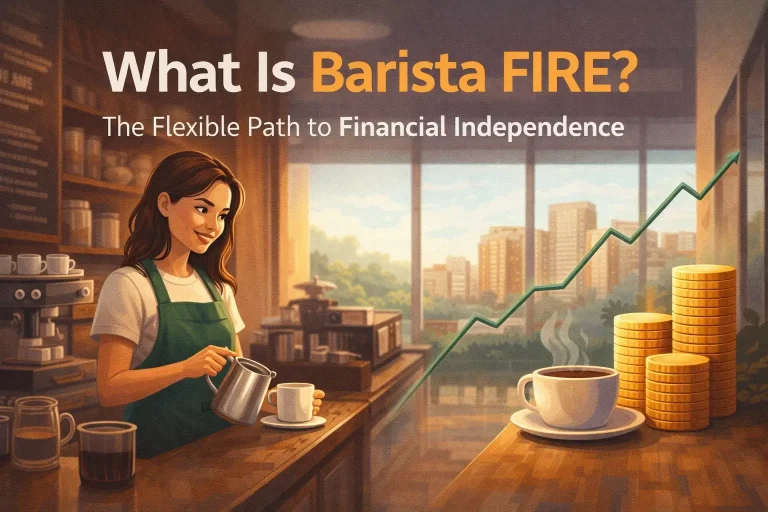
Instead of fully retiring, you leave full-time work but earn part-time income to cover some expenses, often including health insurance. This significantly reduces the amount of money you need invested.
For many people, this creates balance: freedom without the pressure of an extremely large portfolio.
Coast FIRE
Coast FIRE takes a different path.
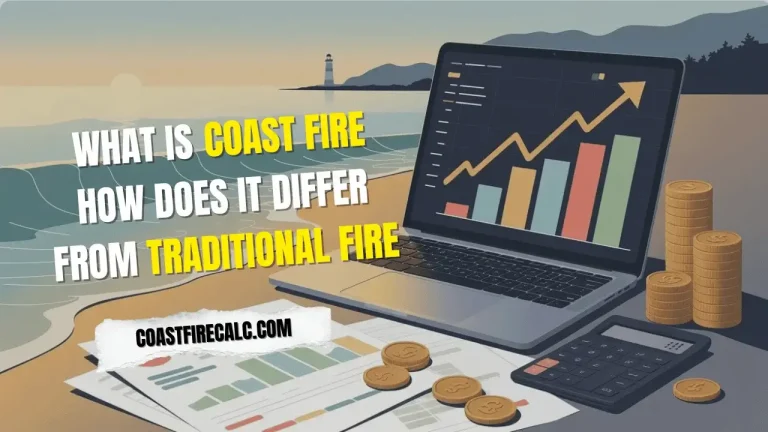
Instead of saving aggressively forever, you invest heavily early in life until your portfolio is large enough that it can grow on its own to fund traditional retirement. After that point, you only need to earn enough to cover current living expenses, not future retirement savings.
If you want a deeper explanation, you can read your full breakdown here about What Is Coast FIRE?
For many Americans, Coast FIRE feels more sustainable because it reduces long-term savings pressure while still building wealth.
How Long Does It Take to Reach FIRE?
Your timeline depends far more on your savings rate than your income alone.
Someone saving 10% of their income may take 50 years or more to retire.
Someone saving 50% could potentially reach financial independence in under 20 years.
The math is powerful. Increasing your savings rate doesn’t just increase investments, it also reduces how much you need to live on in retirement.
Is FIRE Realistic for the Average American?
Yes, but it requires trade-offs.
The benefits are obvious: more freedom, less financial stress, and greater control over your time.
But there are real challenges too.
Healthcare costs before Medicare eligibility at 65 can be significant. Market downturns can affect portfolio withdrawals. And saving aggressively can feel restrictive if not approached thoughtfully.
FIRE works best when it’s sustainable, not extreme.
The Advanced Considerations Most Beginners Miss
Many beginner guides stop at the 4% rule. But serious FIRE planning goes deeper.
One major risk is sequence of returns risk. If the market declines sharply in the early years of retirement while you’re withdrawing money, your portfolio can be permanently damaged even if markets later recover. Many early retirees manage this risk by keeping several years of expenses in cash and adjusting withdrawals during downturns.
Taxes are another critical factor. The order in which you withdraw from taxable brokerage accounts, traditional retirement accounts, and Roth accounts can significantly affect how long your money lasts. Strategic tax planning can extend a portfolio by years.
And in the United States, healthcare planning is often the biggest variable. Before Medicare eligibility, early retirees typically rely on ACA marketplace plans, income-based subsidies, or spousal coverage. Healthcare costs can dramatically change FIRE calculations.
These are the areas that separate casual interest from serious planning.
Common Misconceptions About FIRE
Some people assume FIRE is only for high-paid tech workers. While higher income helps, many teachers, nurses, government employees, and small business owners have reached financial independence by maintaining high savings rates.
Others assume FIRE means extreme deprivation. In reality, sustainable FIRE is about intentional spending, cutting what doesn’t matter so you can spend freely on what does.
And perhaps the biggest myth: you must hate your job. Many people pursue FIRE simply for flexibility, not escape.
How to Start Your FIRE Journey
If you’re interested in FIRE, you don’t need to overhaul your life overnight.
Start by tracking your spending for a few months. Calculate your annual expenses. Multiply that number by 25 to estimate your FIRE number. Then begin increasing your savings rate gradually and invest consistently in diversified, low-cost funds.
Progress compounds over time, financially and psychologically.
Frequently Asked Questions
What is a realistic FIRE number in the U.S.?
For many Americans, FIRE numbers fall between $750,000 and $2.5 million depending on lifestyle, location, and healthcare needs.
Is the 4% rule still safe?
Historically, it has worked in most 30-year periods, but early retirees often use 3.5% for added safety.
Do most people fully retire with FIRE?
Not always. Many shift to part-time work, consulting, entrepreneurship, or passion projects once financially independent.
Final Thoughts
FIRE isn’t about escaping work. It’s about gaining control. For some, that means retiring at 40. For others, it means choosing meaningful work without worrying about the paycheck. The core idea remains the same: build investments that support your life, instead of building your life around work.
From here, you can explore specific paths like Lean FIRE, Fat FIRE, or Coast FIRE to see which approach aligns with your goals.