Stock Market Basics: A Beginner’s Guide to Building Long-Term Wealth
Let’s get real for a second:
If you want financial independence — or even just a comfortable retirement — you can’t avoid the stock market.
I know it sounds intimidating. The jargon. The volatility. The talking heads on CNBC yelling about numbers you don’t understand.
But here’s the truth: for regular Americans, the stock market is the single most powerful tool for building wealth. It’s what makes your 401(k) grow, your Roth IRA compound, and early retirement actually possible.
The good news? You don’t need to be a finance expert to invest successfully. You just need to understand the basics and avoid the common mistakes that trip people up.
This guide will walk you through everything you need to know — from absolute beginner fundamentals to smarter strategic thinking — all with a focus on what actually matters for long-term wealth building.
What Is the Stock Market, Really?
At its core, the stock market is just a network of exchanges where people buy and sell ownership shares of publicly traded companies.
In the U.S., the two biggest exchanges are:
- New York Stock Exchange (NYSE)
- Nasdaq
When you buy a stock, you’re buying a tiny piece of ownership in a company. If that company grows and becomes more profitable, your shares typically increase in value. Some companies also pay dividends — regular cash payments to shareholders.
In simple terms:
The stock market lets companies raise money to grow their businesses, and it lets regular people like us grow wealth by owning pieces of those companies.
For anyone pursuing financial independence, this growth potential is what makes long-term compounding possible.
Why the Stock Market Matters for Financial Independence
If you’re serious about FIRE (or even just retiring comfortably), here’s the reality:
You need your investments to generate enough income to cover your living expenses.
And historically, the stock market delivers better long-term returns than:
- Savings accounts
- CDs (certificates of deposit)
- Bonds alone
- Keeping cash under your mattress
Over long periods, U.S. stocks have averaged roughly 7–10% annual returns (before inflation).
That compounding effect is what makes:
- Coast FIRE possible (investing early, then letting it grow)
- Lean FIRE sustainable (retiring on less money)
- Fat FIRE achievable (retiring comfortably with a larger portfolio)
How Stocks Actually Make You Money
There are two main ways stocks generate returns:
1. Capital Appreciation (Price Goes Up)
If you buy a stock at $100 and it rises to $150, you’ve made a $50 gain (assuming you sell).
2. Dividends (Regular Cash Payments)
Some companies share their profits with shareholders through dividends.
Example:
A stock priced at $100 pays a $3 annual dividend = 3% dividend yield
Your total return = price growth + dividends
For long-term investors, reinvesting dividends inside tax-advantaged accounts (like a Roth IRA) dramatically accelerates your wealth building through compounding.
Understanding Stock Market Indexes (The Easy Way to Invest)
Instead of trying to pick individual winning stocks, most smart investors track broad market indexes like:
- S&P 500 (500 largest U.S. companies)
- Dow Jones Industrial Average (30 major companies)
- Nasdaq Composite (heavy on tech companies)
These indexes represent baskets of companies, giving you instant diversification.
Why This Matters:
Here’s a dirty little secret: most professional fund managers fail to beat the S&P 500 consistently over long periods.
Even the experts with fancy degrees and Bloomberg terminals usually underperform a simple index fund.
That’s why index investing has become the go-to strategy for retirement planning and FIRE.
Individual Stocks vs. Index Funds: Which Should You Choose?
Let’s break down the pros and cons:
Individual Stocks
Pros:
- Higher potential upside if you pick winners
- Direct ownership in specific companies you believe in
Cons:
- Much higher risk
- Requires constant research
- One bad company can tank your portfolio
Index Funds / ETFs
Pros:
- Instant diversification across hundreds of companies
- Lower volatility and risk
- Lower fees
- Historically strong, consistent performance
- Super simple — no stock picking required
Cons:
- You won’t dramatically outperform the market
- Less exciting (but that’s actually a good thing)
The Verdict for Beginners:
For most people — especially those targeting financial independence — low-cost index funds inside a 401(k) or Roth IRA are the best starting point.
Less stress. Better results. More time for actually living your life.
Where You Invest Matters: Tax Implications (U.S. Specific)
Okay, this part isn’t sexy, but it’s super important if you want to keep more of your money.
Tax-Advantaged Accounts (The Good Stuff)
- 401(k) (employer-sponsored)
- Traditional IRA
- Roth IRA
- HSA (triple tax advantage — the ultimate hack)
Inside these accounts:
- No capital gains taxes annually
- Dividends compound tax-deferred or completely tax-free
- You keep way more of your returns
Taxable Brokerage Accounts
You’ll owe taxes on:
- Capital gains (when you sell for a profit)
- Dividends (when companies pay you)
Long-term capital gains tax rates (for stocks held over 1 year):
- 0% (lower income)
- 15% (most people)
- 20% (high earners)
Smart Strategy:
Put high-dividend investments inside tax-advantaged accounts to avoid getting taxed every year on those dividends.
This is called asset location — and it can save you thousands over time.
Understanding Risk (What Beginners Get Wrong)
Here’s what most people misunderstand:
Stock market risk is NOT daily price swings.
The real risks are:
- Selling during a market crash out of panic
- Lack of diversification (putting all your money in one stock)
- Emotional decision-making instead of sticking to a plan
Here’s the thing: the U.S. stock market has crashed many times:
- The Great Depression (1929)
- Dot-com bubble (2000)
- Financial Crisis (2008)
- Pandemic crash (2020)
And every single time, it recovered and went on to reach new highs.
But timing those recoveries? Nearly impossible.
What Behavioral Finance Teaches Us:
Losses feel psychologically twice as painful as gains feel pleasurable.
This leads people to make terrible decisions — like selling at the bottom of a crash and missing the recovery.
Long-term FIRE investors win by:
- Staying invested through ups and downs
- Automating their contributions
- Ignoring short-term noise and headlines
The Power of Compounding (Why Starting Early Changes Everything)
Let’s look at a simple example:
If you invest:
- $500/month
- At an 8% average annual return
- For 30 years
You could end up with over $700,000.
But if you wait and delay starting by just 10 years, your ending balance drops dramatically — potentially cutting your wealth in half.
Time is your biggest advantage. The earlier you start, the less you need to contribute.
Advanced Strategies (Once You’ve Mastered the Basics)
Once you’re comfortable with the fundamentals, here are some deeper concepts worth understanding:
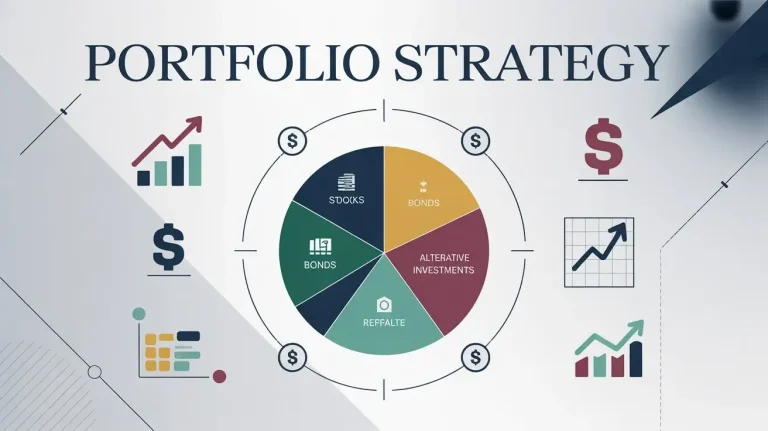
1. Asset Allocation
Your mix of:
- U.S. stocks
- International stocks
- Bonds
This determines most of your long-term return and your risk level.
Younger investors typically go heavier on stocks. Older investors shift toward bonds for stability.
2. Sequence of Returns Risk
This one’s critical for FIRE folks.
If the market crashes right when you retire and you’re withdrawing money, it can permanently damage your portfolio’s ability to recover — even if the market eventually bounces back.
This connects directly to:
- Safe withdrawal rates (the 4% rule)
- Why having a cash buffer matters
3. Valuation Awareness (Without Trying to Time the Market)
Understanding metrics like:
- P/E ratio (price-to-earnings)
- Shiller CAPE (cyclically adjusted P/E)
These can help set realistic expectations — but they’re not crystal balls for predicting crashes.
Don’t use them to time the market. Use them to stay grounded.
4. Tax-Loss Harvesting
In taxable accounts, you can strategically sell losing investments during downturns to offset gains and reduce your tax bill.
It’s a legal, smart way to turn losses into something useful.
Stock Market Myths That Hurt Investors
Let’s bust some common misconceptions:
“The stock market is just gambling.”
No. Gambling is random. Investing is buying ownership in productive businesses.
“You need to be rich to invest.”
False. You can start with as little as $50 in many apps.
“You should wait for a market crash to invest.”
Nobody can predict crashes. Waiting often means missing years of growth.
“Cash is safer long-term.”
Actually, inflation silently destroys cash. Over decades, staying out of the market is often riskier than staying in.
How Stock Market Investing Fits Into Your FIRE Strategy
If you’re building toward financial independence, here’s a solid game plan:
- Maximize your employer’s 401(k) match (free money)
- Max out your Roth IRA (if eligible)
- Use a taxable brokerage account for additional investing
- Maintain a diversified allocation (don’t put all eggs in one basket)
- Rebalance periodically (once or twice a year)
Stock market investing isn’t about excitement or getting rich quick.
It’s about:
- Discipline (staying the course)
- Time (letting compounding work)
- Tax efficiency (keeping more of what you earn)
- Strategic allocation (balancing risk and reward)
When done right, it becomes the foundation that makes Coast FIRE possible — and traditional retirement optional.
Final Thoughts
The stock market isn’t a shortcut to wealth.
It’s a long-term wealth-building system powered by:
- Compounding growth
- Corporate innovation and profits
- Investor patience
For Americans pursuing financial independence, understanding stock market basics isn’t optional — it’s foundational.
The earlier you learn how it works, the more time you have to let it work for you.
And honestly? It’s not as complicated as Wall Street wants you to think.
Buy diversified index funds. Invest consistently. Ignore the noise. Stay the course.
That’s it. That’s the whole game.