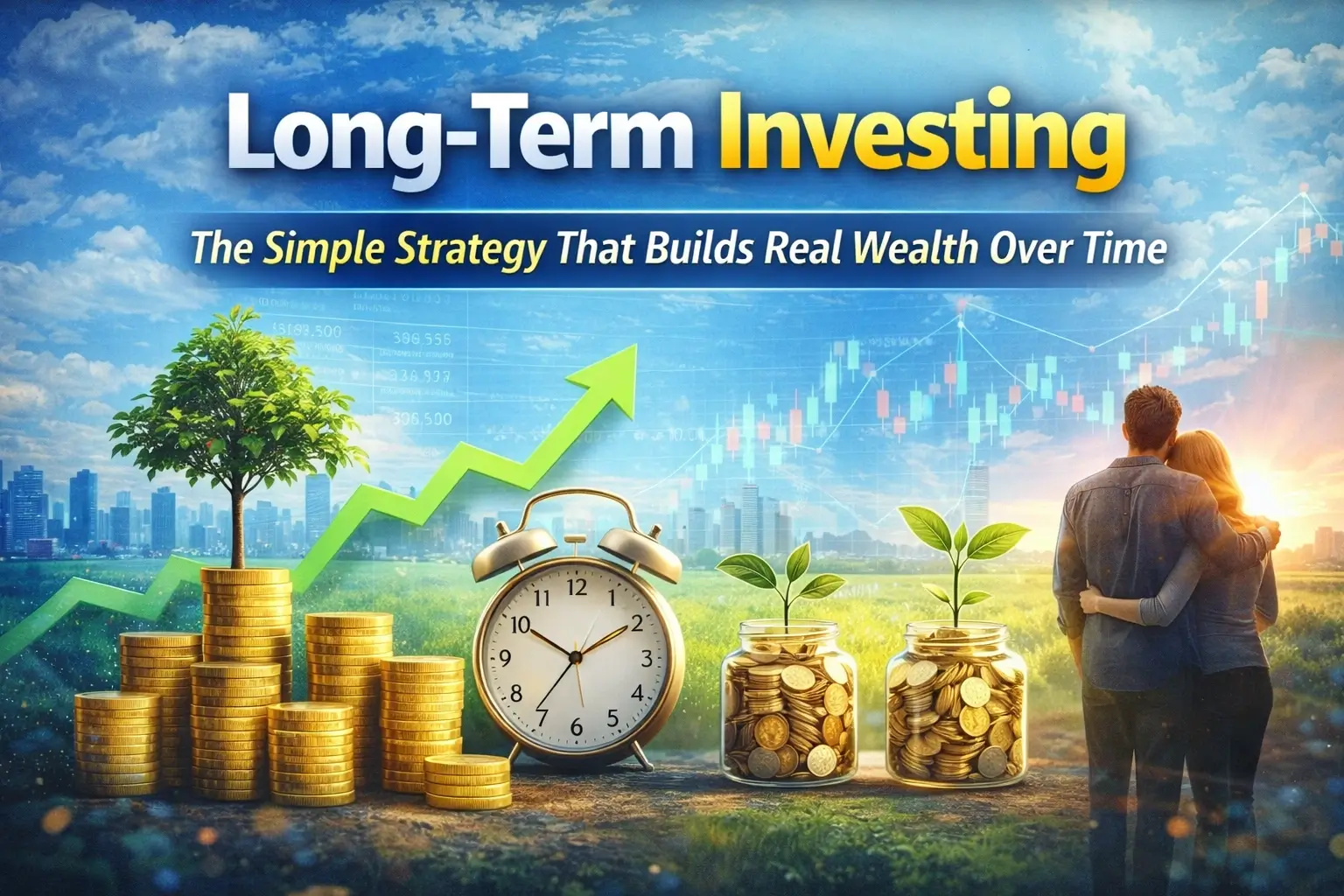
Long-Term Investing: The Boring Strategy That Actually Builds Real Wealth
Here’s a secret that Wall Street doesn’t want you to know:
The most successful investors aren’t day traders glued to their screens. They’re not constantly buying and selling based on the latest news. They’re not trying to predict the next hot stock.
They’re just… waiting.
Patiently. Sometimes for decades.
It sounds almost too simple to be true, but long-term investing — buying good investments and holding them for years — is one of the most proven wealth-building strategies that exists.
Whether you’re saving for retirement, pursuing financial independence, or just trying to build a better future, long-term investing lets your money grow steadily while you focus on actually living your life.
Let’s break down why this works so well and how you can start today.
What Is Long-Term Investing
Long-term investing means buying investments and holding them for many years — often decades — rather than constantly trading in and out.
The goal is to benefit from:
- Compounding returns (growth on top of growth)
- Economic expansion over time
- Corporate earnings growth
- Overall market appreciation
Instead of trying to predict whether the market will go up or down next week, long-term investors focus on staying invested and letting their money grow naturally.
For example: Someone investing for retirement at 30 might hold stocks or index funds for 30-40 years before touching them.
Why Does Long-Term Investing Actually Work?
The stock market is wildly unpredictable in the short term.
Prices bounce around every day based on news headlines, interest rate changes, political drama, and investor mood swings.
But zoom out, and something remarkable happens:
Over long periods, markets historically trend upward.
Why? Because of fundamental forces:
- Population growth (more people = more consumers)
- Productivity improvements (technology makes us more efficient)
- Innovation (new products and services create value)
- Corporate profit growth (successful companies make more money over time)
When you stay invested for the long haul, you ride these powerful trends instead of getting whipsawed by daily noise.
The Magic of Compound Growth
Here’s where things get really interesting.
When you invest money and earn returns, those returns start earning their own returns. Over decades, this creates exponential growth.
Example:
Let’s say you invest $10,000 at an 8% annual return:
- After 10 years → about $21,589
- After 20 years → about $46,610
- After 30 years → about $100,627
Your money more than 10x’d just by sitting there.
The longer your time horizon, the more powerful compounding becomes. It’s like a snowball rolling downhill — starts small, ends up massive.
The Core Principles of Long-Term Investing
Successful long-term investors follow a few simple rules:
1. Time in the Market Beats Timing the Market
A lot of people try to predict market highs and lows. Buy low, sell high, right?
The problem? Even professional investors with teams of analysts can’t consistently do this.
Missing just a handful of the best market days can dramatically hurt your long-term returns. And those best days often happen right after the worst days — when everyone’s panicking.
Long-term investors focus on staying invested consistently instead of jumping in and out trying to be clever.
2. Consistency Beats Occasional Big Moves
Regular investing — sometimes called dollar-cost averaging — means investing a fixed amount at regular intervals.
Like:
- Every month from your paycheck
- Automatically into your 401(k)
- Set-it-and-forget-it contributions
This approach:
- Removes emotion from the equation
- Smooths out market ups and downs
- Makes investing a habit instead of a decision
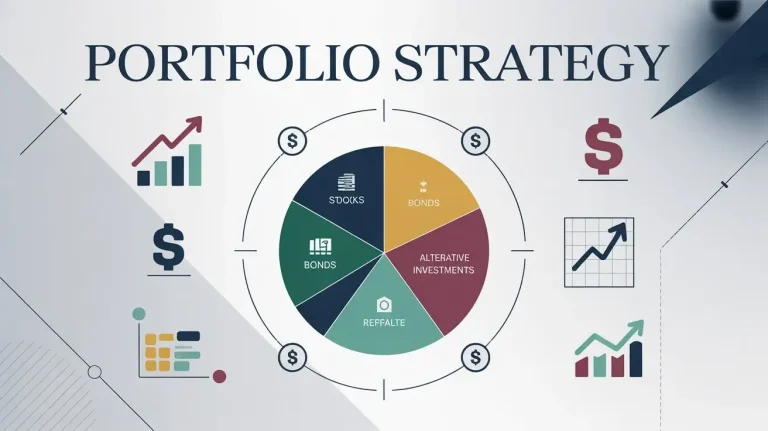
3. Diversification Is Your Safety Net
Don’t put all your eggs in one basket. We’ve all heard it, but it’s true.
Diversification means spreading your money across different types of investments:
- U.S. stocks
- International stocks
- Bonds
- Maybe some real estate
A diversified portfolio protects you when any single investment tanks.
The easiest way to diversify? Broad market index funds. One fund, instant diversification.
4. Patience Is Your Superpower
Markets crash. It’s not a question of if, but when.
We’ve seen major drops in:
- 2000 (dot-com bubble)
- 2008 (financial crisis)
- 2020 (pandemic crash)
Long-term investors understand that temporary declines are part of the game. Instead of panic-selling, they stay the course — or even buy more while things are on sale.
Historically, every single major market crash has been followed by recovery and new highs.
What Should You Actually Invest In?
Different assets serve different purposes in a long-term strategy.
Stocks
Stocks represent ownership in companies. Over long periods, they’ve delivered some of the highest returns.
Long-term stock investors typically focus on:
- Strong, stable businesses
- Broad market exposure (not single stocks)
- Companies with growth potential
Index Funds
Index funds track entire markets, like:
- Total stock market
- S&P 500 (largest U.S. companies)
- International markets
They offer:
- Instant diversification
- Ultra-low costs
- No need to pick individual stocks
Because of their simplicity and effectiveness, index funds are the backbone of most long-term portfolios.
Bonds
Bonds provide income and stability.
They’re less volatile than stocks and help cushion your portfolio during market crashes.
Many investors increase their bond allocation as they get closer to retirement.
Dividend-Paying Stocks
Some investors love companies that pay regular dividends — sharing profits with shareholders.
Dividend investing provides:
- Regular income
- Potential for growth
- Compounding when dividends are reinvested
The Power of Compounding Over Decades (This Will Blow Your Mind)
Let me show you why starting early matters so much.
If you invest $500 per month with an average 8% annual return:
- After 10 years → about $91,000
- After 20 years → about $295,000
- After 30 years → about $745,000
- After 40 years → about $1.5 million
Notice something? Most of the growth happens in the later years.
This is why starting early — even with small amounts — makes such a massive difference.
Time is your biggest ally in investing.
Common Mistakes That Kill Long-Term Returns
Even though long-term investing is simple, people still mess it up. Here’s what to avoid:
1. Emotional Investing
Fear and greed are the enemies of good investing.
Common emotional mistakes:
- Selling during crashes (locking in losses)
- Buying during hype bubbles (buying high)
- Constantly checking your portfolio and stressing out
Long-term success requires emotional discipline. Set it, forget it, and live your life.
2. Overtrading
Constantly buying and selling leads to:
- Higher fees eating your returns
- Bad timing decisions
- Tax headaches
Long-term investing favors low turnover and patience. Boring wins.
3. Ignoring Costs
Investment fees seem small — 1% here, 0.5% there.
But over decades, they compound against you and can destroy hundreds of thousands of dollars in wealth.
Pay attention to:
- Expense ratios (lower is better)
- Trading fees (minimize them)
- Fund management costs
Lower-cost investments = more money stays invested and compounds for you.
4. No Clear Plan
Without a strategy, you’ll make emotional decisions when markets go crazy.
A solid long-term plan includes:
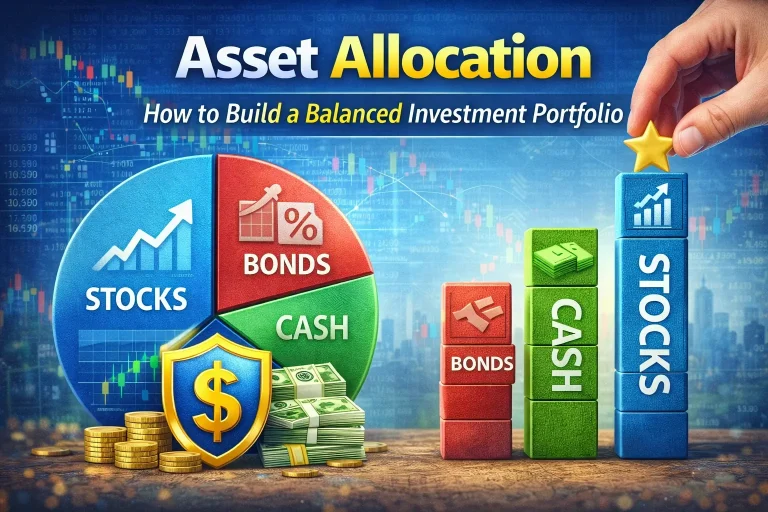
- Your target asset allocation (stocks vs. bonds)
- Your investment timeline
- Your risk tolerance
- A rebalancing schedule
The Psychology of Long-Term Investing
One of the hardest parts of investing? Your own brain working against you.
Common psychological traps:
- Panic during market crashes
- Overconfidence during bull markets
- FOMO (fear of missing out) on hot stocks
Successful long-term investors build systems to remove emotion from decisions:
- Automated contributions
- Diversified portfolios they don’t constantly tinker with
- Clear, written-down long-term goals
Understanding these biases helps you stay consistent when everyone around you is freaking out.
Advanced Strategies (Once You’ve Got the Basics)
Portfolio Rebalancing
Over time, some investments grow faster than others, throwing off your target allocation.
Rebalancing means periodically adjusting back to your target.
Example:
- Target: 70% stocks / 30% bonds
- After a bull market: 85% stocks / 15% bonds
- You sell some stocks and buy bonds to get back to 70/30
This forces you to “sell high, buy low” systematically.
Tax-Efficient Investing
Smart long-term investors think about taxes:
- Hold investments longer to get lower capital gains rates
- Use tax-advantaged accounts (401(k), IRA, Roth IRA)
- Harvest losses to offset gains in taxable accounts
Tax efficiency can add thousands to your returns over decades.
Asset Location Strategy
Put the right investments in the right accounts:
- Income-producing assets → tax-advantaged accounts
- Tax-efficient index funds → taxable accounts
This optimizes your after-tax returns.
Long-Term Investing and Financial Independence
Long-term investing is the foundation of financial independence.
By consistently investing and letting compounding work over decades, you can build a portfolio capable of funding:
- Early retirement
- Passive income
- Complete financial freedom
Most financial independence strategies rely on long-term market investing — not day trading or get-rich-quick schemes.
Final Thoughts: Boring Wins
Long-term investing isn’t sexy.
You won’t have exciting stories about predicting the next Tesla or timing a market crash perfectly.
But here’s what you will have: actual wealth.
While markets will always have ups and downs, history shows that investors who stay focused on long-term goals are far more likely to build lasting wealth than those constantly chasing the next hot thing.
For most people, the winning strategy is almost embarrassingly simple:
✅ Invest consistently (every month, no matter what)
✅ Stay diversified (broad index funds)
✅ Minimize costs (low-fee investments)
✅ Be patient (decades, not days)
That’s it. That’s the whole game.
Simple, boring, and incredibly effective.
Start today, stay consistent, and let time do the heavy lifting.