Index Fund Investing: The Simplest Path to Long-Term Wealth
If there’s one investment strategy that consistently works for building wealth — whether you’re pursuing financial independence or just trying to retire comfortably — it’s index fund investing.
Here’s why index funds are so powerful:
- Simple — no complex decisions required
- Diversified — spreads your risk automatically
- Low cost — keeps more money in your pocket
- Tax efficient — minimizes tax drag
- Consistently effective — beats most active investors over time
This guide will walk you through everything you need to know, from the absolute basics to smarter portfolio strategies.
What Is an Index Fund?
An index fund is a mutual fund or ETF that tracks a specific market index rather than trying to beat it.
For example:
- An S&P 500 index fund holds the 500 largest publicly traded U.S. companies
- A Total Stock Market index fund holds thousands of U.S. companies of all sizes
Instead of a fund manager picking individual stocks they think will win, the fund simply mirrors the entire index.
This passive approach eliminates:
- Stock picking risk (betting on the wrong companies)
- Manager bias and mistakes
- High trading costs
And here’s the kicker: historically, it beats most actively managed funds over long periods.
Why Index Fund Investing Actually Works
The core principle is beautifully simple:
You own the entire market.
When the economy grows over decades, corporate profits rise. When profits rise, stock values increase. By owning the whole market, you capture that growth automatically.
Instead of trying to predict which company will be the next Apple or Amazon, you just own them all. And the index takes care of itself:
- Winners automatically grow and become a bigger part of the index
- Losers shrink or exit the index naturally
It’s self-cleaning and self-adjusting — no guesswork required.
For anyone building long-term wealth, this systematic structure is incredibly powerful.
Index Funds vs. Actively Managed Funds
Actively managed funds have professional managers who try to beat the market by picking winning stocks.
Sounds good in theory. But here’s the reality:
- Most fail to beat their benchmark after fees
- High expense ratios (often 0.5%–1.5%) eat away at returns
- Higher trading creates more taxes in regular accounts
Example:
An index fund charging a 0.03% fee versus an active fund charging 1% annually can create a six-figure difference over 30 years on the same initial investment.
Compounding works both ways — costs compound against you too.
Where to Hold Index Funds (Tax Strategy Matters)
Index fund investing becomes even more powerful when you put them in the right accounts.
1. 401(k) or Similar Workplace Retirement Account
- Tax-deferred growth (no taxes until withdrawal)
- Employer match = free money
- Often includes S&P 500 or total market funds
2. Roth IRA
- Tax-free growth forever (no taxes when you withdraw)
- Perfect for long-term stock index funds
- No required withdrawals at any age
3. Regular Taxable Brokerage Account
- Use tax-efficient index ETFs
- Benefit from low trading activity
- Qualify for lower long-term capital gains rates
Index funds work especially well in regular taxable accounts because:
- They distribute fewer taxable capital gains each year
- Dividends often receive favorable tax treatment
This means you keep more of your returns.
Building a Simple Index Fund Portfolio
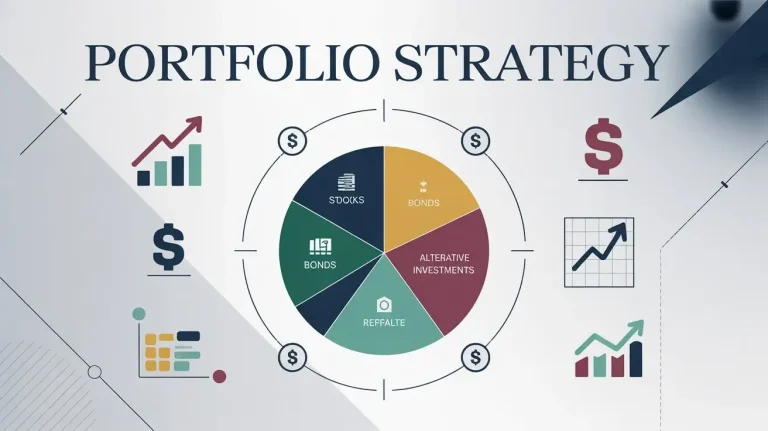
Most smart investors use a straightforward three-fund portfolio:
- U.S. Total Stock Market index fund
- International Stock Market index fund
- Total Bond Market index fund
That’s it. Three funds. Total diversification.
Example Allocation (for someone building wealth):
- 70% U.S. stocks
- 20% International stocks
- 10% Bonds
Younger, aggressive savers might use even less in bonds. Older investors or those closer to retirement typically increase bonds for stability.
The beauty? You can adjust this simple mix based on your age, goals, and risk tolerance.
Why Index Funds and Financial Independence Go Together Perfectly
Building financial independence requires:
- Consistent growth over many years
- Low expenses that don’t eat your returns
- Broad diversification to reduce risk
- Predictable performance you can plan around
Index funds deliver all of this:
- Market-level returns (which historically beat most investors)
- Minimal fees (often under 0.10%)
- Simplicity in planning and projections
When people calculate how much they need to retire early, they typically assume long-term stock market returns — not the hope of picking winning stocks.
Index funds make that achievable.
Understanding the Risks (Yes, There Are Some)
Index funds eliminate the risk of picking bad individual stocks.
But they don’t eliminate market risk.
Key risks to understand:
1. Market Volatility
Broad indexes can drop 20–50% during recessions and bear markets. That’s just how markets work.
2. Sequence of Returns Risk
If you retire right before a major crash and start withdrawing money, it can damage your portfolio’s long-term sustainability — even if the market eventually recovers.
3. Inflation Risk
Bonds alone may not keep up with inflation over time. Stocks historically have.
Understanding these risks helps you avoid panic selling during downturns — which is when most people hurt themselves.
The Behavioral Advantage
Index investors benefit from:
- Less decision fatigue (no constant choices about what to buy/sell)
- Lower temptation to trade (which usually hurts returns)
- Automated investing habits (set it and forget it)
Advanced Strategies (Once You’ve Mastered the Basics)
Once you’re comfortable with index investing, here are some ways to optimize:
1. Smart Account Placement
Put different investments in different account types for tax efficiency:
- Bonds → tax-deferred accounts (401(k), Traditional IRA)
- Stock ETFs → taxable accounts
- High-growth assets → Roth accounts (tax-free forever)
This simple strategy can save you thousands in taxes.
2. Rebalancing
Over time, stocks might grow faster than bonds, throwing off your target allocation.
Rebalancing means: selling some of what’s grown and buying what hasn’t, to get back to your target mix.
This forces you to “buy low, sell high” systematically.
Do this once a year or whenever your allocation drifts significantly.
3. Global Diversification
Many people invest only in U.S. stocks. That’s risky — you’re betting everything on one country’s economy.
Adding international exposure:
- Reduces country-specific risk
- Provides a hedge if the dollar weakens
- Makes your portfolio more resilient
A globally diversified portfolio is structurally stronger.
4. Watch Those Fees
Even tiny cost differences compound into huge amounts over decades.
Example:
A 7% return with a 0.03% fee versus a 7% return with a 1% fee:
Over 30 years, the fee difference alone can cost you hundreds of thousands of dollars.
Low-cost indexing isn’t just philosophy — it’s mathematical reality.
Common Myths About Index Fund Investing
“It’s boring.”
Yes — and that’s exactly why it works. Exciting investing usually means losing money.
“You can’t beat the market with index funds.”
True. But most professionals don’t beat it either, even with teams of analysts and fancy tools.
“Index funds don’t protect you during crashes.”
Nothing protects you from crashes completely. But diversification reduces risk without eliminating opportunity.
“It’s too simple to be effective.”
In finance, simplicity often outperforms complexity. Complicated strategies mostly benefit the people selling them.
A Practical Roadmap (Beginner to Advanced)
Stage 1: Beginner
- Invest in a total market index fund in your 401(k) or IRA
- Automate contributions every month
- Ignore short-term market noise completely
Stage 2: Intermediate
- Add international index exposure for diversification
- Optimize which investments go in which accounts (tax efficiency)
- Start rebalancing once a year
Stage 3: Advanced
- Use tax-loss harvesting in taxable accounts
- Fine-tune your asset allocation based on your timeline
- Model different withdrawal strategies for retirement
This step-by-step approach builds sophistication without creating behavioral problems or paralysis.
Final Thoughts
Index fund investing isn’t exciting.
It won’t make you rich overnight.
You won’t have dramatic stories about picking the next Tesla before it exploded.
But for building real, lasting wealth? It’s one of the most reliable, proven strategies available.
Index fund investing transforms wealth building into:
- A system rather than gambling
- A long-term growth engine rather than speculation
- A disciplined framework rather than emotional reactions
Here’s the beautiful truth: you don’t need to be a genius to build wealth. You just need to consistently invest in diversified, low-cost index funds and give time the chance to work its magic.
That’s it. That’s the whole strategy.
Simple, boring, and incredibly effective.